It seems I’ve become hooked on exploring cool features, cool settings, and cool positions. Sometimes it works out great, with unexpectedly beautiful rock throughout (Iron Tears, Juggernaut). Sometimes, we fear, and then find, a world of choss (No Fiesta…, Confessions…). Sometimes the approach turns into a 5-hour epic through a swamp filled with fallen trees (Haven’t gone back to finish that one yet.)
I like adventure. And in order for something to be an adventure, the outcome must be uncertain. And if the outcome is uncertain, sometimes, it’s going to be a bit crap, and the burden is on you to find the silver lining.
When descending Solar Circus early this season, I saw a crazy looking rock formation, and immediately wanted to:
- A: Find out what the hell it was, and
- B: Climb it.
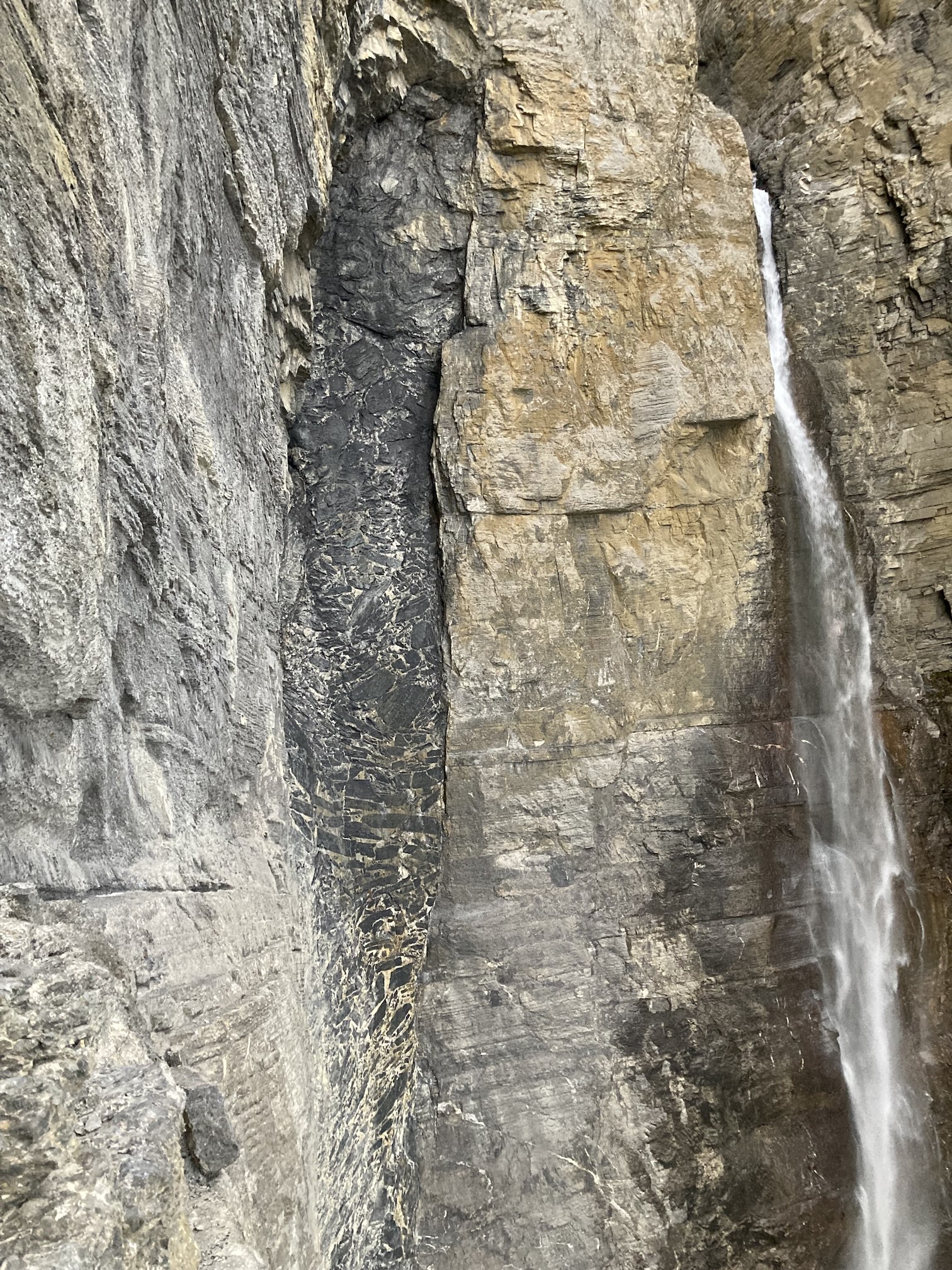
Three geologists later, we seemed to have pinned down that it was a ‘breccia’ (brech-ee-uh), so the only thing left to do was try to climb it. From the angle I saw it from on rappel, it looked like solid steep rock. I prepared myself mentally, and equipped myself metallically, to lay siege to a steep pitch of solid sport climbing.
All the route names in this story can be confusing. To set the stage:
- Polar Circus is the original ice climbing route.
- Solar Circus is a route Gavin and I put up earlier this year.
- Nick and I climbed three pitches of Tim Taylor’s ‘Solar Delight’ (which very close to the same start as ‘Solar Circus’).
- We continued on a three pitch first ascent of ‘Fall Festival’, which leads to the final tear of ‘Polar Circus’.
- We finished on a three pitch first ascent of ‘Breccia won’t do that again’, which leads to the top of the wall.
- We’re treating ‘Festival’ and ‘Breccia’ as different routes, since ‘Festival’ is worth climbing by itself, and ‘Breccia’ is a horror show.
Armed with Steel and Lithium Ions
Nick Baggaley and I left town with 38 bolts and a beastly rotary hammer, and headed back to Polar Circus. The plan for the first half of the day was to establish a moderate and well protected way to gain the bowl below the final tier.
Our first three pitches went smoothly. In a crazy coincidence, Tim Taylor had established ‘Solar Delight/Solar Purpose’ in the time between when Gavin and I established ‘Solar Circus’ and when we wrote about it. Tim left behind bolted protection and rappel anchors in terrain just beside what Gavin and I had climbed on clean gear. No complaints on my end. Nick lead us up Tim’s enjoyable variation and we continued on.
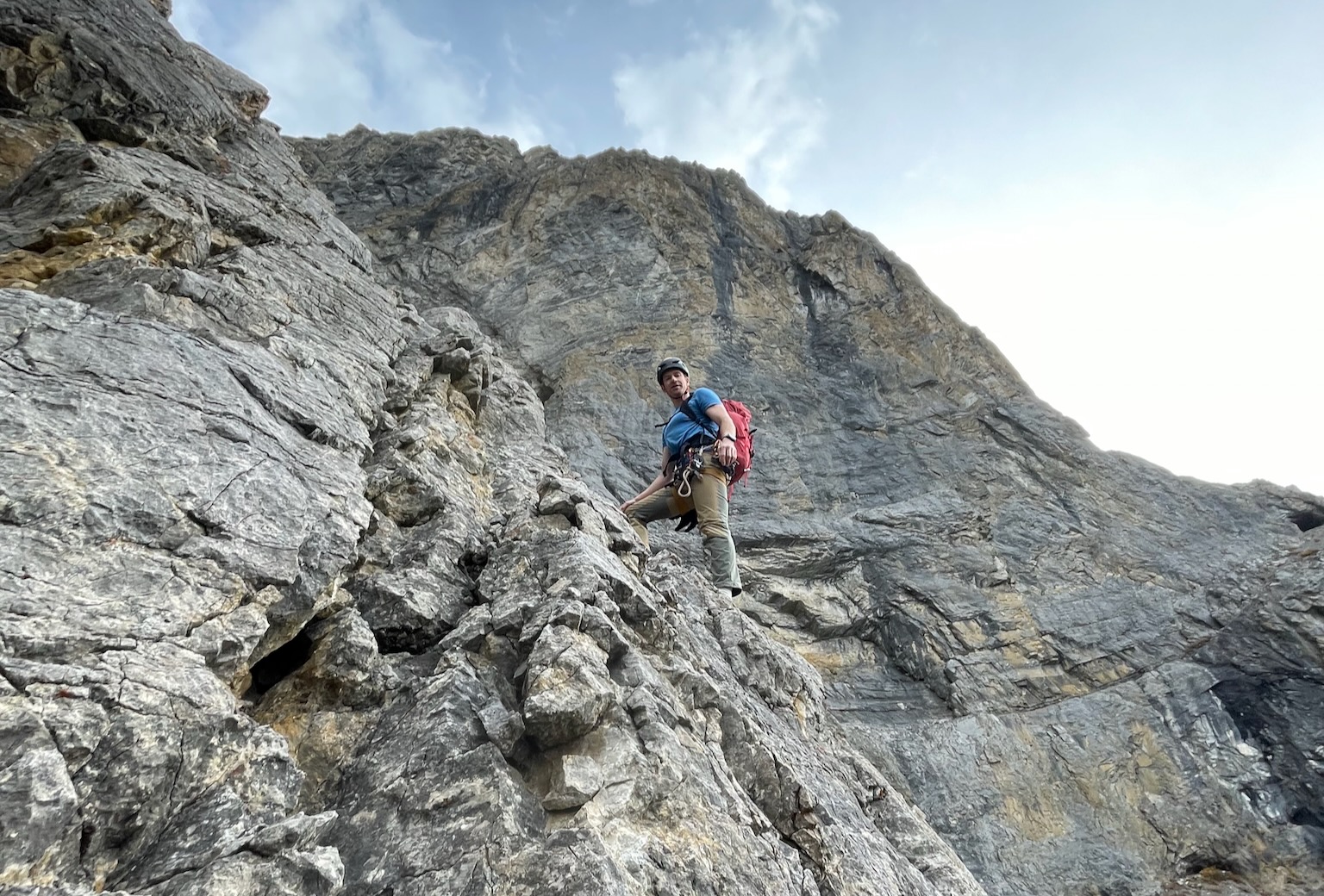
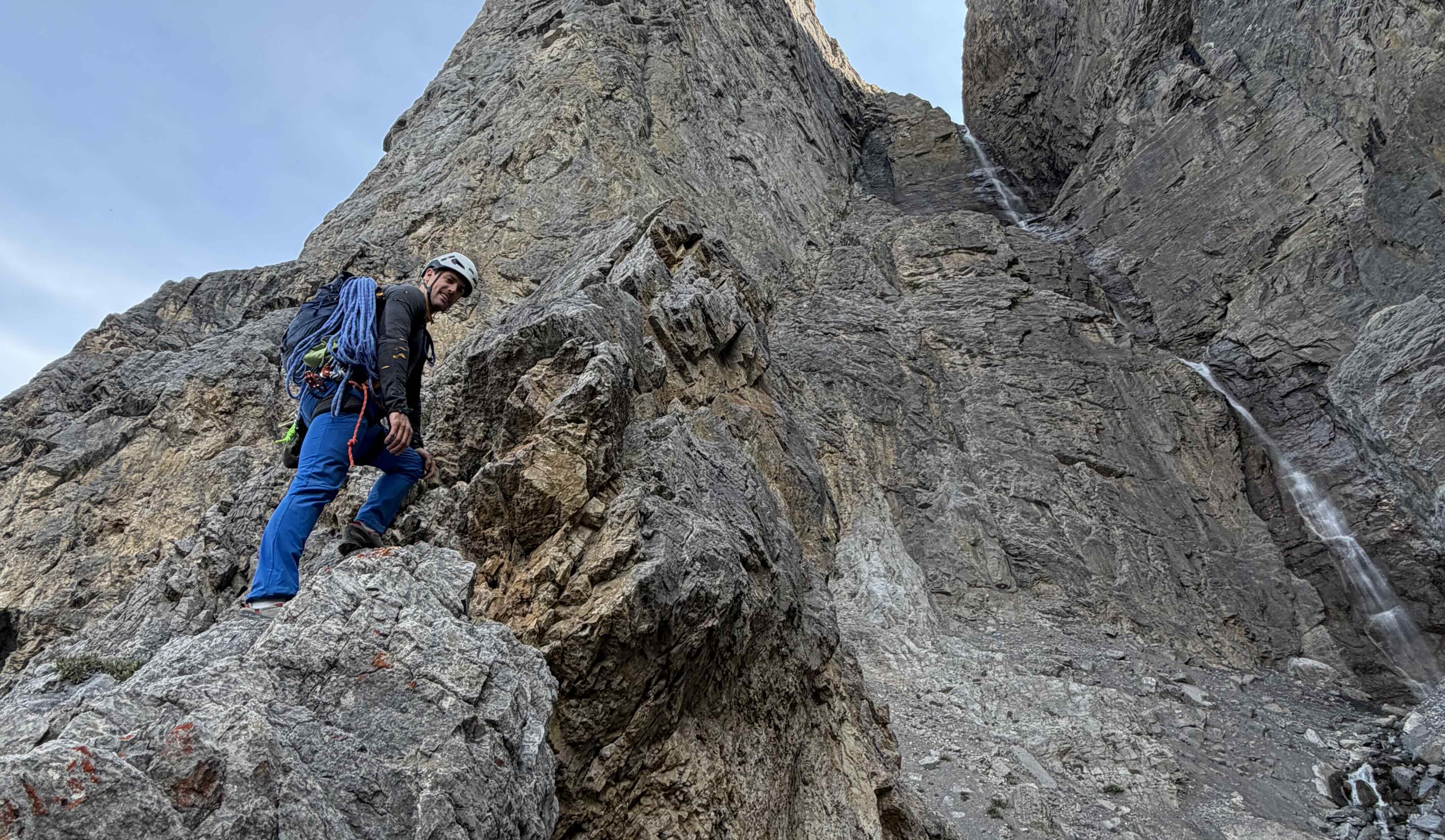
We scrambled, as for Solar Circus, until we reached a fork in the road where Gavin and I had headed left across choss ledges. Nick and I instead continued up and right, gaining a ramp system below the towering left wall of the Polar Circus amphitheatre. Moderate scrambling took us quite far up the ramp. Nick soloed some exposed moves before building a trad anchor, and we decided I should leave behind a bolted belay before scrambling over to join him.
Things go according to plan
Now the actual new climbing began, and Nick climbed up a rib that looked questionable from below, but turned out to be remarkably solid and fun. He crafted an extremely finicky gear anchor, and I joined him. Once again we placed a bolted anchor in a better stance. A similar pattern followed on the next pitch. He put together an excellent face sequence, I joined him, and this time, we bolted a rappel anchor.
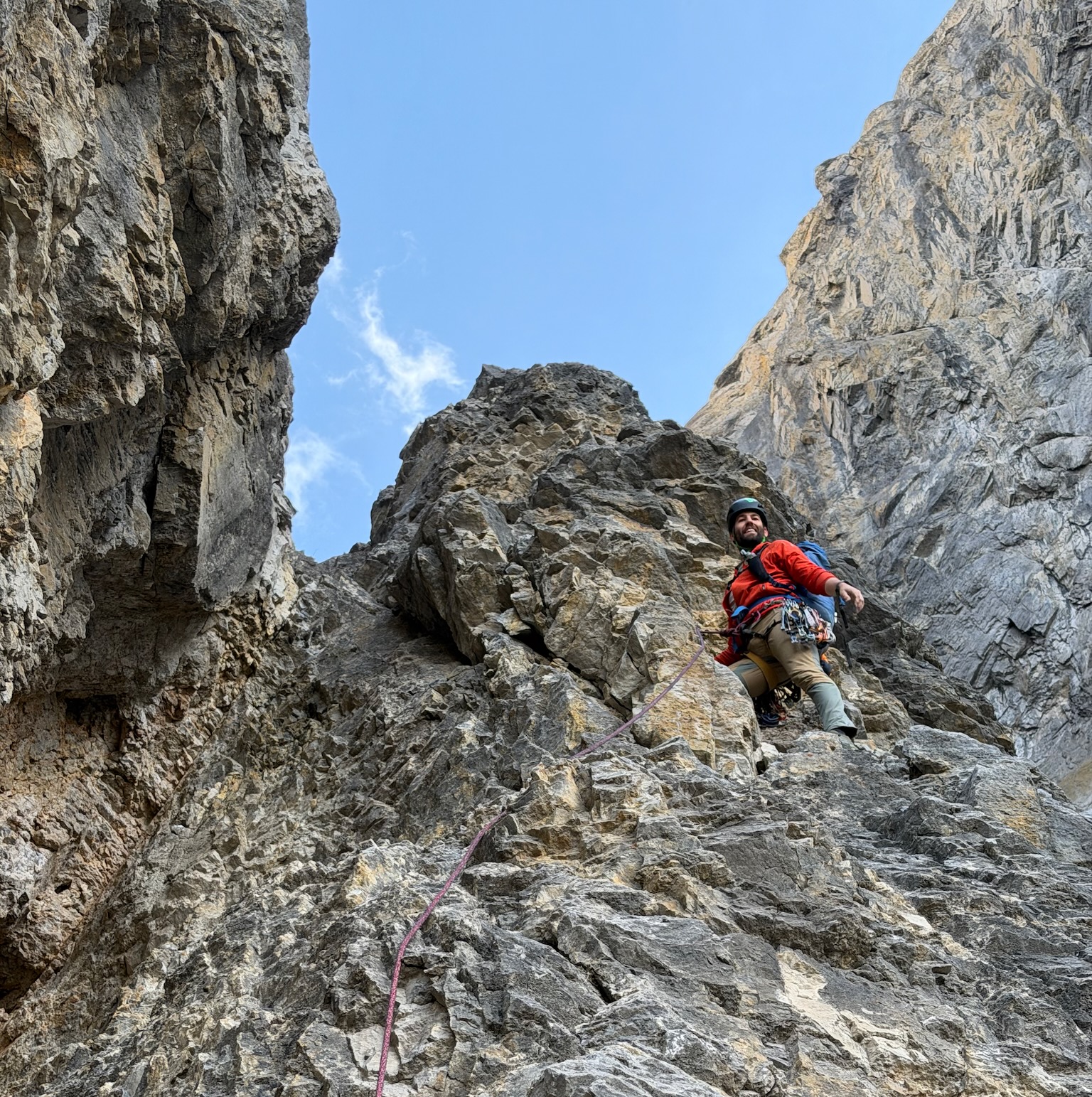
The third pitch was the meat of the route. A band of dubious rock lead to steep and slabby terrain, with tricky-to-no protection. Nick quested in a few directions, before stepping down to put on rock shoes. He danced rightward across the face, his last cam far away to his left. Eventually he pulled over the top and into the final Polar Circus bowl. I awkwardly cleaned the gear and left behind two protection bolts to make Nick’s runout more sensible for anyone who follows.
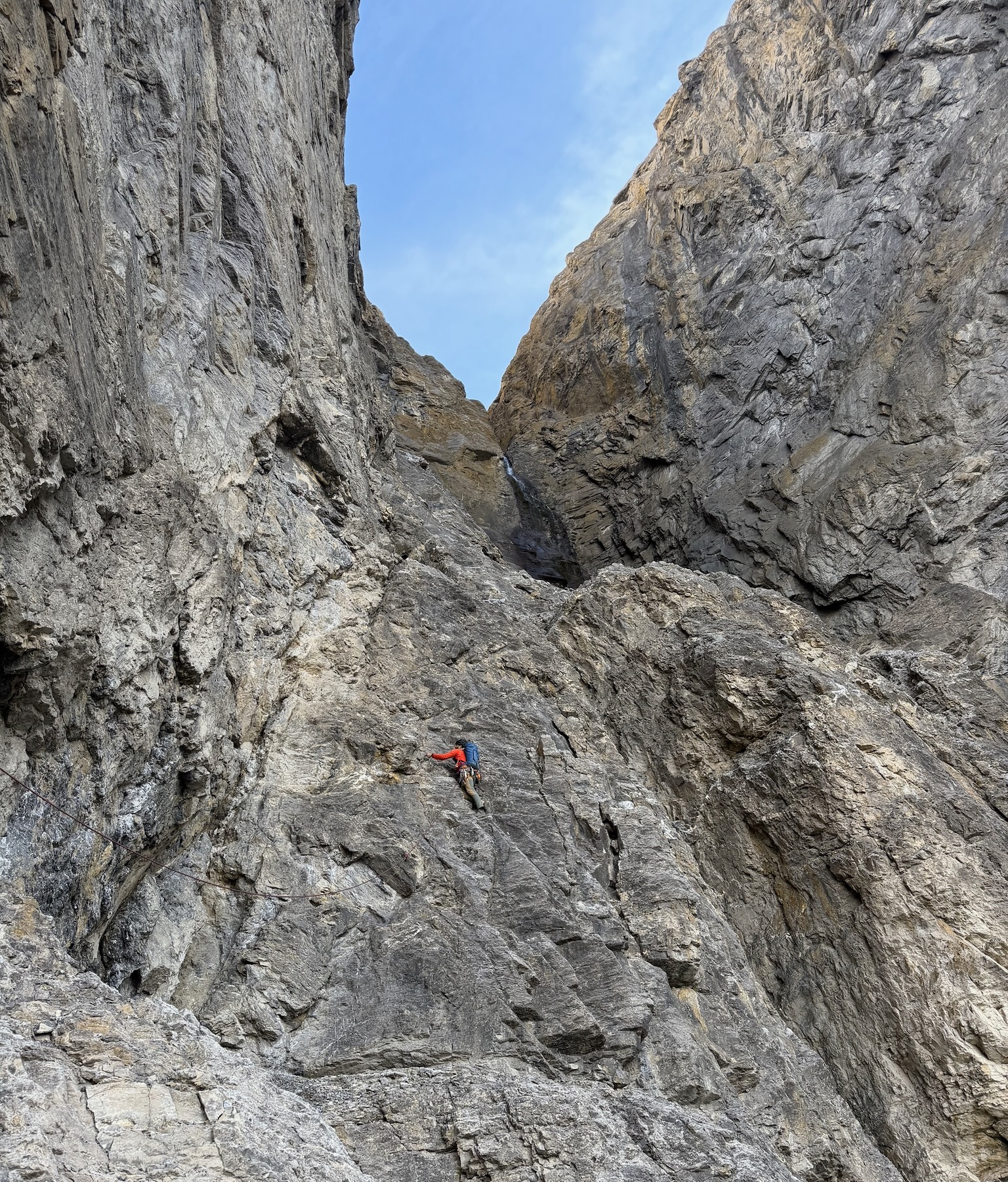
We wanted to leave behind something we could actually encourage people to repeat, a moderate alpine line with moderate protection in a next-level setting. It has a distinctly alpine character, but I think ‘Fall Festival’ achieves that.
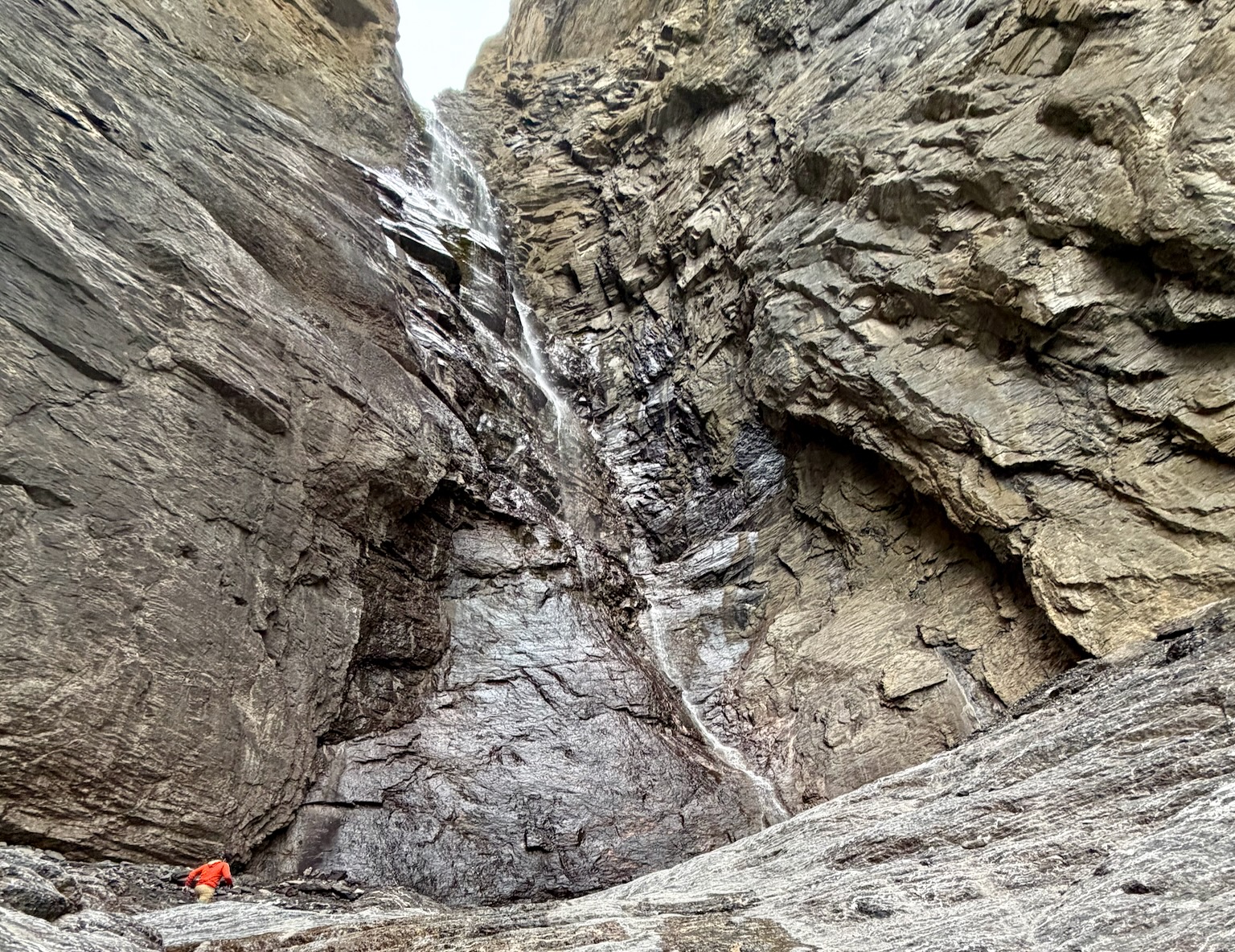
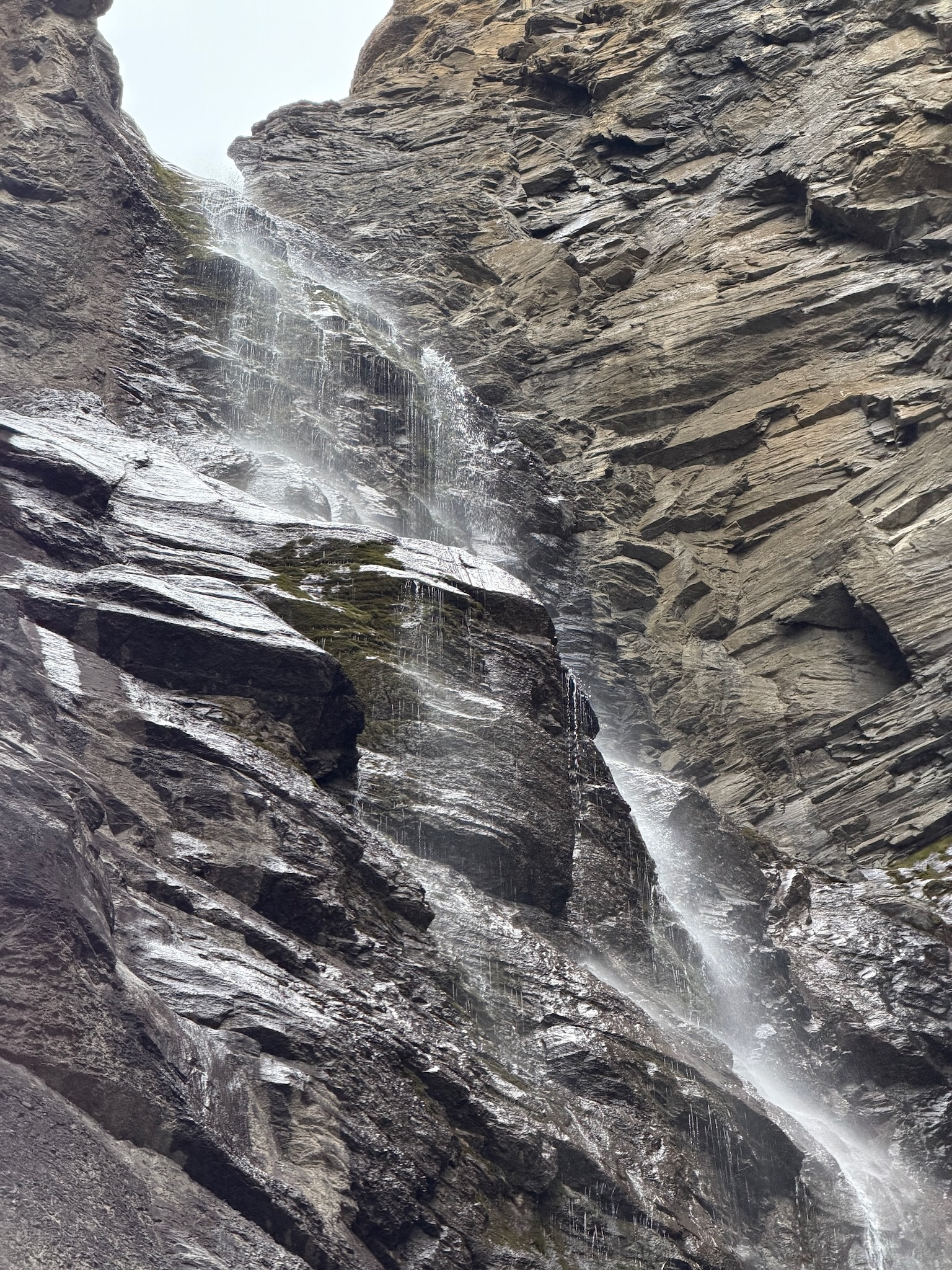
Once again I was awestruck by the waterfall pouring out of a notch and spraying over a hundred meters downward towards us. Looking closely at the moss and algae covered features, I could imagine how the shape of the rock created the characteristic shapes of the waterfall’s frozen counterpart: Steep grooves here, a belay cave there, and an unconsolidated curtain down low.
Things fall apart, at times, literally
The rock didn’t look so good from up close. On rappel on Solar Circus, it looked solid and interesting. Now it looked… interesting.
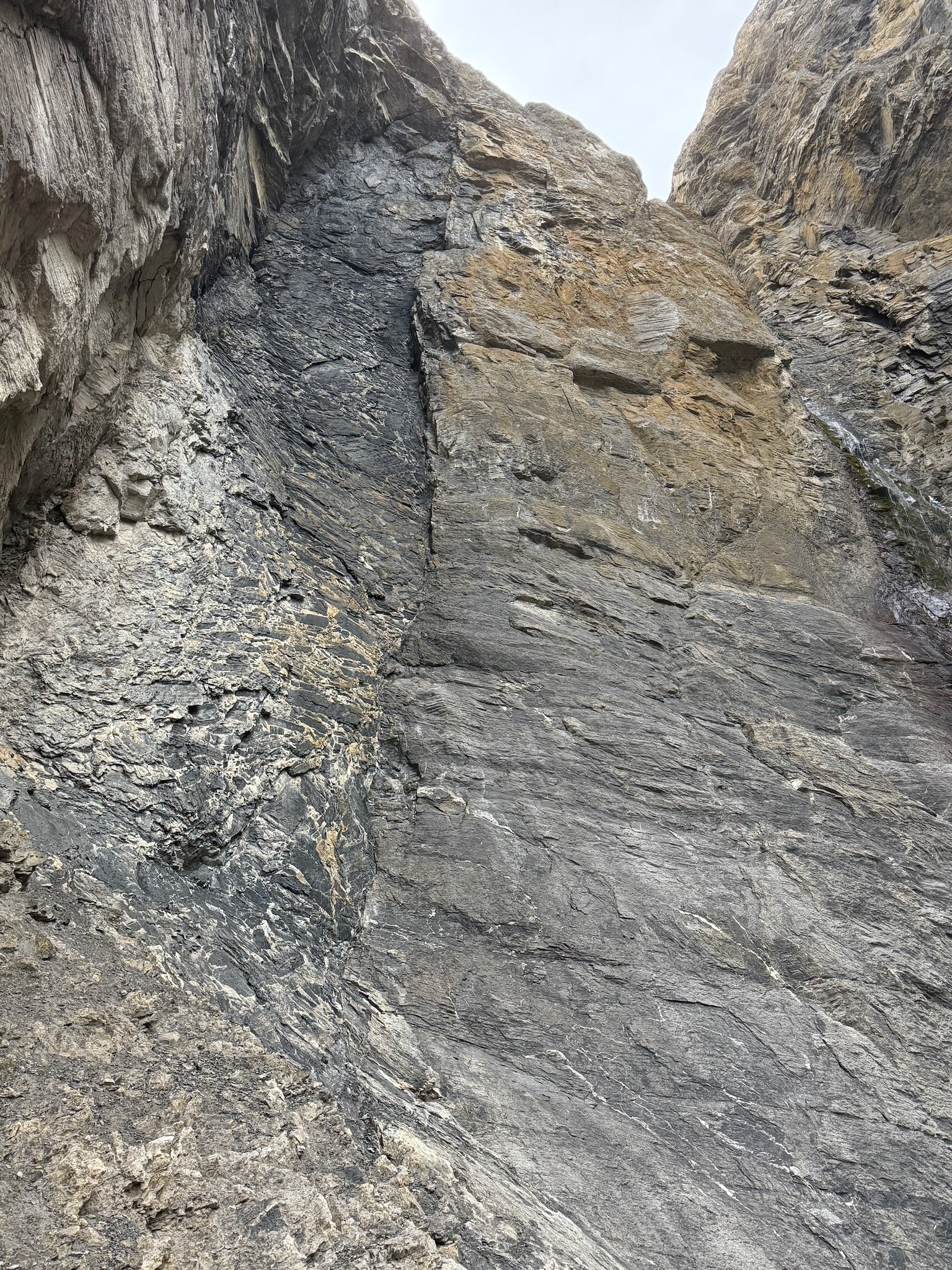
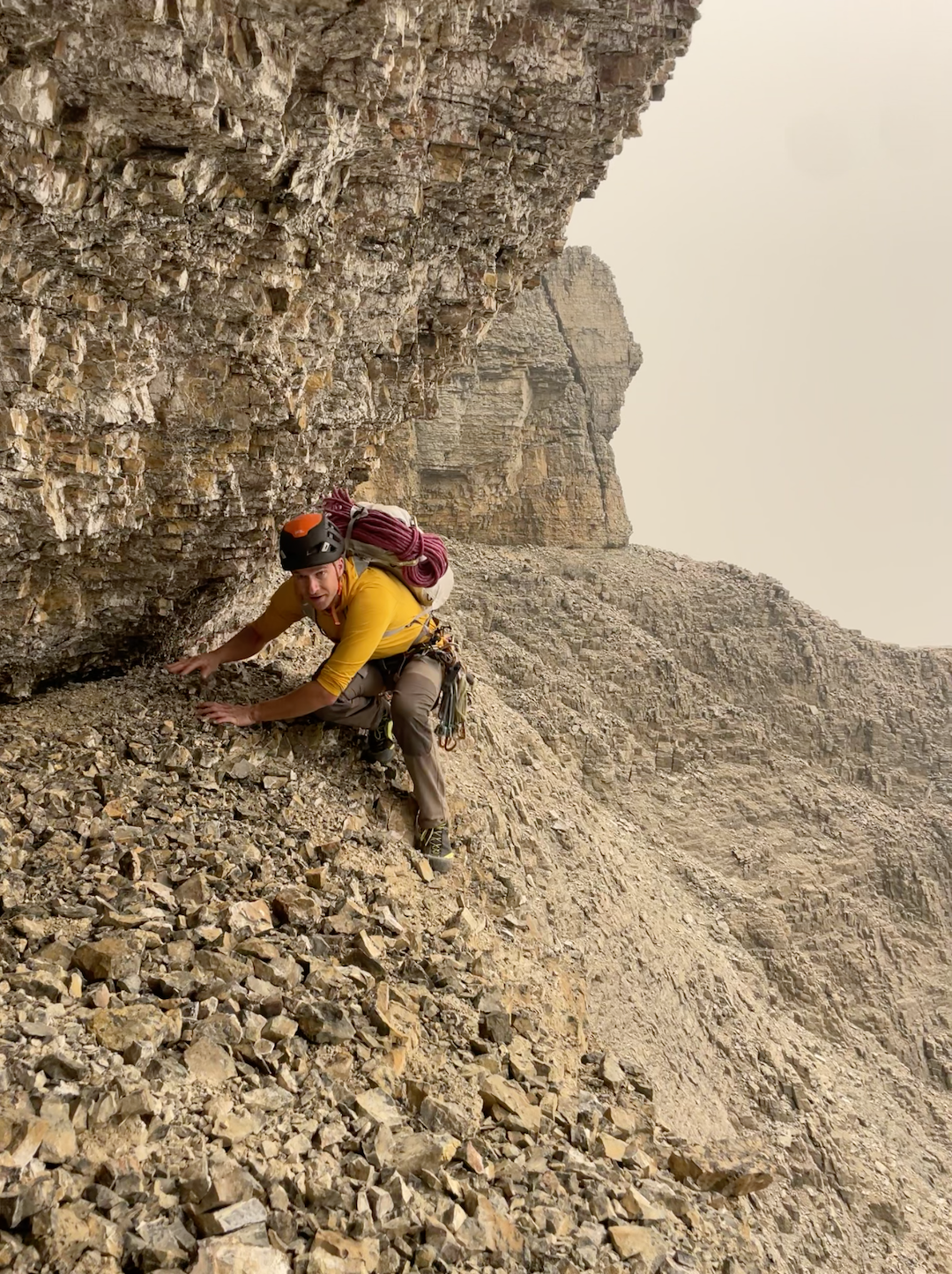
I started up my first pitch in approach shoes. The climbing wasn’t steep, but it was tenuous, especially with the belay subject to rock fall if I looked at a flake wrong. After what felt like a great distance, I placed my first bolt, hanging onto the rock with one hand and operating the drill and tools with the other. I continued up a sensible distance, and reached for my drill to place another. Nick chimed in that if I kept this spacing, I’d run out of bolts far before the top. And he was right. I tiptoed on, and a tone was set: This was not going to be a well protected route. Eventually another bolt went in, I found a series of cams behind questionable flakes, and finally I found myself looking across at an intimidating traverse to the ledge I wanted to belay on. One more protection bolt, a shimmy across thin edges, and I established another bolted anchor and brought Nick up to join me.
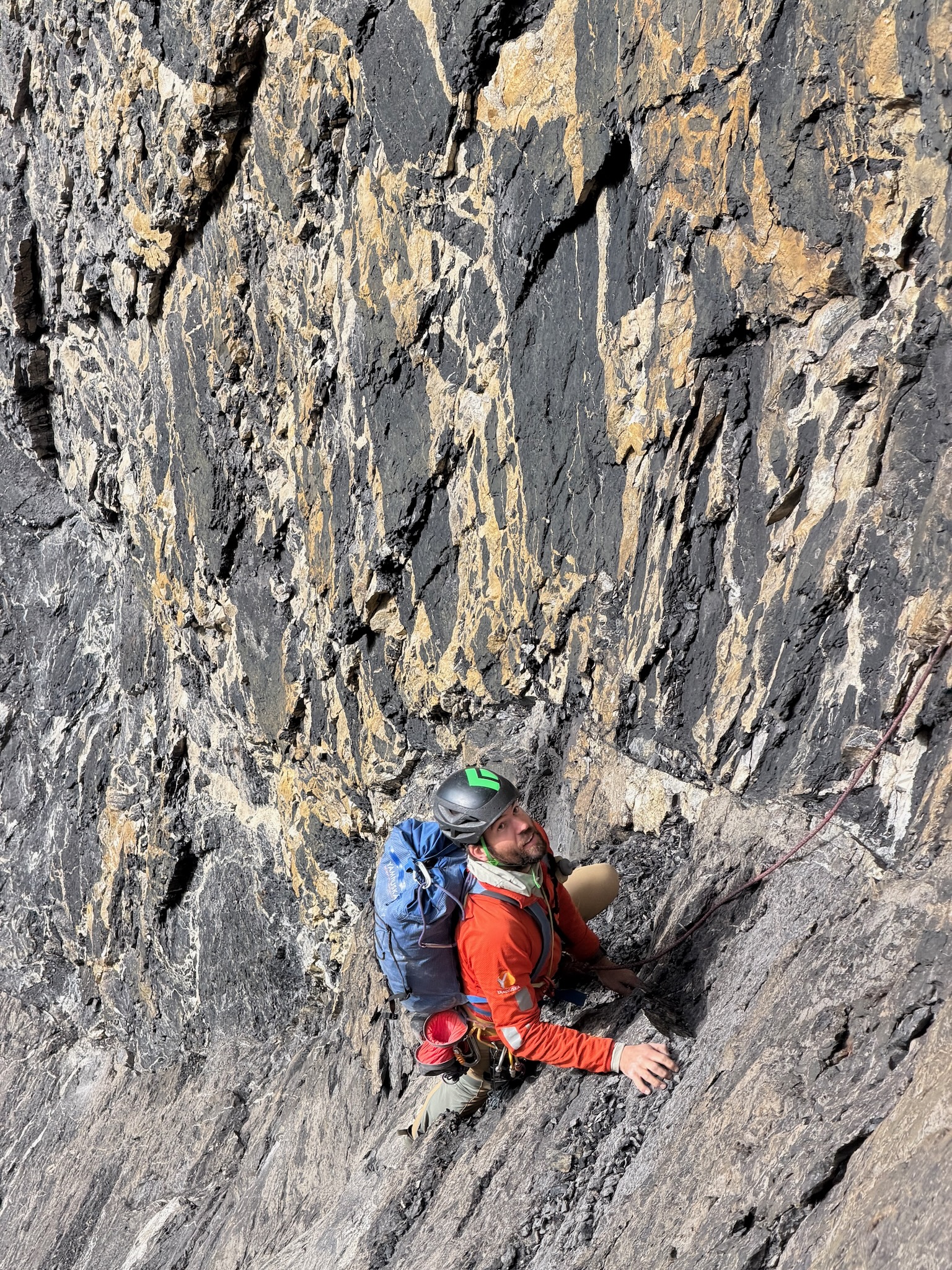
The second pitch seemed like it would be the crux. We were properly in the main dihedral now, and the climbing steepened significantly. My rock shoes went on, and my movement became very slow and methodical. Every hold was thoroughly tested, but never fully trusted. I climbed in a manner where I could potentially catch myself, even if a hold did break. And one did. A foot sheared off as I shifted my weight to move upward. No matter, I had three more points on the rock. After an initial bolt, the corner actually took gear and became enjoyable. I plugged in as much protection as I could, which was the right call. Nick was able to remove one nut simply by yanking on it and destroying the rock it was placed in.
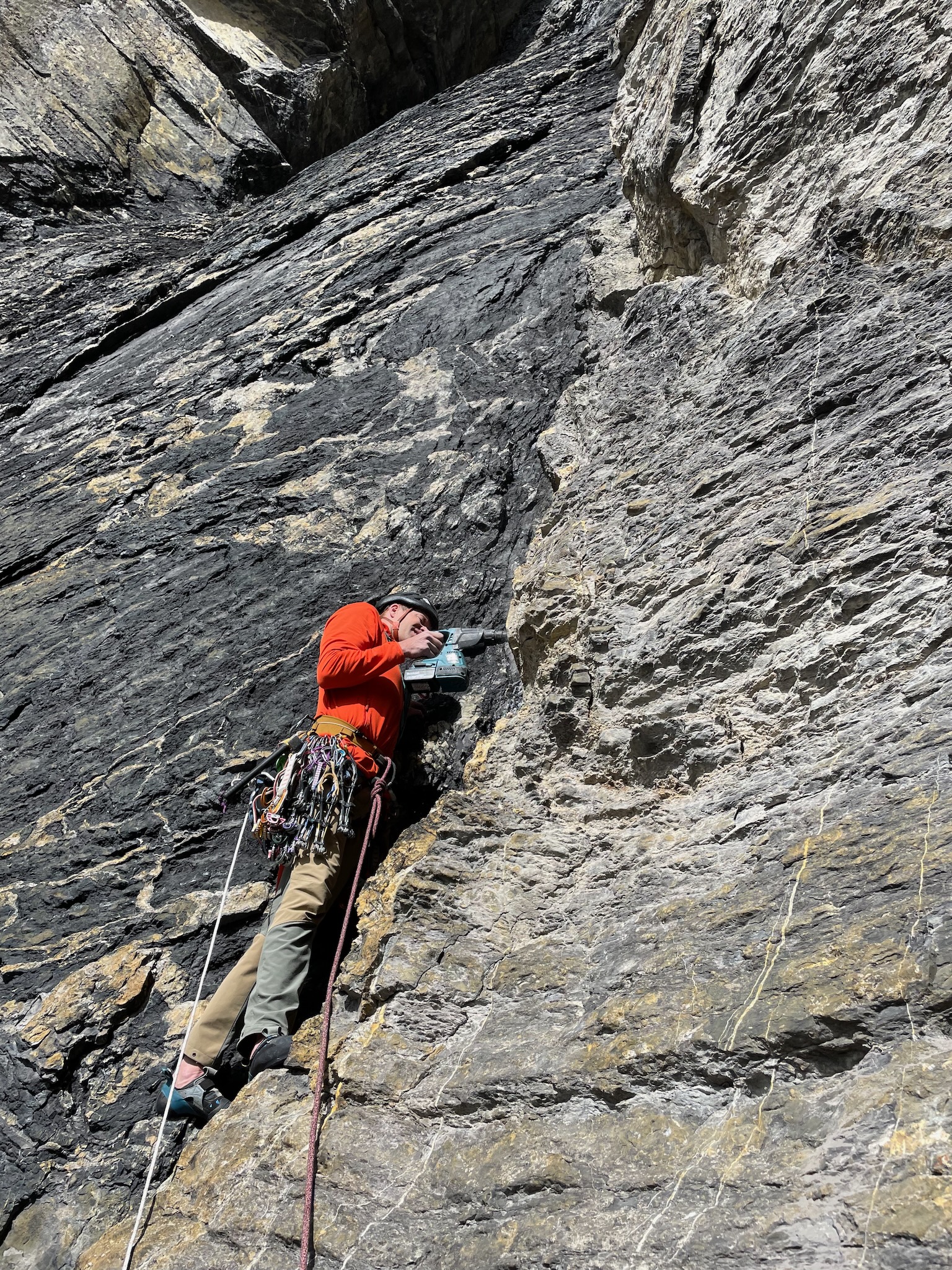
As I got high in the dihedral, my next belay ledge in sight, the rock went from bad to unforgivable. The black precipitate that cemented chunks of what seemed to be limestone and quartz together covered my hands, making me feel like a coal miner. Above, no such chunks of real rock were present any longer. It was simply powdery black ‘coal’. I had a choice between slab-friction-on-coal and pulling rightward around a steep arete. A protection bolt and a single delicate foothold gave me just enough courage to poke my nose around onto the steep face. I delicately established myself amongst the rock pinnacles above. Top of mind was the conversations I’d been having all summer about ropes cutting on sharp edges. A fall with the rope wrapped around an arete is the classic example of this hazard, and I placed another bolt on the face to prevent it. I cautiously moved up the pinnacles, acutely aware that Nick was right below, should I send one tumbling. I found my way to a generous belay ledge, and breathed a sigh of relief.
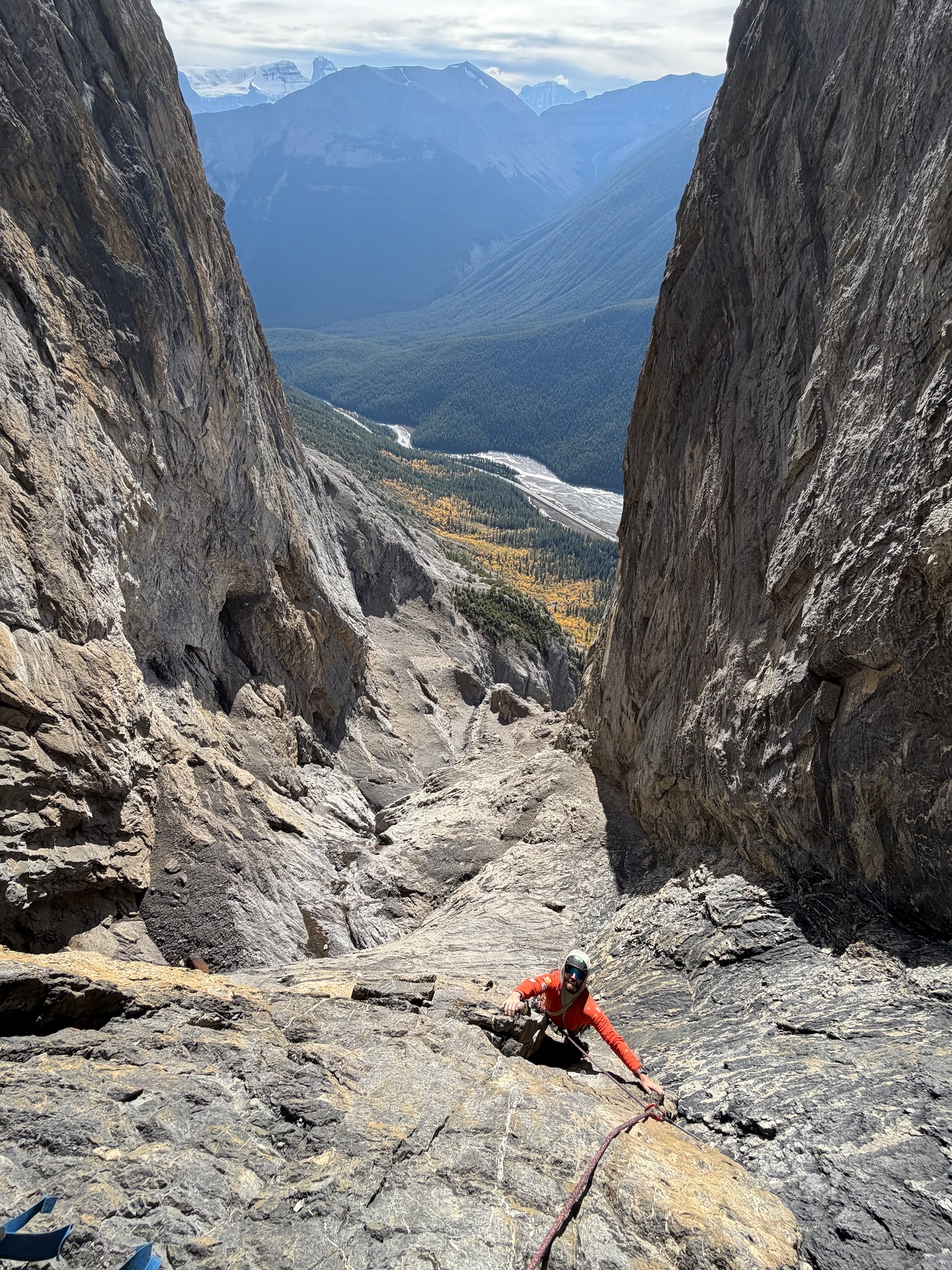
The top of the wall is guarded by a substantial overhang of unwelcoming rock. From below, I’d seen a plausible weakness that skirted much of the overhang. It was time to tackle it. More delicate climbing led me to an undercut stance just below the weakness. I placed two cams, reached up, and just could not find a confidence-inspiring version of the sequence. I squatted back down into an awkward ball, trying to find a position that let me shake out on an undercling. I popped up again, didn’t find what I wanted, back down, and up, like a ground squirrel. Simultaneously wanting to hide, and wanting to be aware of the predators that lurked beyond. Many bobs later, I found what I wanted, and a few thuggy moves led past the bulge.
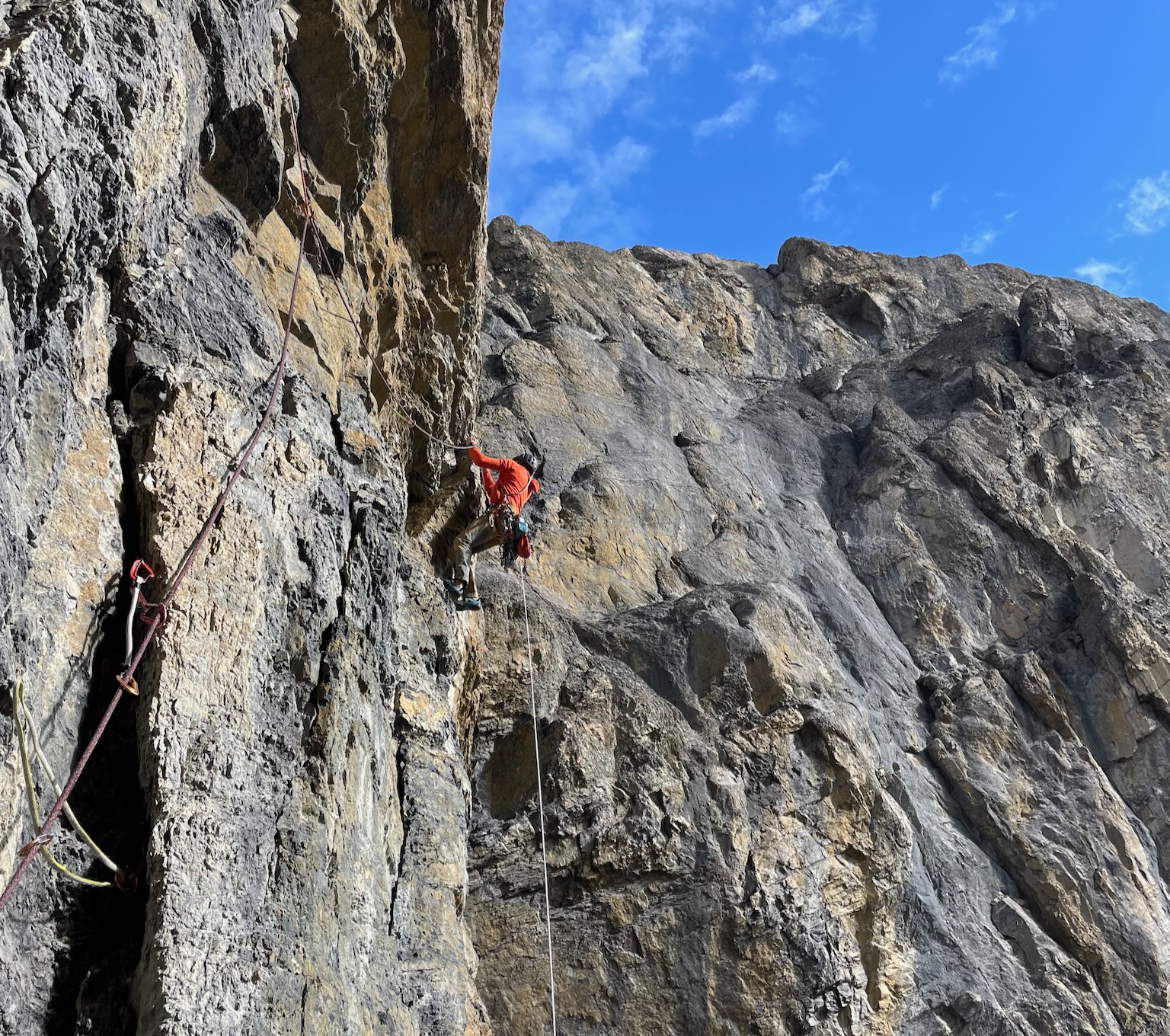
The top of the wall was in sight. I’d contracted an incurable pump during my shake-and-bob session, but my headspace was still intact and I tiptoed up flaky but lower angle ground above, eventually reaching the top of the wall. One more easy traverse pitch led us properly into the bowl above Polar Circus. There were gorgeous waterfalls, a beautiful headwall high above, and tranquil pools of water leading down into the notch. And many, many avalanche start zones. Bare of snow today, but waiting to threaten climbers in a few short months.
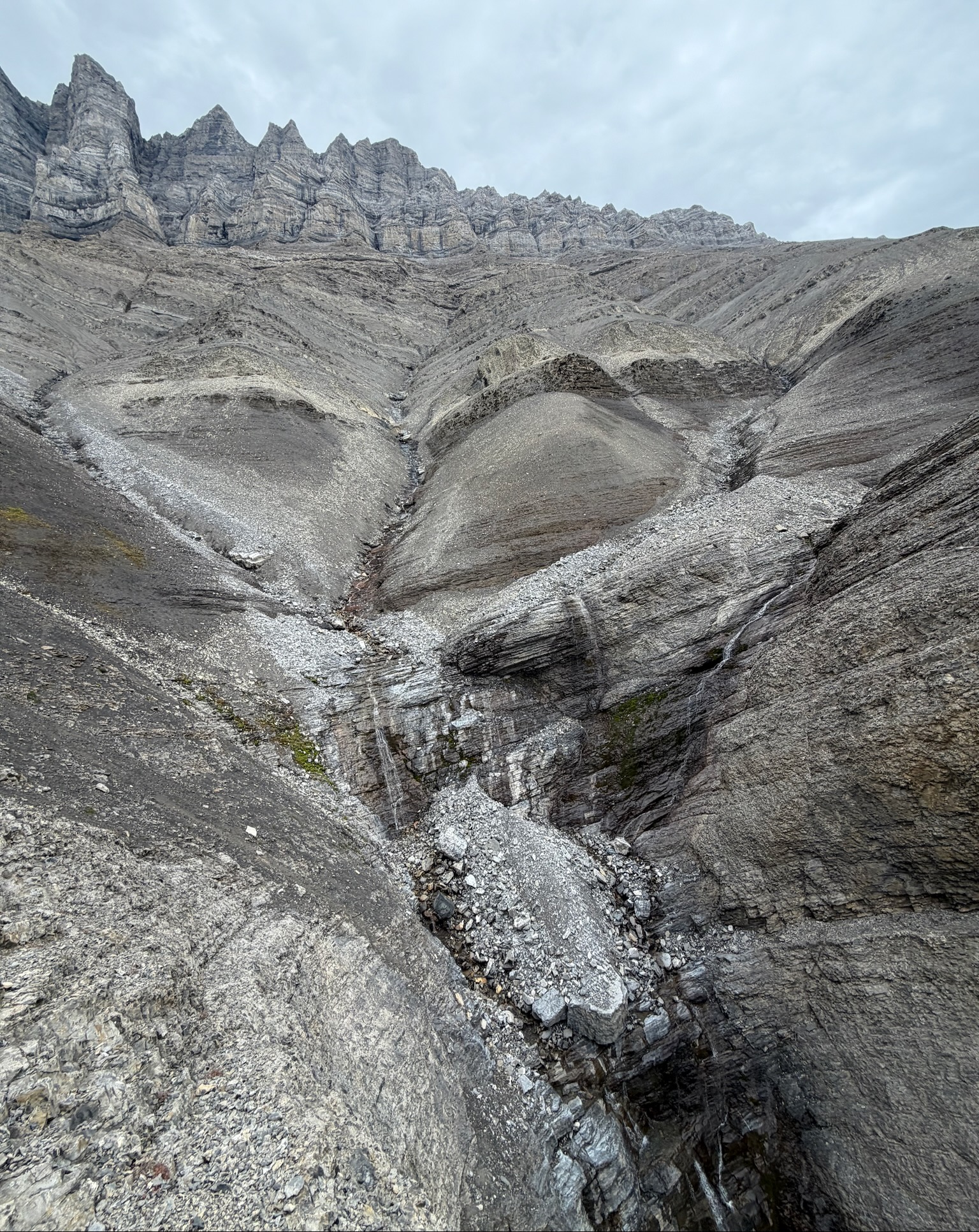
Our descent was beautiful and smooth. First down Brecia, then Fall Festival, and finally Solar Delight. In the end, we placed all 38 of our bolts during a day that lasted ‘only’ thirteen hours.
Adversity helps us know ourselves
I’m proud of my work in that terrain. I sent onsight and free, placing bolts while clinging to the wall, and resisting the temptation to sit on them once they went in. The tenuous and committed climbing wore on my mind, but it held up to the challenge. I had a single moment where I felt things were starting to get unreasonable, and I stepped down and got the protection I needed before proceeding on. That moment was reassuring, in that it showed me that I haven’t just shut my mind off to fear and good sense. I have a high bar for how much I’m willing to push things, but that bar is calibrated and present, and I do notice when I bump my head against it.
It was a funny combination. I do think Fall Festival is worthy of repeats, and could be greatly enjoyed as a moderate but very ‘alpiney’ objective in a lovely setting. And then there’s Breccia. I won’t do that again. Maybe someone else will, but it seems more likely that it will live on only as a memory in my head, and as a shiny glint of metal to confuse winter patrons of Polar Circus.
Fall Festival Route Description
Nick will be putting together a writeup for Fall Festival, which I’ll link here once it’s ready.
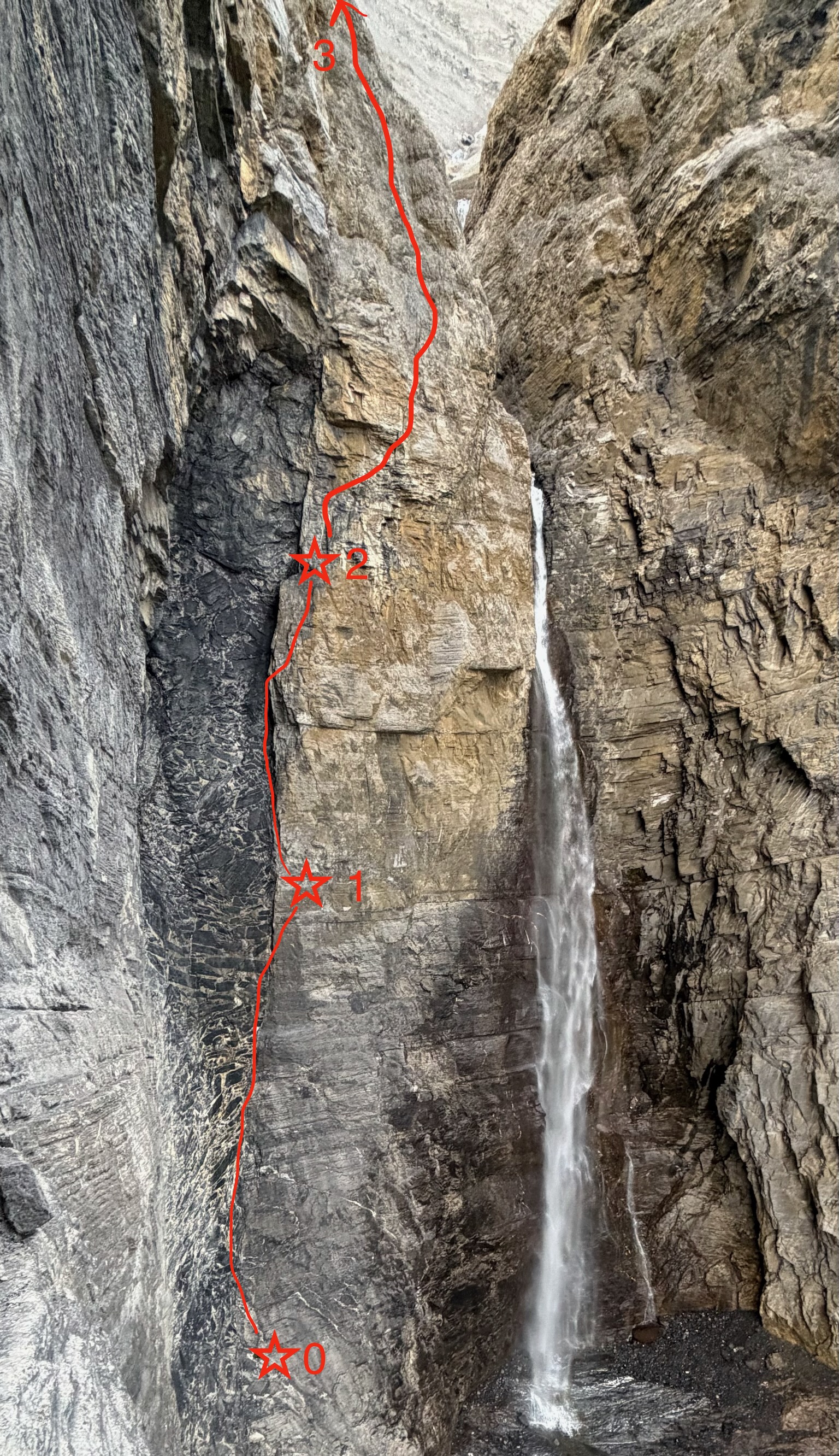
Route Description
Breccia (Betcha) Won’t Do That Again
Cirrus Mountain, Alberta
5.10R 105m
Greg Barrett, Nick Baggaley
September 24, 2026
This route climbs a ‘breccia’ beside the final tier of the classic ice climb Polar Circus. A breccia is a geological formation created when a fracture in the rock is filled in with a combination of large chunks of said rock and mineral-bearing groundwater. The minerals eventually cement the rock in place, and then millions of years later, a foolish climber thinks it looks cool and optimistically hopes it won’t be a pile of choss.
This route is runout, featuring tenuous climbing on poor rock with dubious protection. A smattering of bolts, placed during the first ascent from free stances, keep things from getting totally silly.
The setting beside the Polar Circus waterfall is lovely, the breccia is geologically interesting, and at times the climbing and position are great. But on the whole, this is a route that will only interest someone who is seeking out a demanding test of their runout choss wrangling, akin to what ‘Freak Out’ on Yamnuska must have offered before being cleaned by generations of traffic.
Approach
Climb ‘Solar Delight’ P1-3 followed by ‘Fall Festival’ to gain the bowl below the final tier of Polar Circus. The Breccia is obvious on the back left wall. The route climbs its right flank. Scramble up towards this point, aiming for a large pod to belay the first pitch from (two bolts).
Start of climbing (52.13964, -116.98590)
Ascent
P1, 5.7R, 35m Climb lower angle but loose terrain, passing a couple bolts. Beware of rockfall threatening the belay early in the pitch. At around 30-35m, a final bolt steers you rightward onto the face, leading to a two-bolt belay on a ledge.
P2, 5.8R, 30m Step back left into the dihedral. Stem upward with some bolts and, at times, reasonable trad protection. Eventually, the breccia degrades into what can best be described as powdered coal. Escape by clipping a bolt and pulling right around the arete. Clip another bolt and move tenuously up rock pinnacles to a large ledge.
P3, 5.10R, 50m This pitch has a well protected 5.10 crux, but 5.8R climbing elsewhere. Step right on the ledge to gain a steep crack. Follow this for a few meters to its top. Diagonal up and right past two bolts, aiming for a steep weakness. Good cams protect crux moves through a bulge. Above, trend generally leftwards past more bolts and occasional gear on at-times enjoyable edges. Head towards a solid pinnacle at the top of the wall, with a clearly visible ring-bolt anchor.
Optional: P4, 4th, 35m A nice view of the bowls and waterfalls above Polar Circus can be gained by doing one more easy ‘pitch’. From the belay, head straight out across loose terrain and up an easy notch. Past this point, stretch the rope out to find a couple large cams to back up a seated belay. Bring your partner over and explore the area as you wish. To return to the top of P3, scramble up the ridge a short distance to find a two-bolt-and-cord rappel anchor.
Descent
Rappel the route. It’s best to use all three ring stations. A double rope rappel from the top of P1 gets you way back down into the bowl. Soak up the scenery, then follow the ‘Fall Festival’ and ’Solar Delight’ descents.
Gear
- Your choice of ropes. You need to be able to lead ~50m and rappel ~40m (P3), so a pair of short ropes is viable. However, there are many 35m rappels on ‘Fall Festival’ that work great with a single 70m rope.
- 14 draws, including many alpines
- Single rack .2-3, doubles .3-1
- Medium to large nuts
- You could probably make use of some knifeblades and small angles, but the FA party brought none.
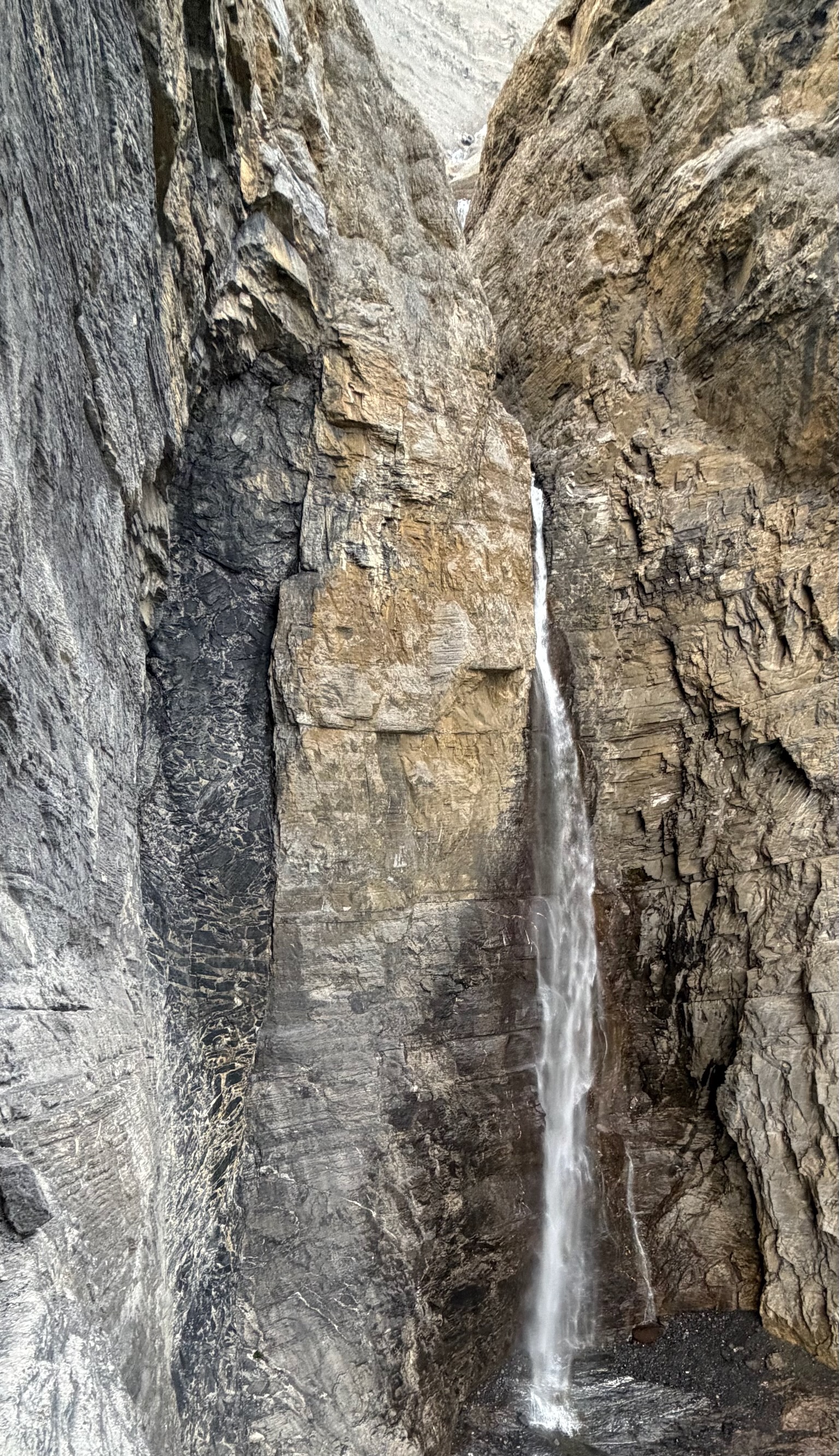
Breccia (Betcha) Won’t Do That Again Route Description and Photo Topo by Greg Barrett is marked CC0 1.0