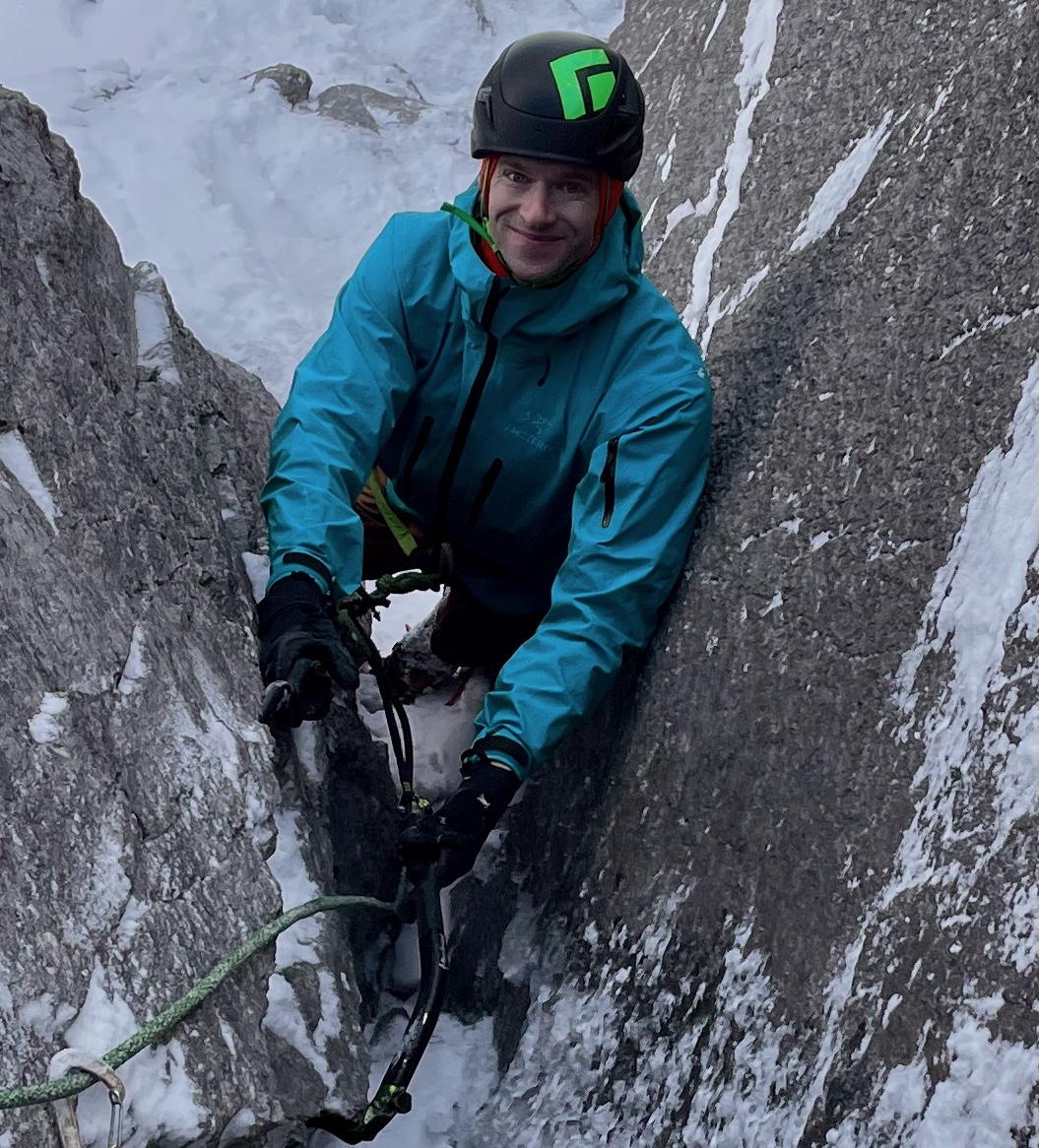
Coming off the high of a resounding success on Keep on Stemming, I needed more exploratory rock missions. Gavin was a bit doubtful, pointing to colder temps and shorter days. Eventually, I persuaded him to take a crack at the line he had eyed up originally before we established Solar Circus at the start of the season.
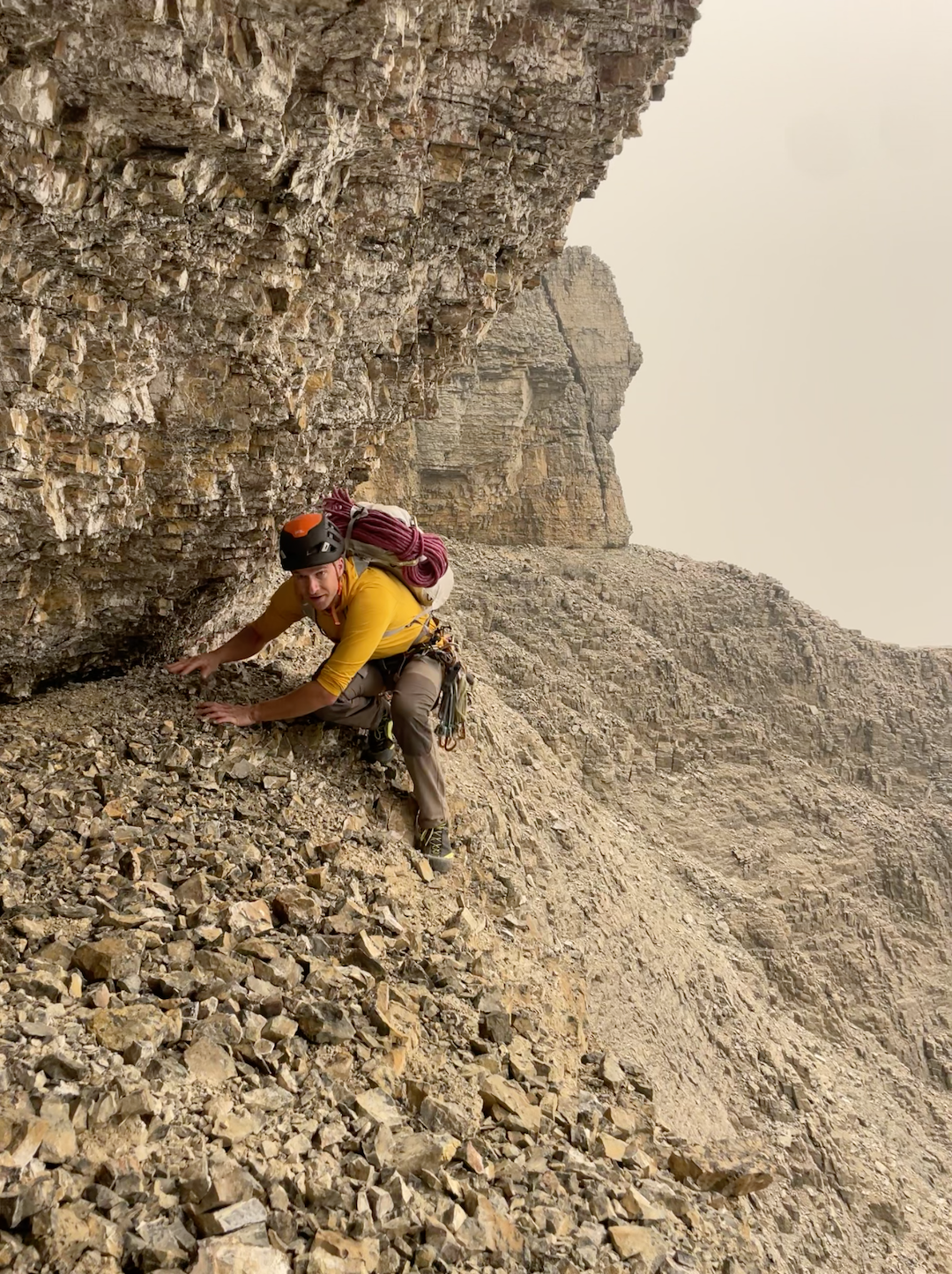
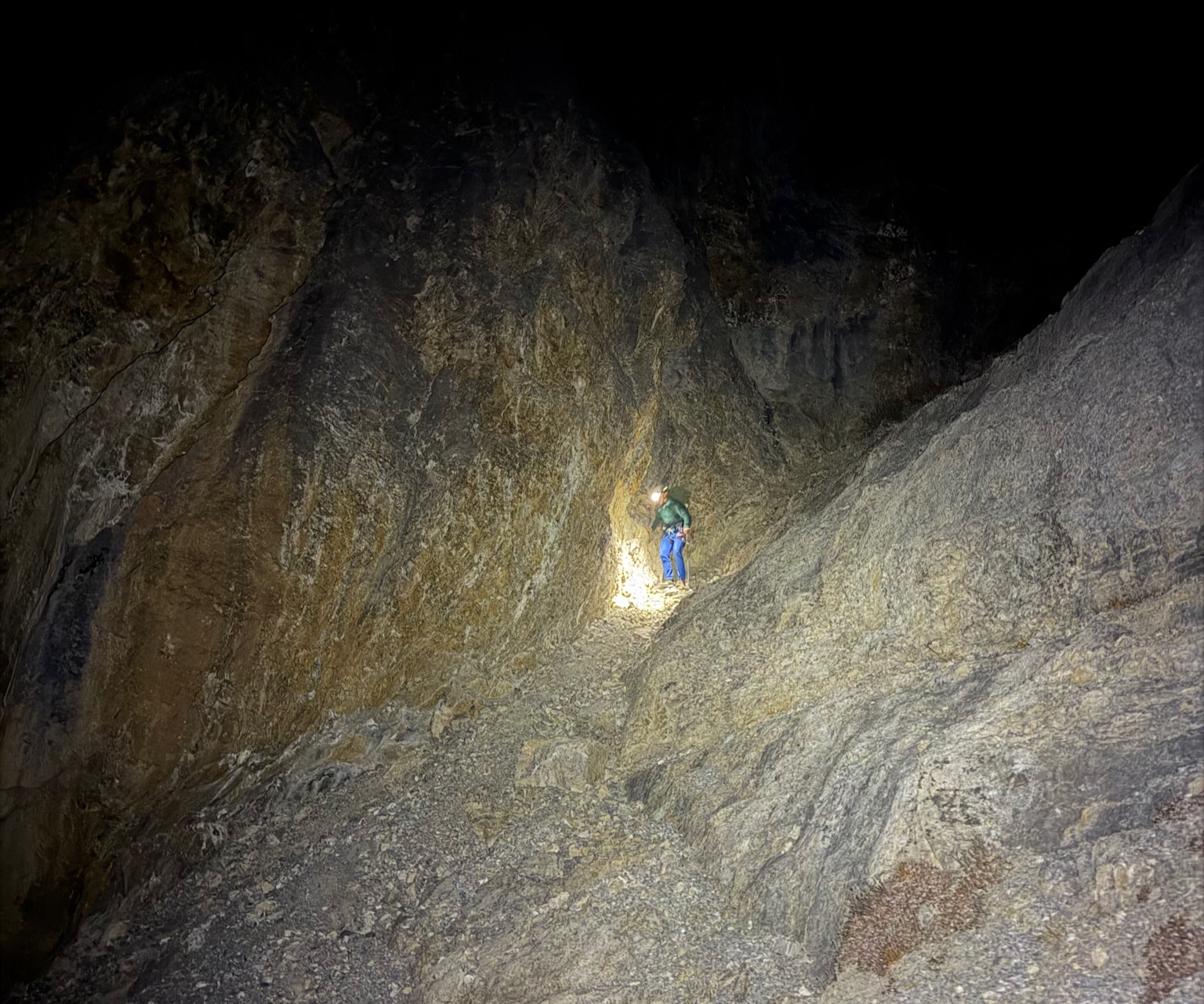
We left town at 5:30, started hiking by 8:00, and had ropes out by 8:30. The first three pitches of Solar Delight fell quickly, and we raced through our scramble past The Pencil. By 11 we were at the base of our corner system. Eight hours of daylight left, perhaps eight pitches of climbing. How bad could it be? In my typical fashion, I declared that the terrain actually looked much easier and shorter than expected. I was very wrong.
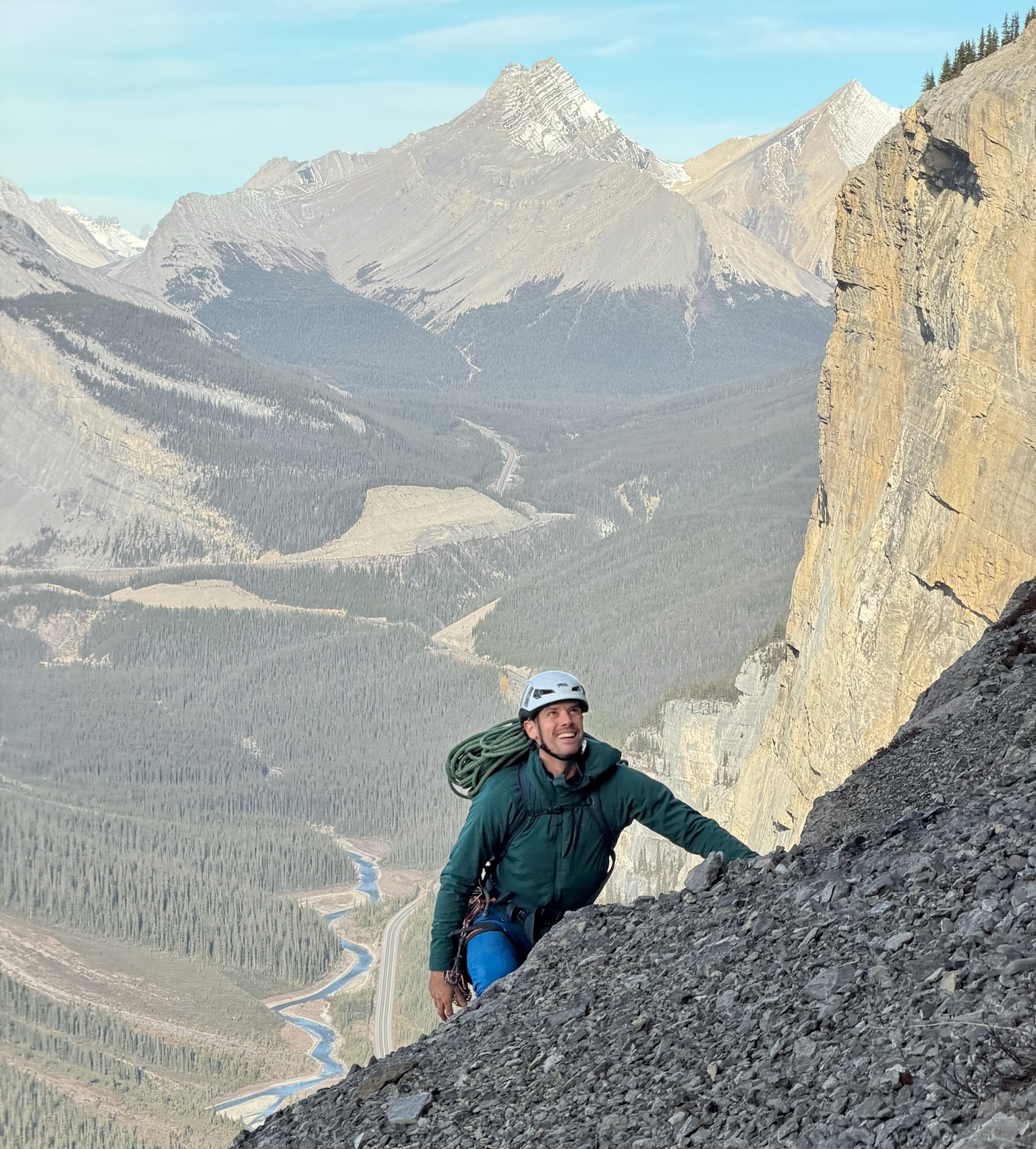
I was very wrong
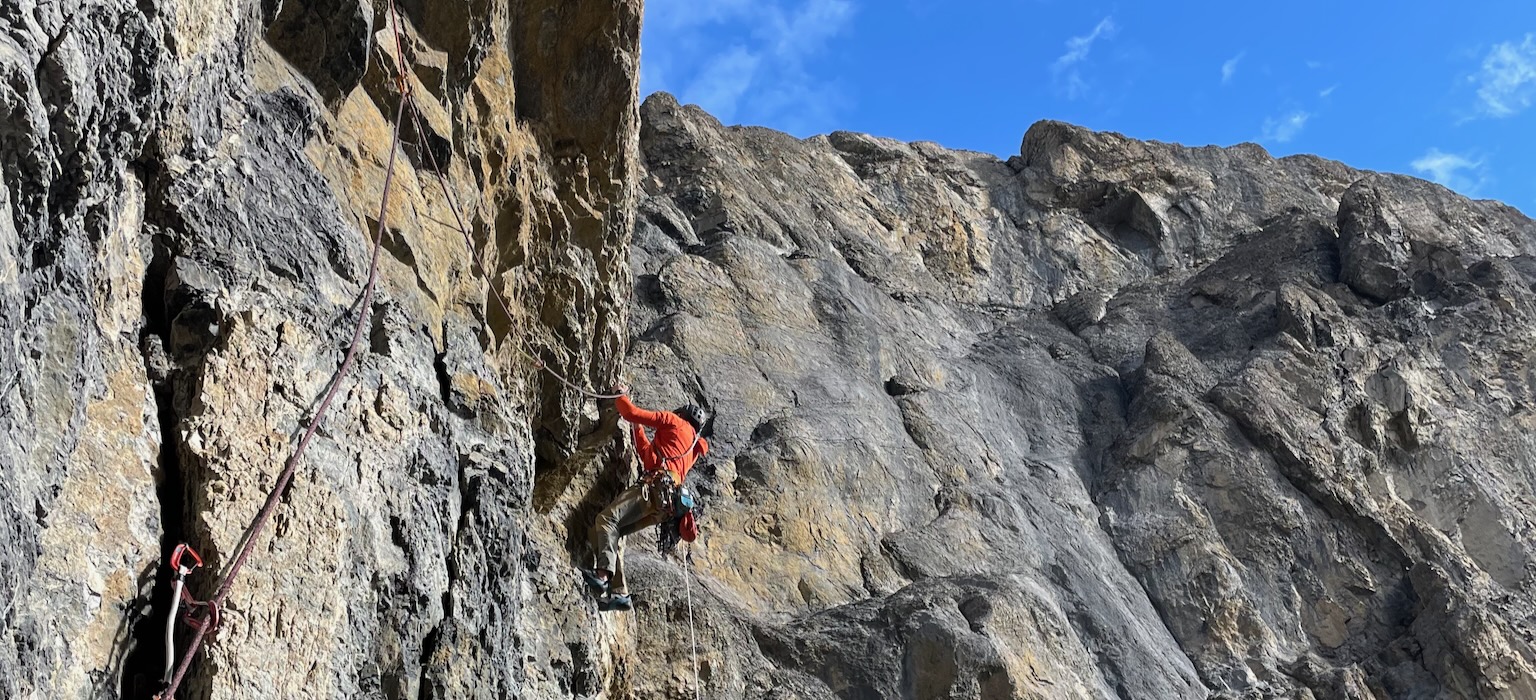
We thought the first pitch was the biggest question mark of the day, since it had the blankest stretch of rock. On the whole, it turned out better than expected, requiring only three bolts to protect excellent face climbing. It didn’t go quickly, but I put it down.
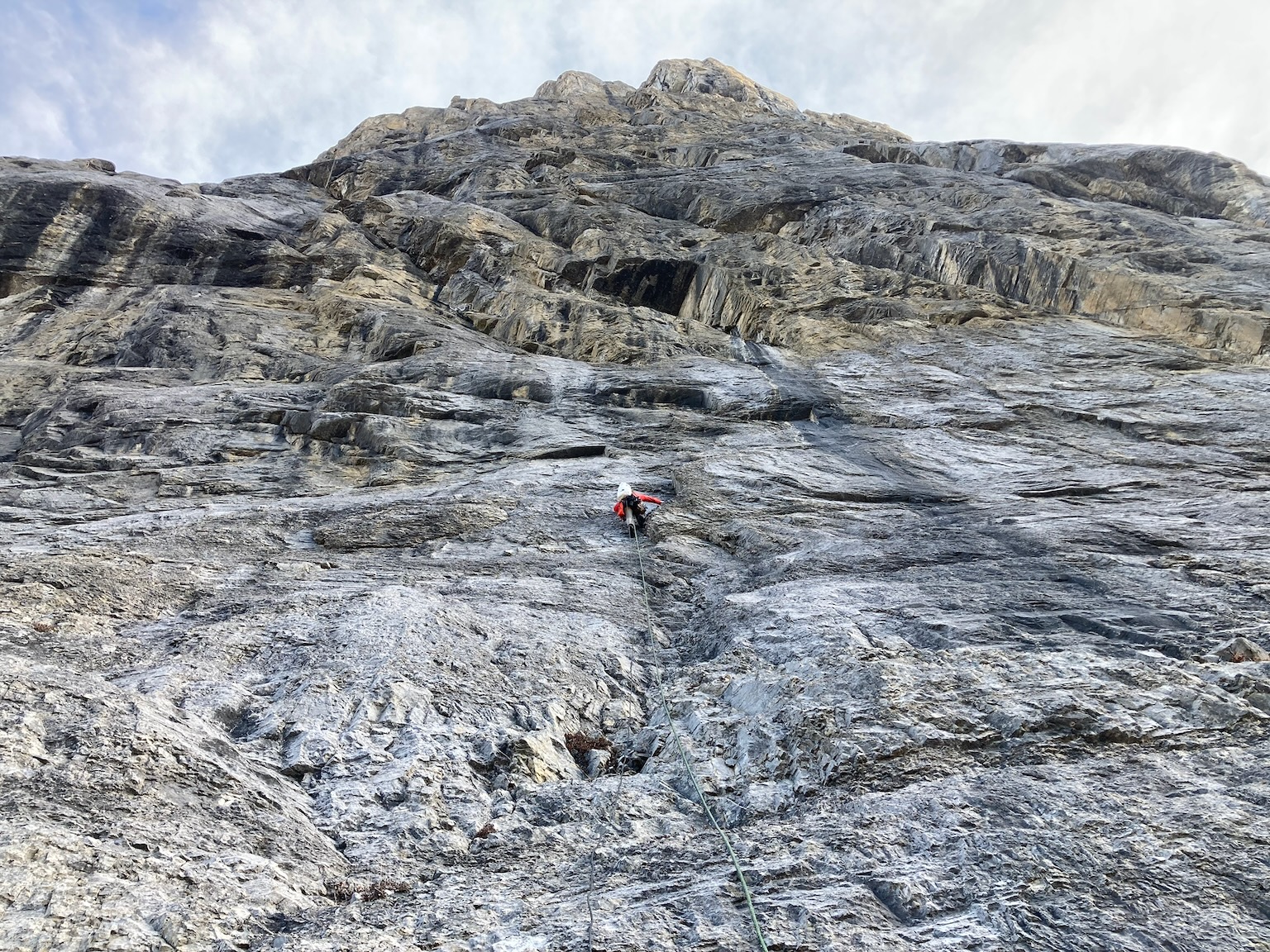
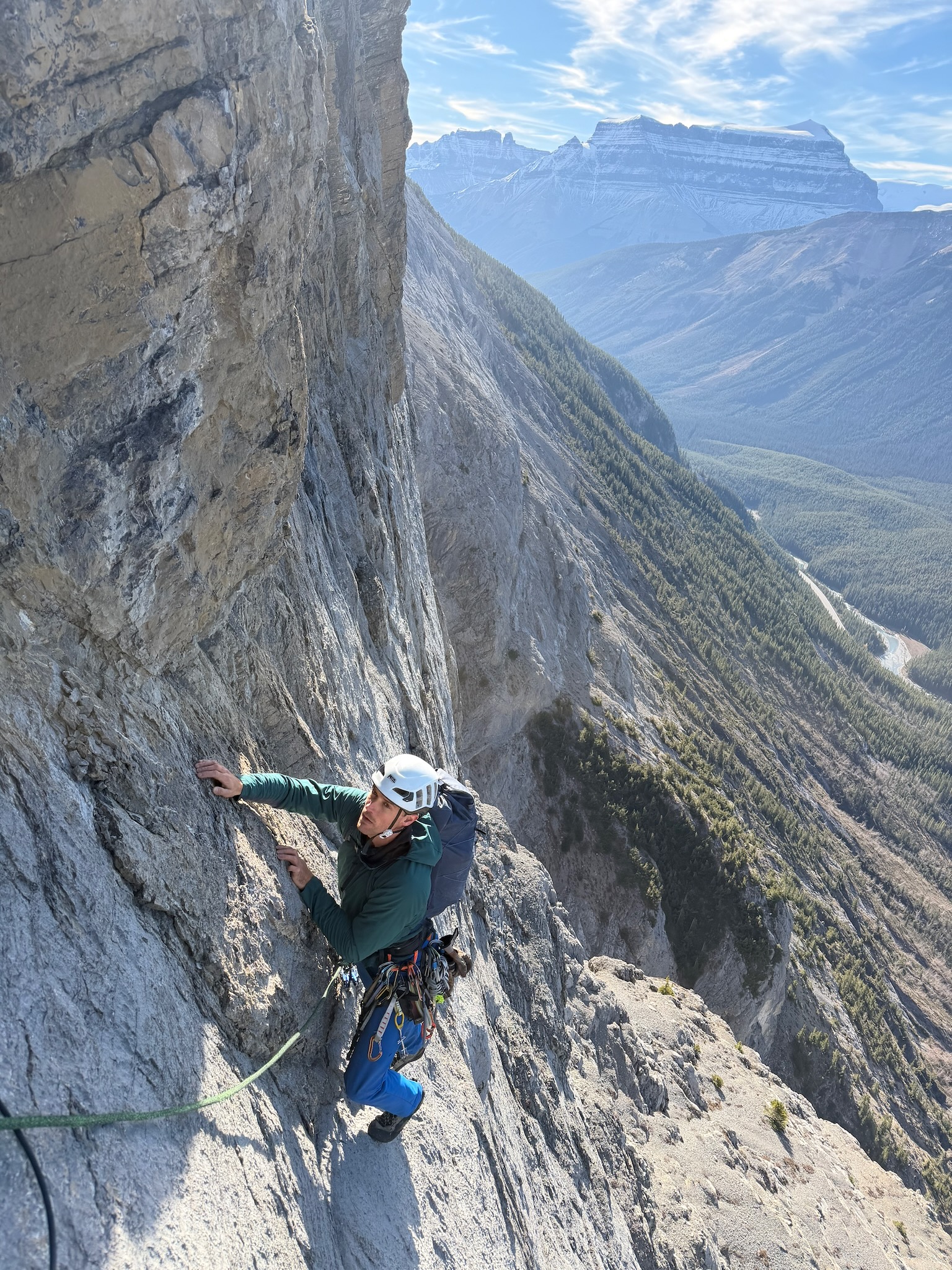
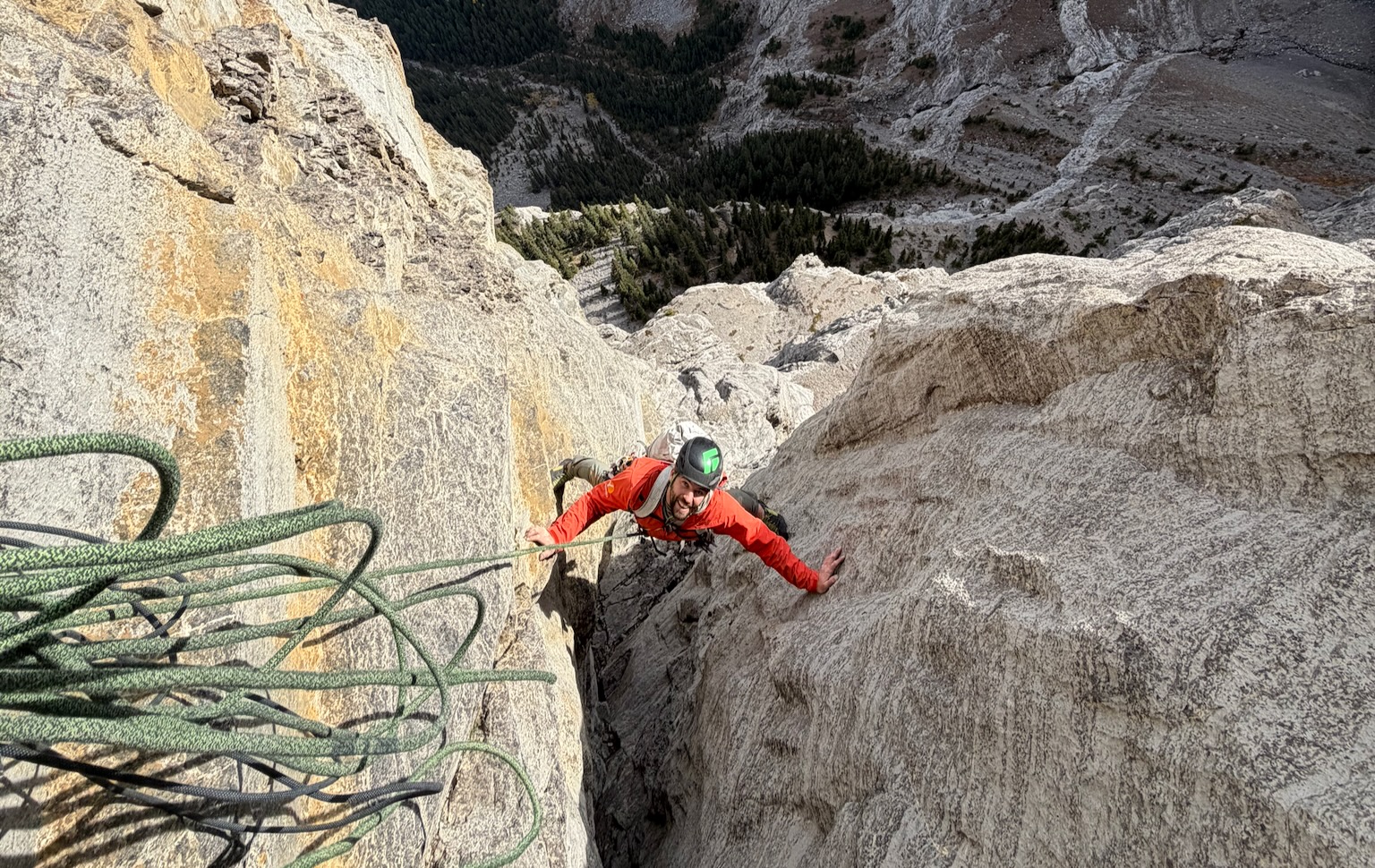
I hung at the pitch two belay, a bit unsure about Gavin’s slower-than-usual pace. It looked tricky, but we’d need to go quicker to get the route done in time. Eventually it was my turn to follow, and I was horrified even on top-rope. The climbing was steeper and more technical than it looked, the gear more questionable, and holds broke off the wall if you so much as looked at them funny. He stated that he was shell-shocked, and I couldn’t blame him.
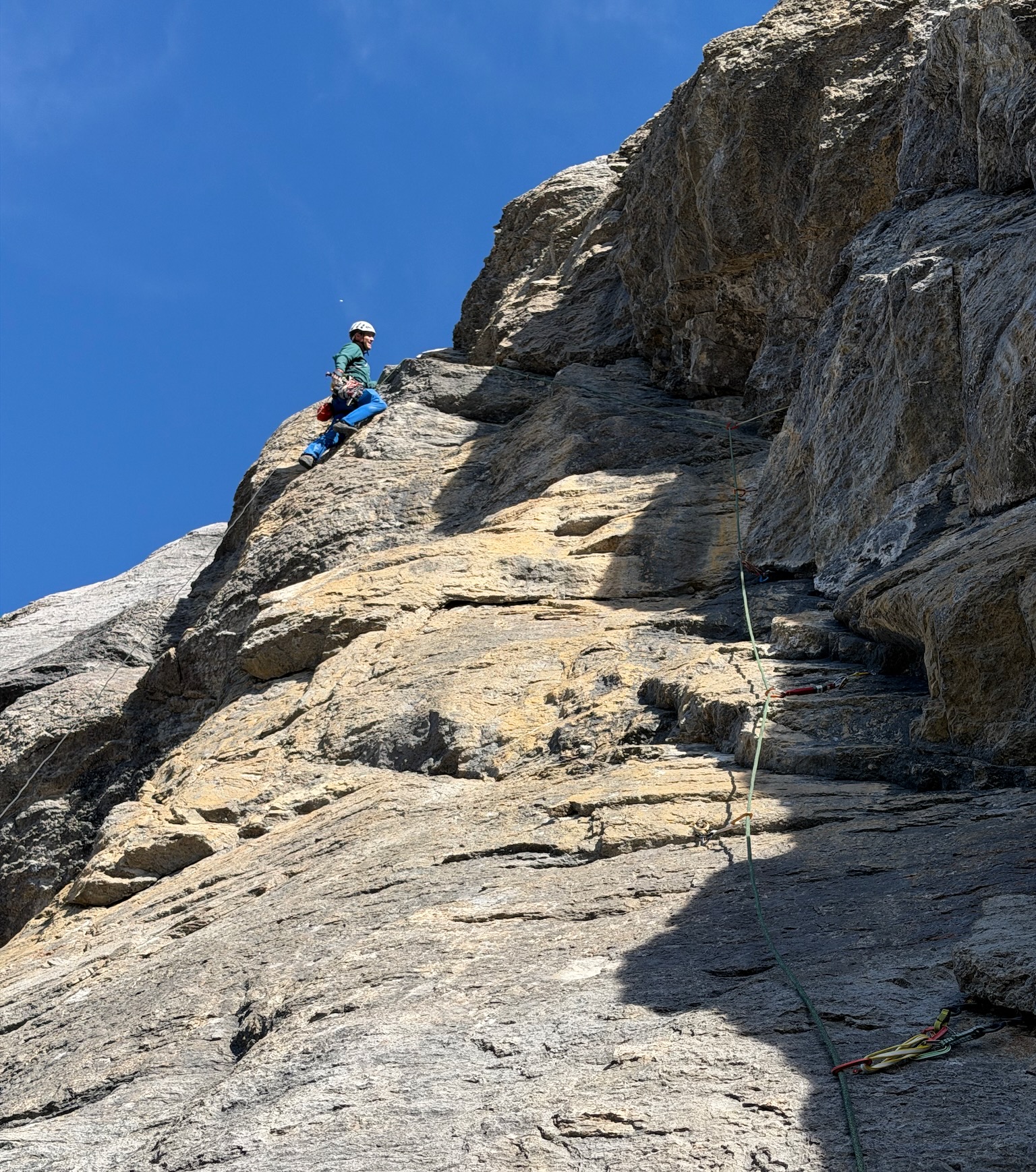
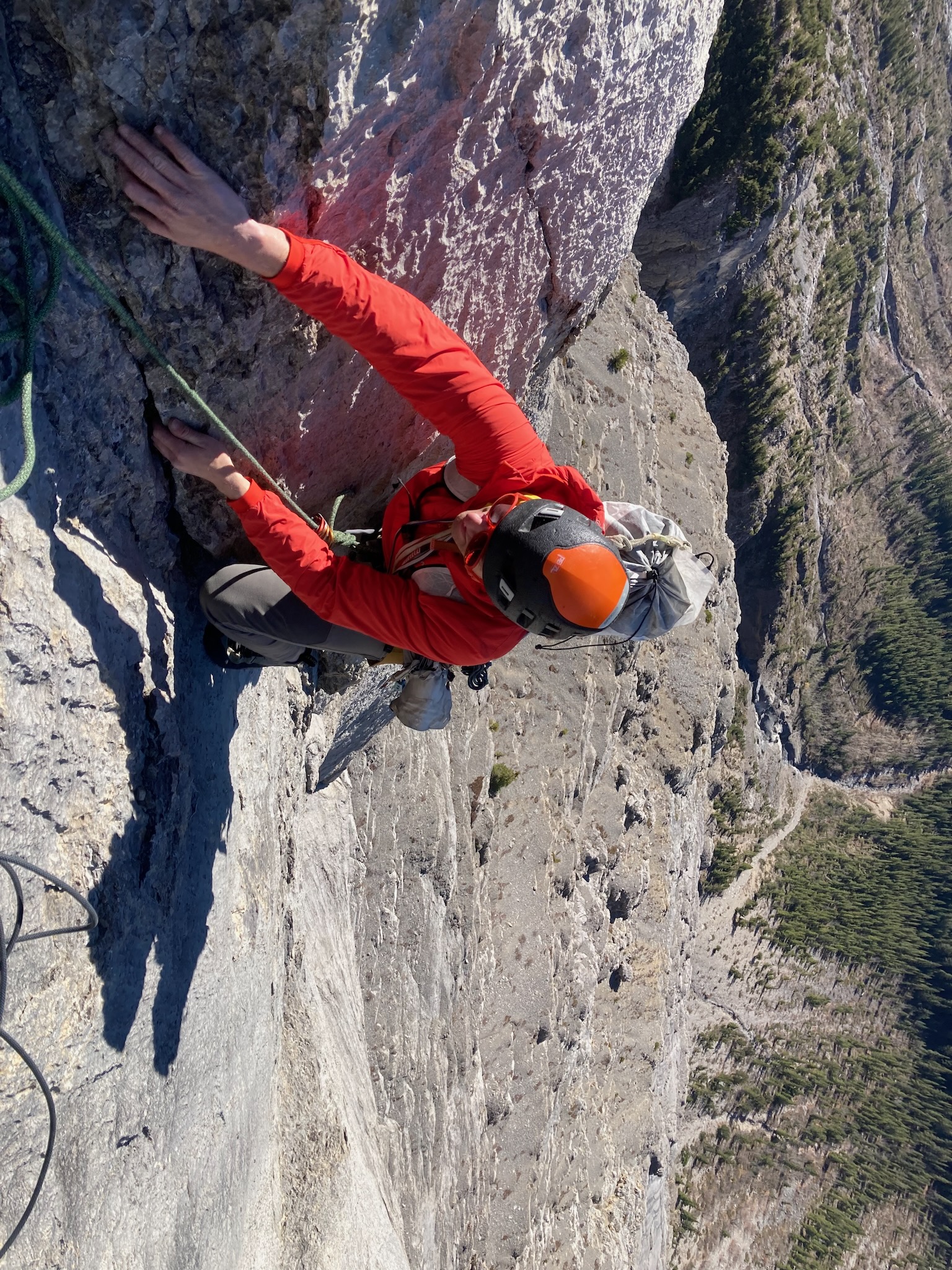
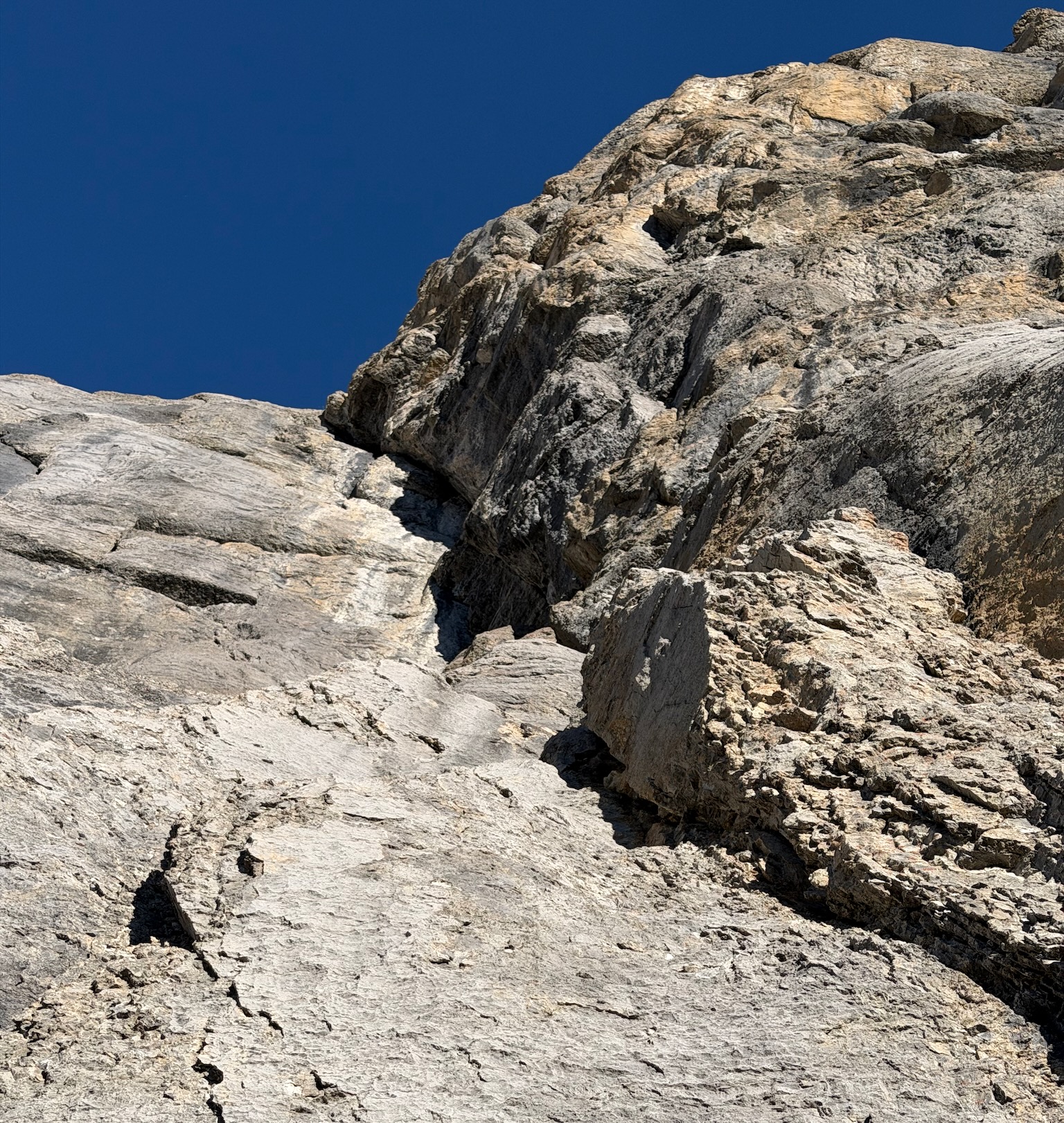
Pitch three looked more moderate from below, but it wasn’t. I worked hard up a steep corner, fighting for gear where I could. Eventually the angle eased as I traversed below a roof. But more steep moves followed, gaining the next gash in the rock. I looked down at my hips to see a scant few cams and a couple tiny nuts left. The only plausible belay required me to stretch the rope out to a small ledge above. I worked on, and fought hard to establish the belay, smashing choss out of slots to fit in the few cams I had left. Not quite shell shocked, but certainly worked.
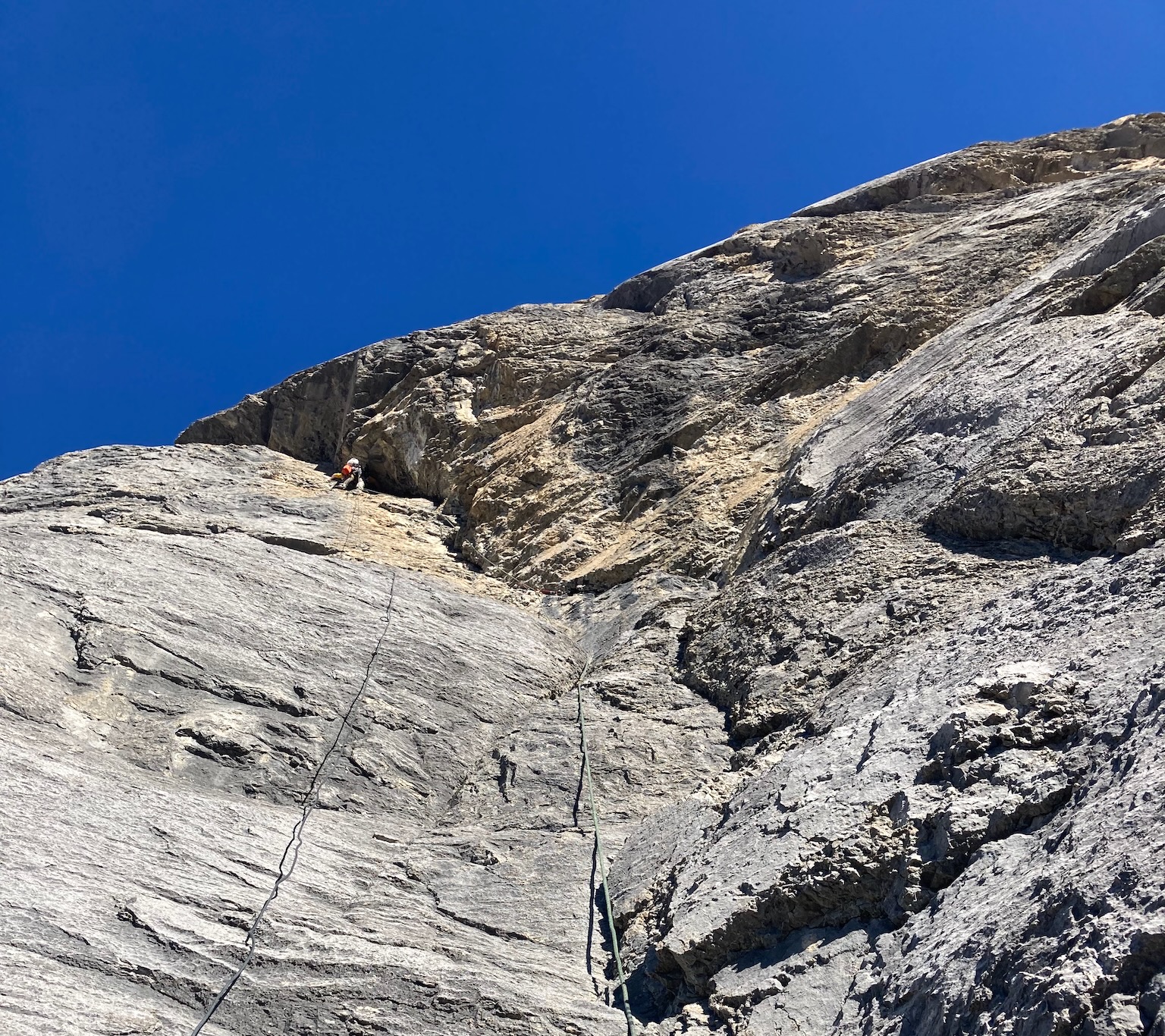
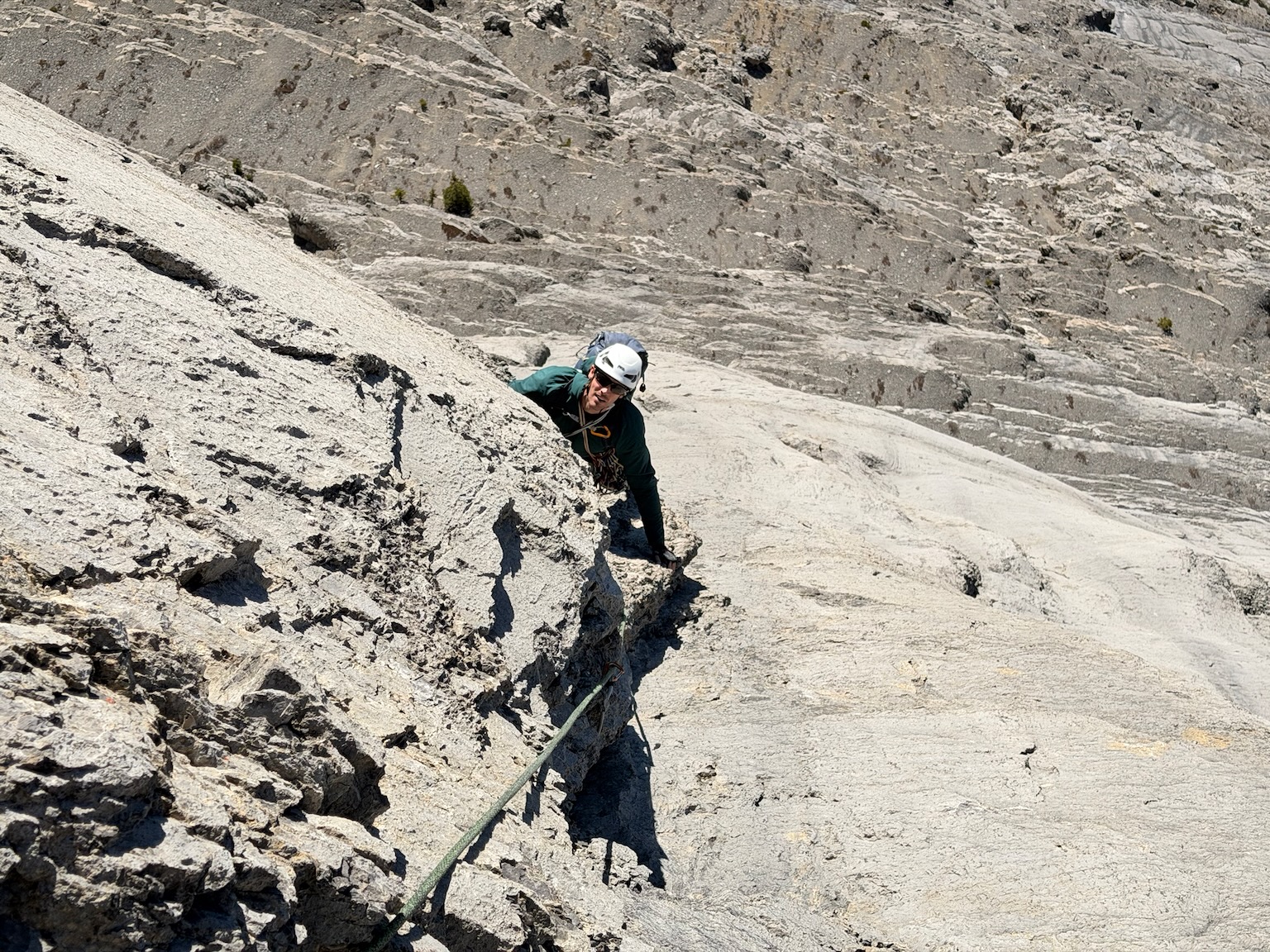
Gavin took the reins again, and pulled technical moves with gear barely keeping the fall factor below two. He gained a ledge system, and we tried to shout back and forth to communicate, but it was a bit futile. He made the call to continue upward, placing a single bolt before launching into high-angle kitty litter. He brought me up, and he was over it. Willing to go on, but keen to just hold the rope while I threw what mental and physical stamina I had left against the wall.
Onward into exhaustion
Pitch five was nuts. Huge fins of black rock protruded from the wall, offering great but slightly suspect jugs. At a lower angle, this would have made for rompy climbing, but instead a steep corner led to a roof. I fought for gear before thrashing through it, only to find that the difficulties didn’t ease. I kept struggling upward, eventually finding a stance at the base of the next chimney.
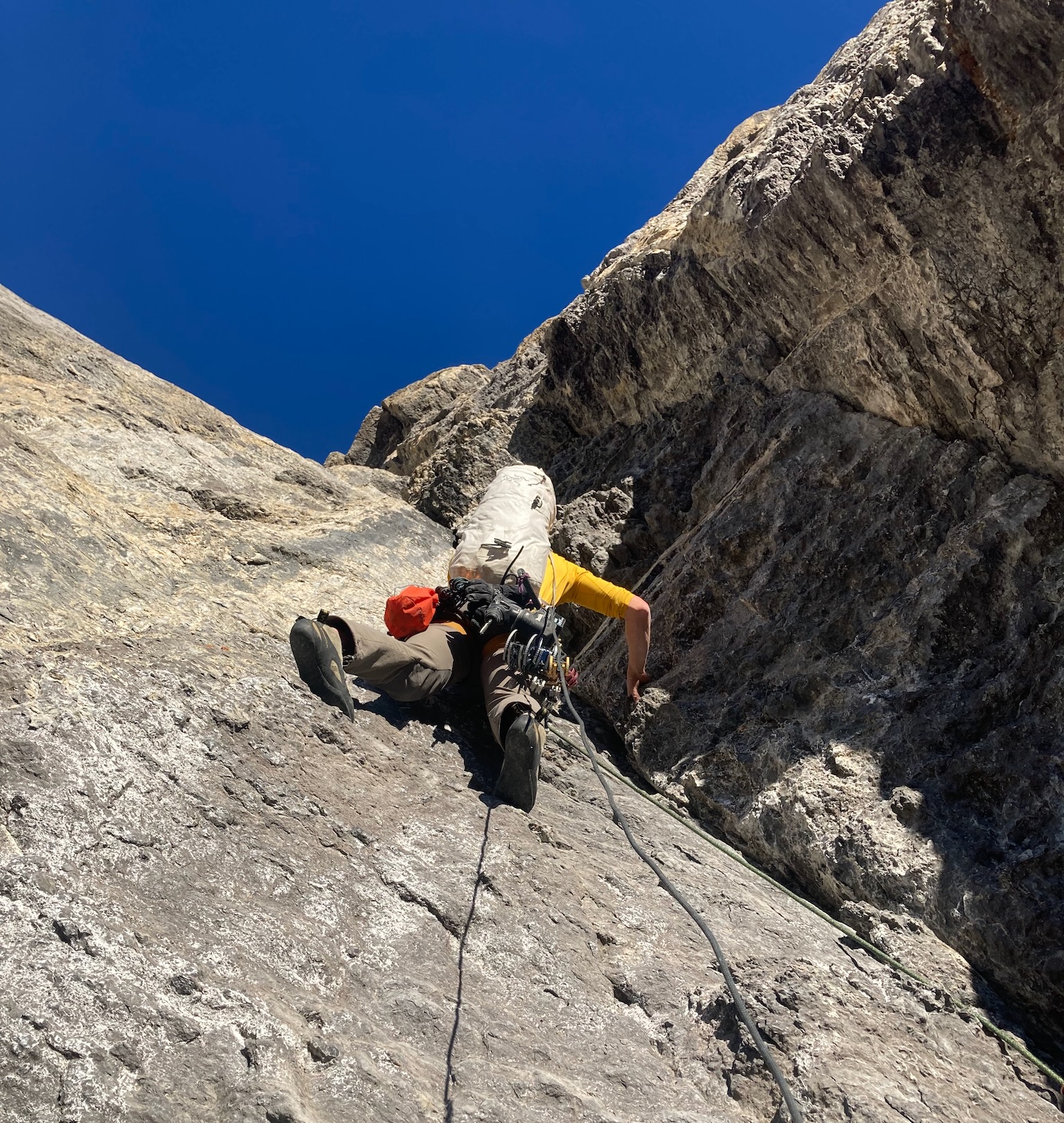
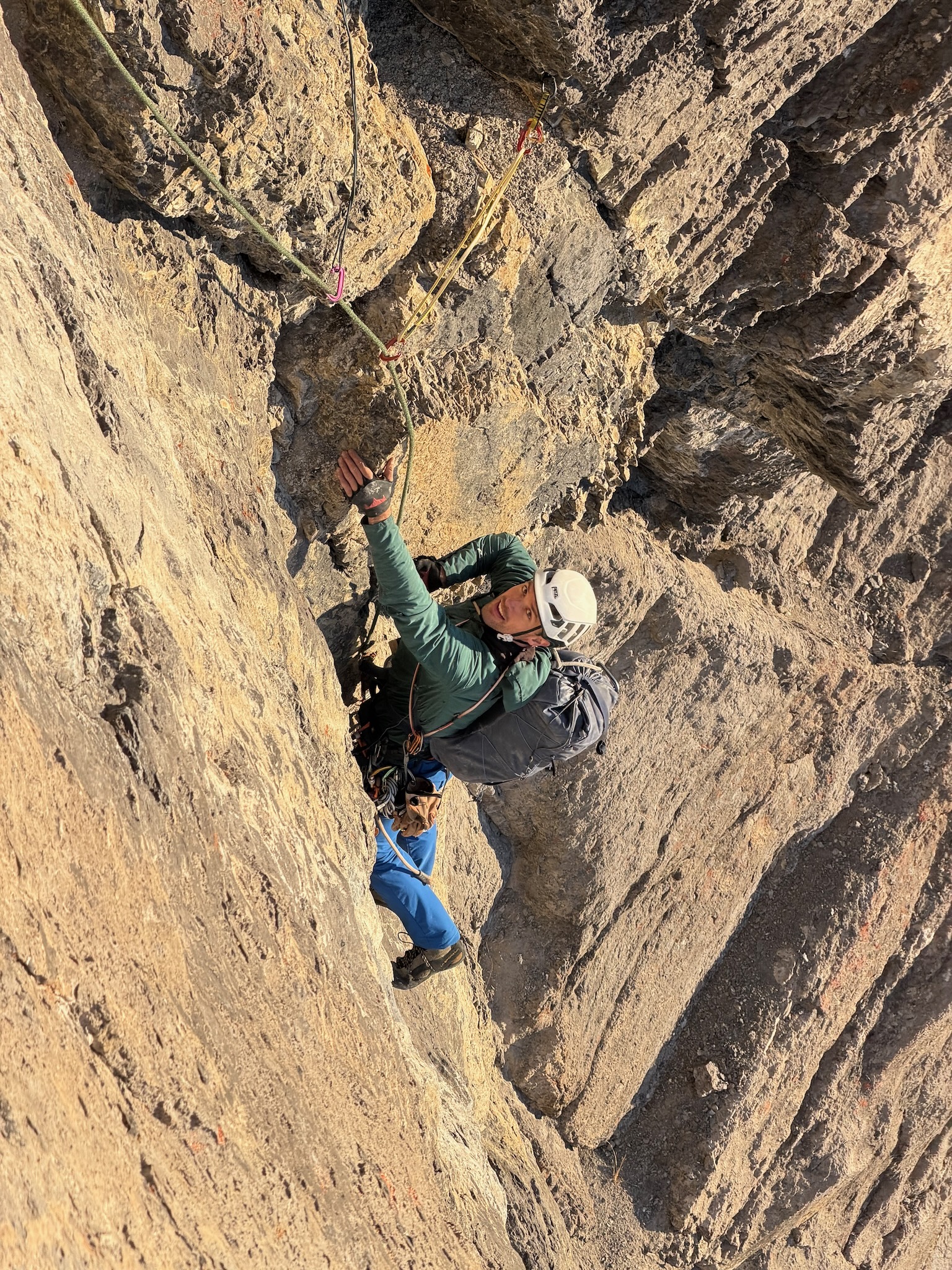
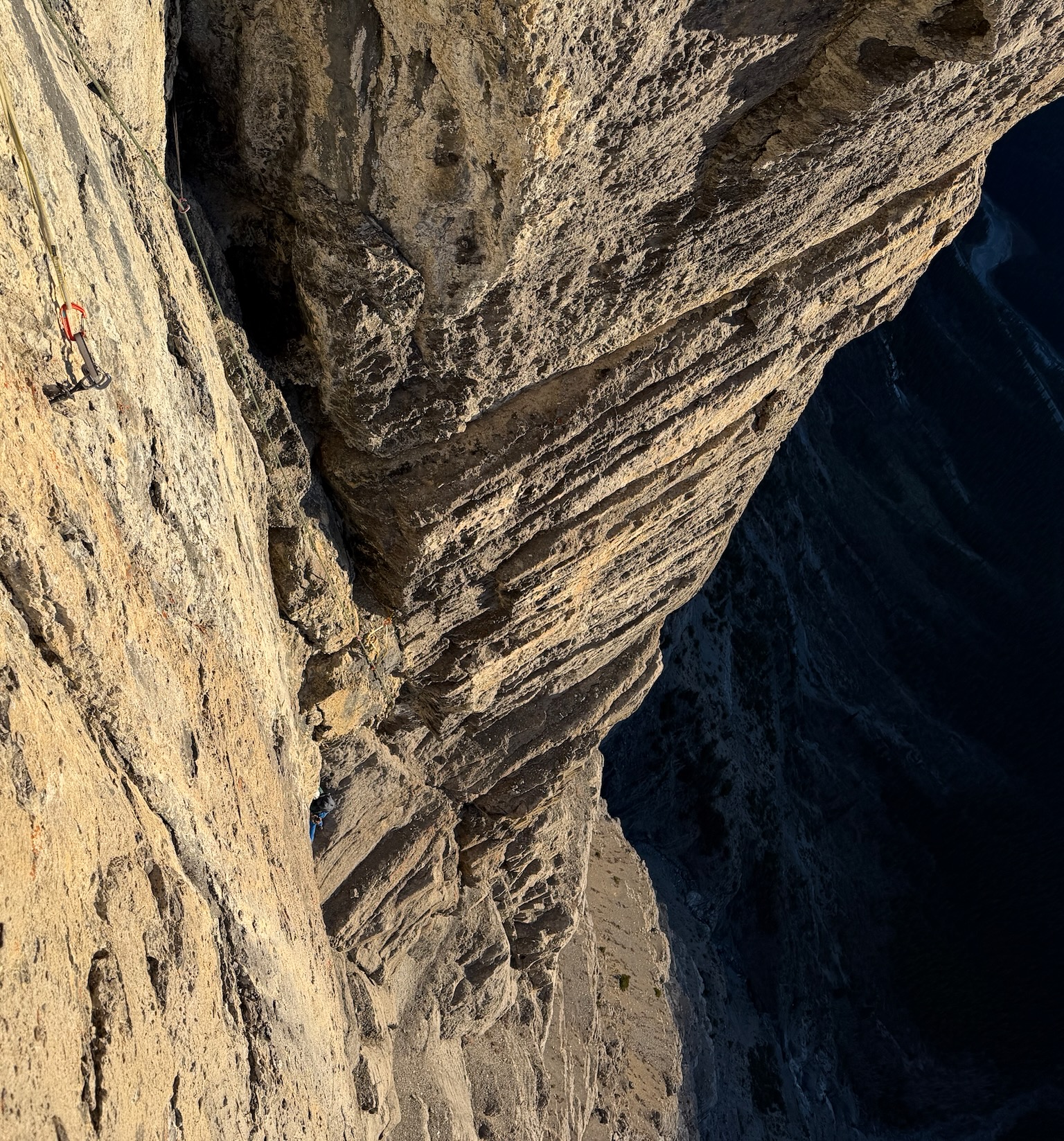
Eventually, we found ourselves on a small ledge, looking above at a stretch of steep blank rock. We had precious few bolts left, and significant terrain left above us. I resorted to tactics which I’ll only barely consider free climbing. Aiding between ⅜” bolts and our one removable bolt to push the line upward, before being lowered back down to climb that stretch of terrain under my own power. But it worked, and got the job done quickly.
Night time is the right time
The next pitch was probably better by headlamp anyway. Sometimes it’s easier if you only have to mentally contend with the terrain inside your headlamp beam. I picked my way up exfoliating face holds, before gaining reprieve on a ledge. A steeper section of the wall loomed above and I placed our removable bolt. It ended up being my only protection on the pitch.
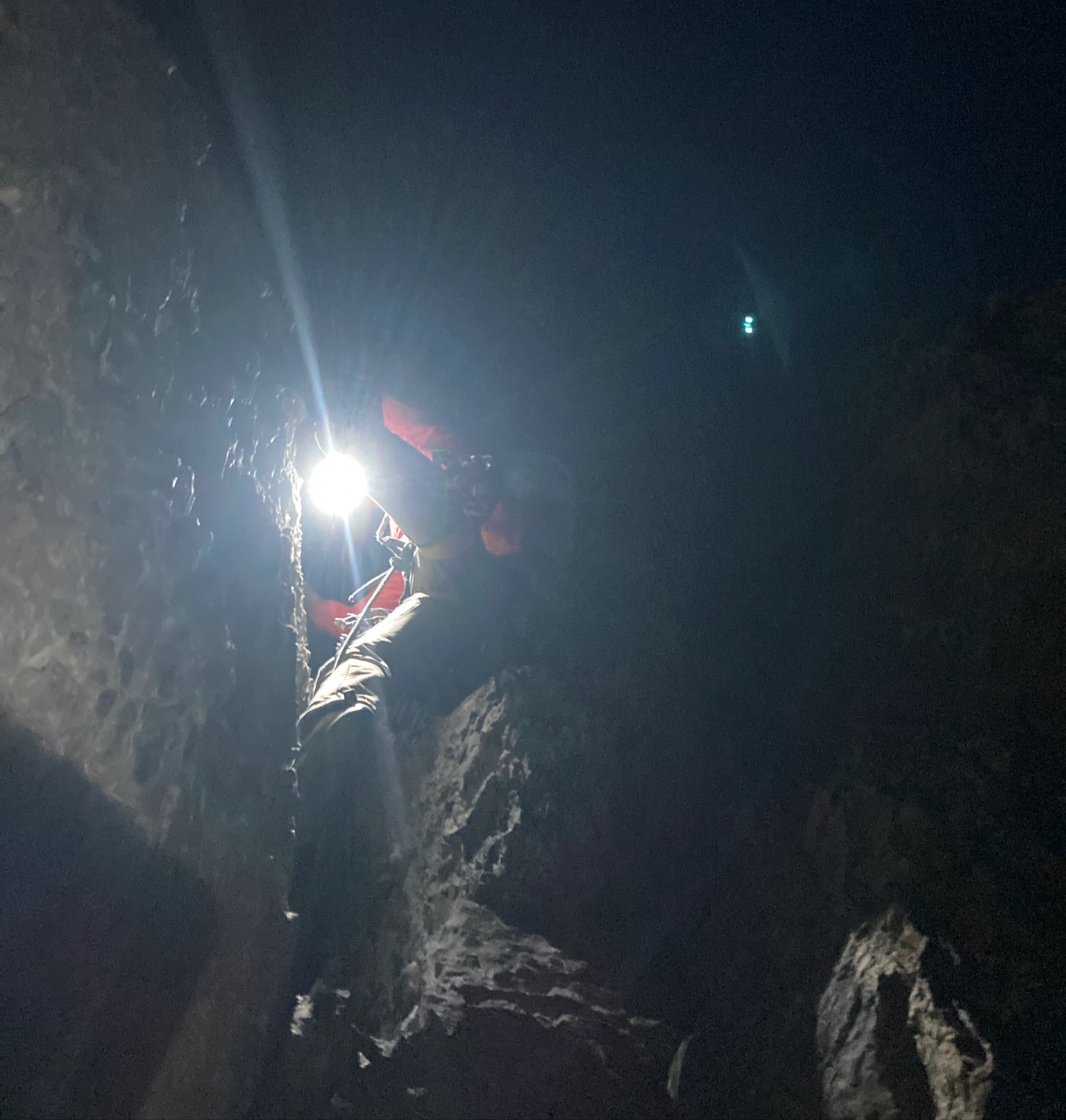
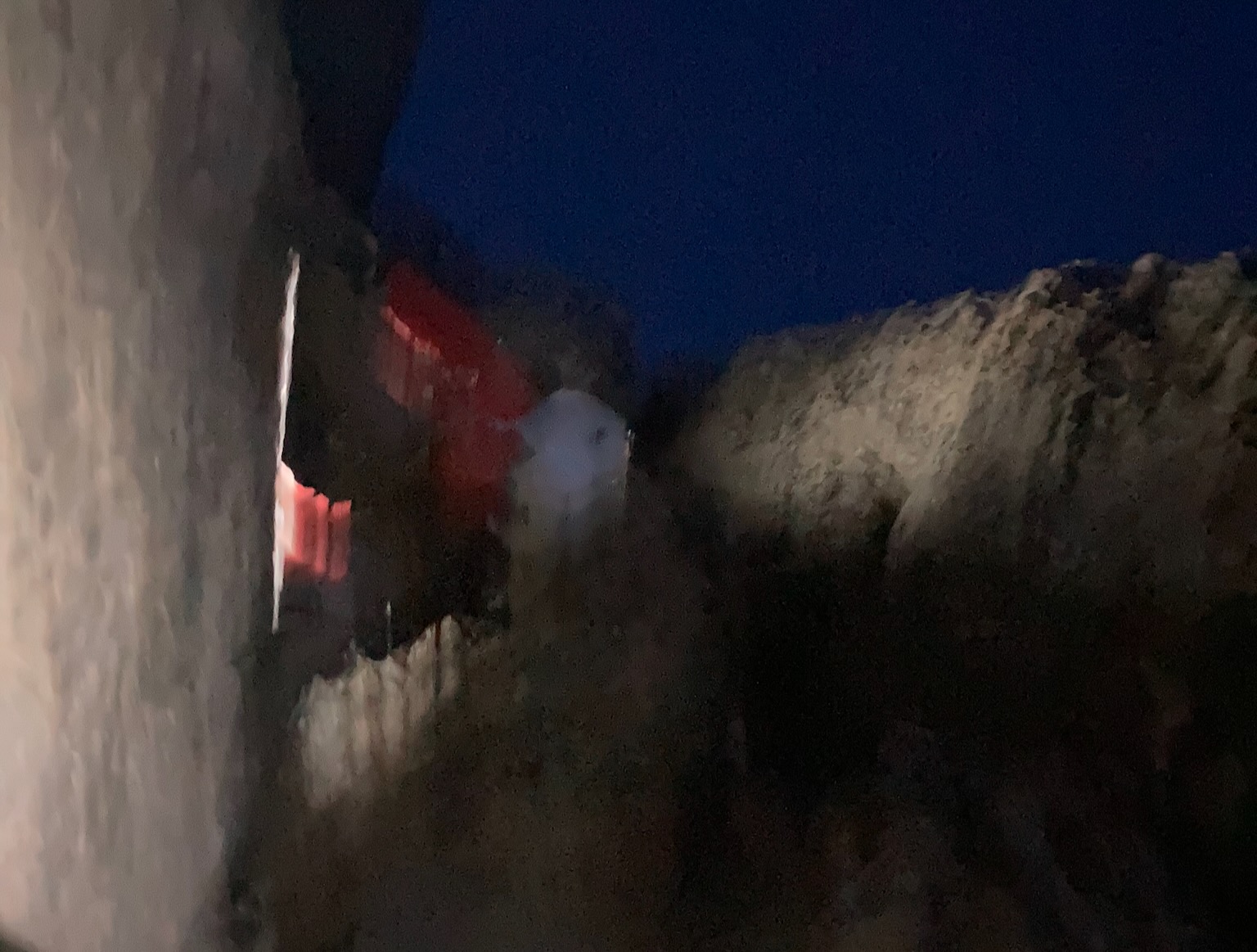
Sometimes coaches tell their fighters to ‘settle’, trying to bring breathing and heart rate back down, and awareness and focus back up. This was my mantra many times that day, and it was again for the back half of the pitch. There is no way to rush this sort of climbing, it needs to be slow and methodical, never pushing until you can confidently commit to the next move.
I struggled for a belay in moss and choss. An even worse corner loomed above, but we had to be within a rope length of the top now. As I belayed Gavin up, I stared at a ledge system running rightward across the buttress, hoping against hope that it would lead to an easier line. Gavin joined me, and I explored. I was elated. I found a steep and poorly protected wall of questionable rock, but not as steep, poorly protected, and questionable as the corner above the belay! I made my way up, pep-talking myself not to blow it at the finish line.
On top it was a plateau of rubble. I kept walking, and eventually found a slab of solid (ish) rock. I had two studs left, just enough to make an anchor to belay Gavin. As I made the first hole, the drill strained, the distinctive sound of a battery about to die. I switched to my second hole, preferring to get two half-depth studs than one full-depth. I went back and forth between the holes, and just as I got full depth on both, the battery quit for good. It was a surreal moment, having been saved from a final horror-show pitch by a sneak, and getting just enough juice out of the drill to safely bring Gavin up, beneath a crescent moon, with a cold wind whipping across the mountain.
Gratitude
We found our descent line, and took our first proper rest beneath the final tier of Polar Circus. It was magic. Sheltered from the wind, freshly hydrated, the falls pouring beside us, and a sky of stars silhouetted by the three rock walls of our amphitheater. In a strange way, the purpose of all of the fear and struggle and exertion is just to provide a backdrop to these still moments. I felt such a profound gratitude for those ten minutes of rest, in a way that would not have been possible without the previous ten hours of climbing.
In the end, we were 18 hours car to car, an identical time span to Solar Circus three months before. This climb felt like the culmination of all the varied new-routing this season. It was at least as hard, at least as run out, at least as choss-wrangly as everything else. But it was just so viciously sustained. It is one thing to mentally power through a pitch or two of that sort of climbing, but something else entirely to do it back-to-back for hours on end. I didn’t go into the season feeling like I had something to prove to myself, but perhaps I did, against my better judgment.
Route Description
Against My Better Judgement
Cirrus Mountain, Alberta
5.11R 325m
Greg Barrett, Gavin McNamara
October 16, 2026
Three major crack systems extend up the buttress left of the ice climb Polar Circus. Against My Better Judgment climbs the left-most of the three.
The route is highly demanding. Many pitches have extended stretches of technical climbing on loose rock with poor protection. Its cruxes are often very burly for a Rockies alpine line. However, if you can see past (or savour) these challenges, it is perversely good as a test piece of your team’s mental and physical endurance on terrain of this character.
Most pitches feature ‘R’ climbing, so they are not called out individually.
There are two places on the route where an 8mm removable bolt was used (P6/P7). It is advisable to bring one, or a hand (or power) drill to enlarge the hole to ⅜” and place your own stud.
Approach
Park as for Polar Circus. Approach and climb the first three pitches of Solar Delight. Scramble as for Solar Circus, past the pencil, and past the leftward choss-ledge traverse. 2-2.5 hours to this point.
Continue traversing left across large gravelly ledge systems, trending upward as the terrain allows. You will be able to see the left-facing corner system of Judgment from below. Make your way up towards the base of it. Once close, scramble up a gravelly gully feature to the top of a pedestal. You will be down and slightly left of the weakness.
Ascent
P1, 5.10+, 50m
Climb easy ledges, leading into the shallow left-facing corner system. A steeper section of the corner leads to stippled gray rock below an overlap. Excellent face climbing past three bolts breaks through this overlap on its left end. Continue above to a two bolt belay at the base of the deeper yellow corner.
Get whatever gear you can at the start and early on in the pitch to keep your team attached to the mountain.
P2, 5.10+, 35m
Climb the corner. Some harder sections can be bypassed by pulling left onto the face to climb steep edges. Higher up on the pitch, loose rock, steep moves, and tricky gear keep things quite real. Continue to a ledge with a single bolt belay, which can be backed up with a #4.
P3, 5.10, 60m
Start up a groove with sporadic protection before entering a surprisingly steep corner. There’s enough gear to keep things reasonable but engaging. Difficulties ease as you reach the large roof, which you traverse leftward under. At the left end of the roof, steep moves lead upward into another corner. Continue until the angle eases and you can build a gear belay.
P4, 5.10-, 50m
Climb a short distance up the groove to get high gear, before stepping back down and traversing left on the face. Climb up without additional protection on face holds until the terrain eases above. Continue up onto a gravel ledge. Clip a single bolt before climbing a kitty-litter high-ball boulder problem. Beyond the high-ball, continue a short distance to belay in a corner, well below the roof/bulge.
P5, 5.11, 25m
Climb up the corner on huge and funky jugs until you encounter a wild bulge pull. Get high gear before committing, then pull it on the left. Difficulties don’t ease for another few meters, but you’ll eventually gain a ledge at the base of a chimney/crack system. Climb up a tower of blocks and get gear high and right in the chimney. Pull out left past a bolt on the face, targeting a thin ledge beside a right facing slot. Build an anchor on #1-3 cams.
P6, 5.11, 45m
Start up the crack before stepping left onto a thin face. Climb a cruxy sequence up this thin face past a bolt, eventually gaining a stance and another bolt. Above, follow the path of least resistance on the face and in the corner. Belay in this corner where you see fit to end the pitch.
The FA party used an 8mm removable bolt above the first protection bolt. This hole could be reused for an RB, or enlarged for a ⅜” bolt. It is reachable by aider high-stepping on the first bolt. Without it, the fall would be significant, although relatively clean.
P7, 5.8, 20m
Continue up the corner. Eventually wander out onto the face and climb shattered edges with no protection. Head up and right and belay in a bay on a ledge system.
The FA party used an RB as the only point of protection on the pitch, located just before pulling onto the steepest part. Again, this hole could be re-used or enlarged, but if you’ve come this far, you might feel okay with no protection. It’s already a no-fall zone.
P8, 5.8, 40m
See that horrendous gully above you? Don’t climb it. Exit right up a ramp system, following it nearly to its end. Climb up the easiest looking ground above you (gear), trending towards the lower angle terrain on the arete. Top out and hike about 10 metres from the edge of the cliff to find a rock slab with two studs (nut & washer, but no hangers). Bring up your second.
Descent
Hike back toward Polar Circus, without gaining any elevation. As you get within a couple hundred meters of the creek, look right across scrambly terrain. There is a larger ledge system above the creek, and a narrower one slightly above that. Traverse this narrower one to the cliff edge. Poke your nose around the edge and find a bolt and cord rap anchor. This is the final anchor on Breccia Won’t Do That Again. Descend as for Breccia / Fall Festival / Solar Delight.
Gear
- Doubles .2-2, Single 3&4
- Full set of medium to large nuts
- 14 draws
- 60m half ropes, or single/tag
- Pitons may be useful, but were not carried by the FA
Photo Topo
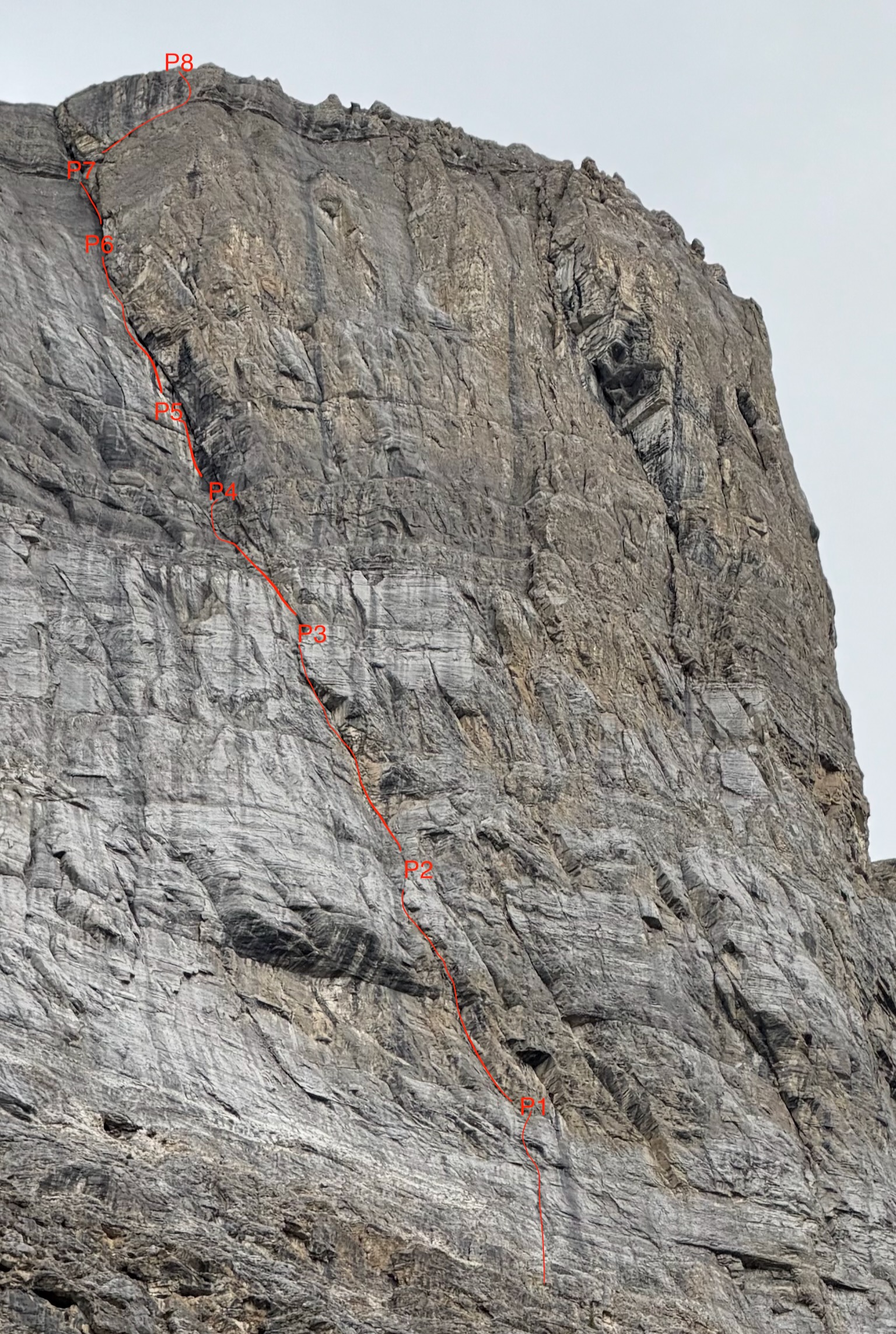
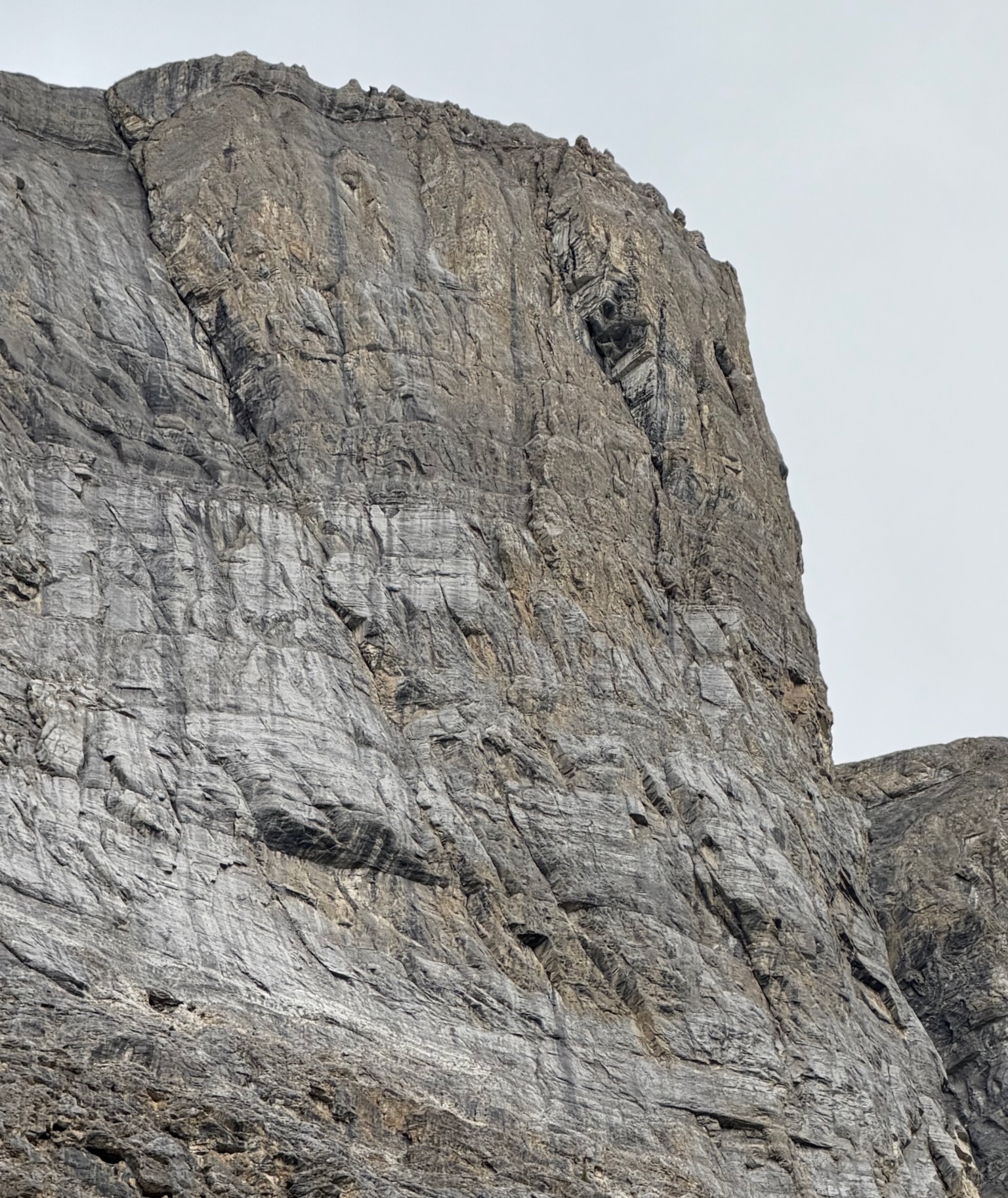
Against My Better Judgement Route Description and Photo Topo by Greg Barrett is marked CC0 1.0