A Fuzzy Plan
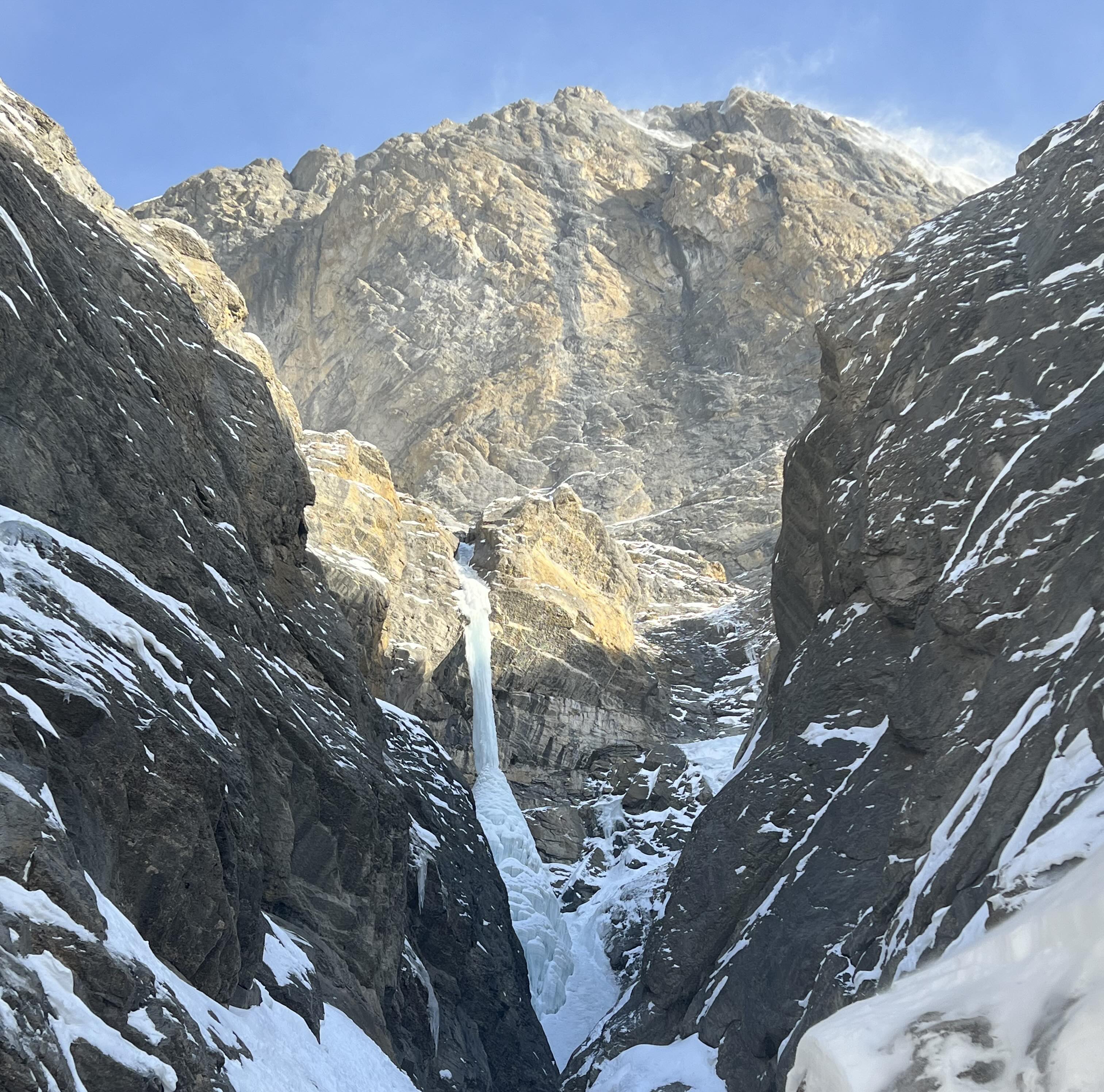
Every time I’ve stepped onto the slopes below the final tiers of Polar Circus, I’ve been blown away. The majesty of those ribbons of ice pouring through an immaculate rock amphitheater is awe inspiring. Solar Circus was born out of a desire to experience that awe in a different season, from a different vantage point.
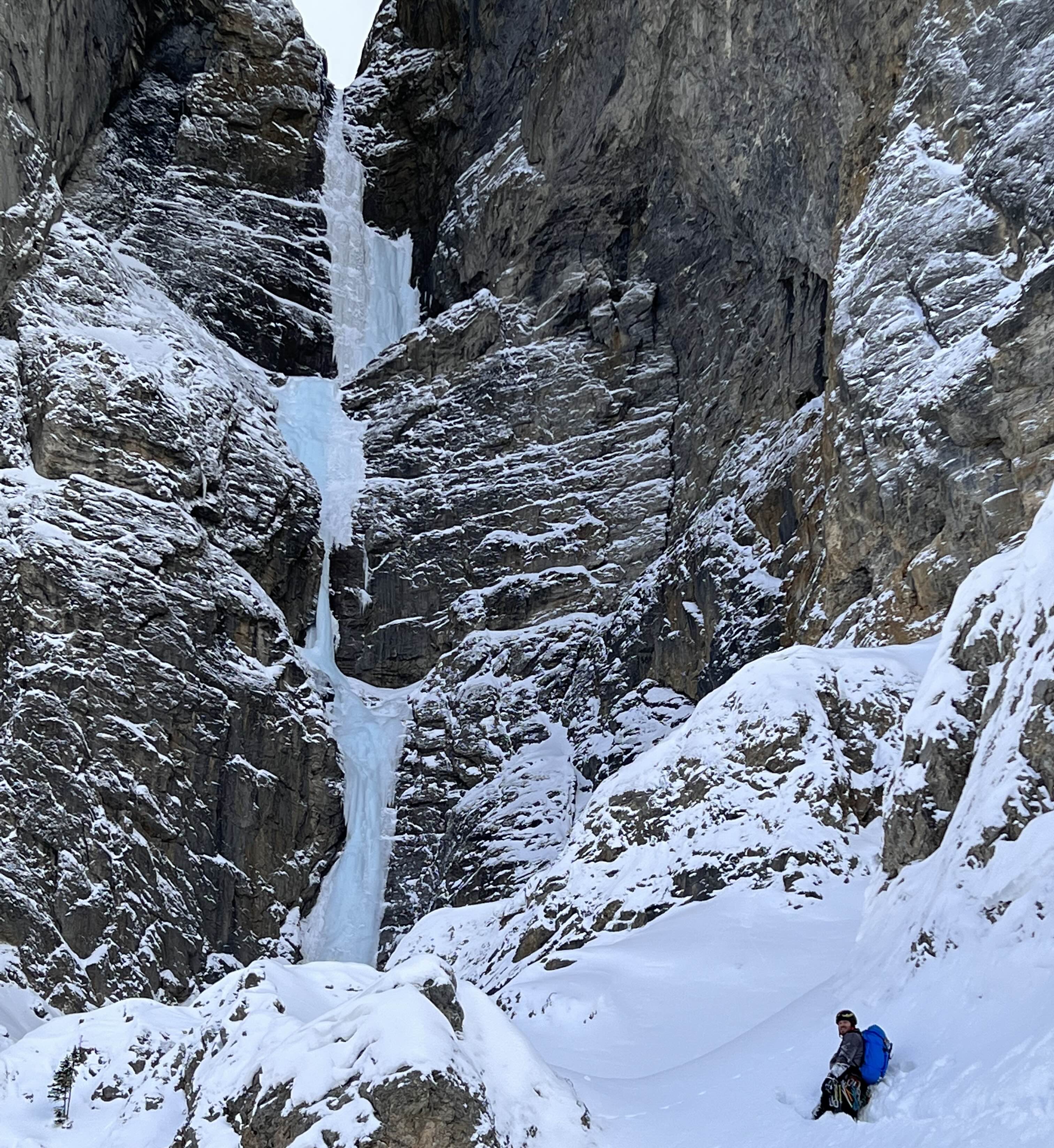
As Gavin and I descended Polar Circus in February, we found ourselves staring up at the rock buttress on the left side of the amphitheatre. We traced lines across snowy ramps and up steep corners with our eyes. We saw a plausible path between weaknesses. A single blank section of steep gray rock presented the biggest question mark. But a seed had been planted in my mind, and I knew we needed to return in the summer.
I’ve developed an addiction to this sort of adventure climbing. You get an idea, pour over photos, talk through a plan, select your equipment, and set an alarm for an early start. Once you’re up there, it’s just you and your partner, in the unknown, supporting each other and living completely in the moment. When things go well, you’re grateful. When they get challenging and scary, you revel in the adventure.
Twenty-two bolts. Twelve for lead protection, ten with rap rings for our descent. Two drill batteries, two bits. An eight millimeter removable bolt and its bit. A wrench, a brush, a blower, a hammer. Not a light loadout. The route would have an alpine character, but we were prepared for the reality of working our way through blank slabs.
A Meandering Approach
We left town at five, got fast food, and found ourselves at the parking at seven. Hiking gave way to scrambling as we moved up rock steps, avoiding the loose avalanche gully to our left and the waterfalls to our right. We located the most plausible weakness through the rock band beside the first pitch of Polar Circus, and the rope came out.
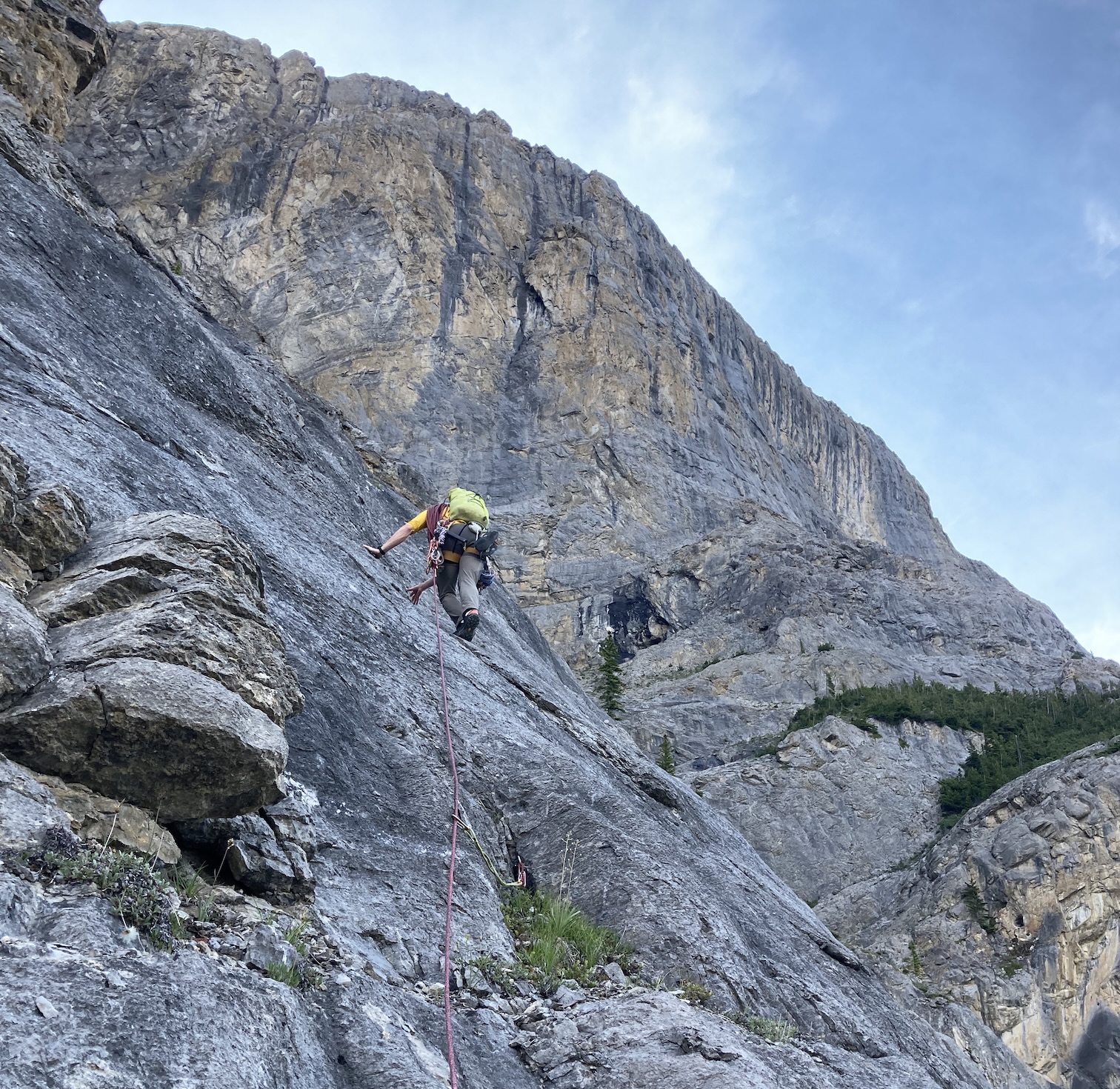
Still in approach shoes, I worked my way up the slab. I found a bit of gear initially, but it didn’t take long before the climbing became runout. I asked Gavin if he wanted to add a bolt for future parties while he seconded the pitch, and he pointed out that we may not want to chip into our limited supply already. Another easy pitch followed. We worked our way across a ledge system and up a gulley before encountering another slab. The rock was excellent, but again it was a runout pitch. A theme was developing.
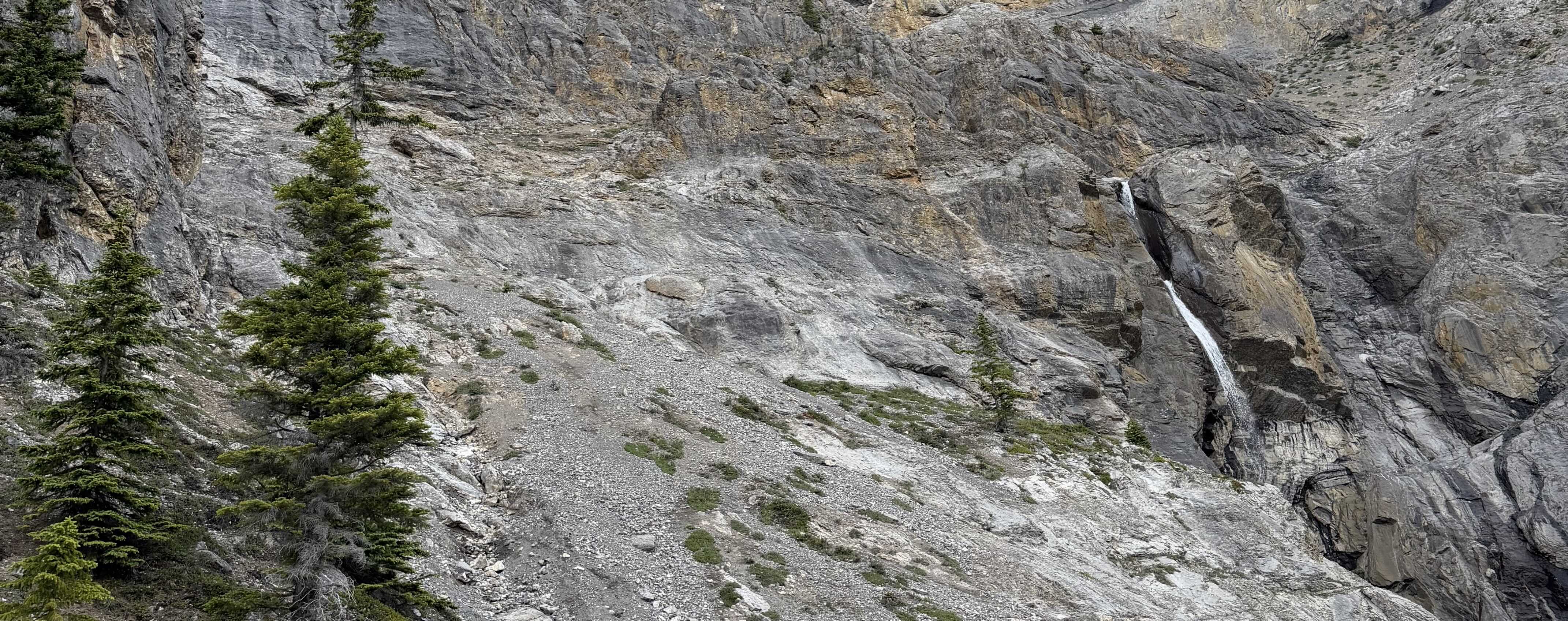
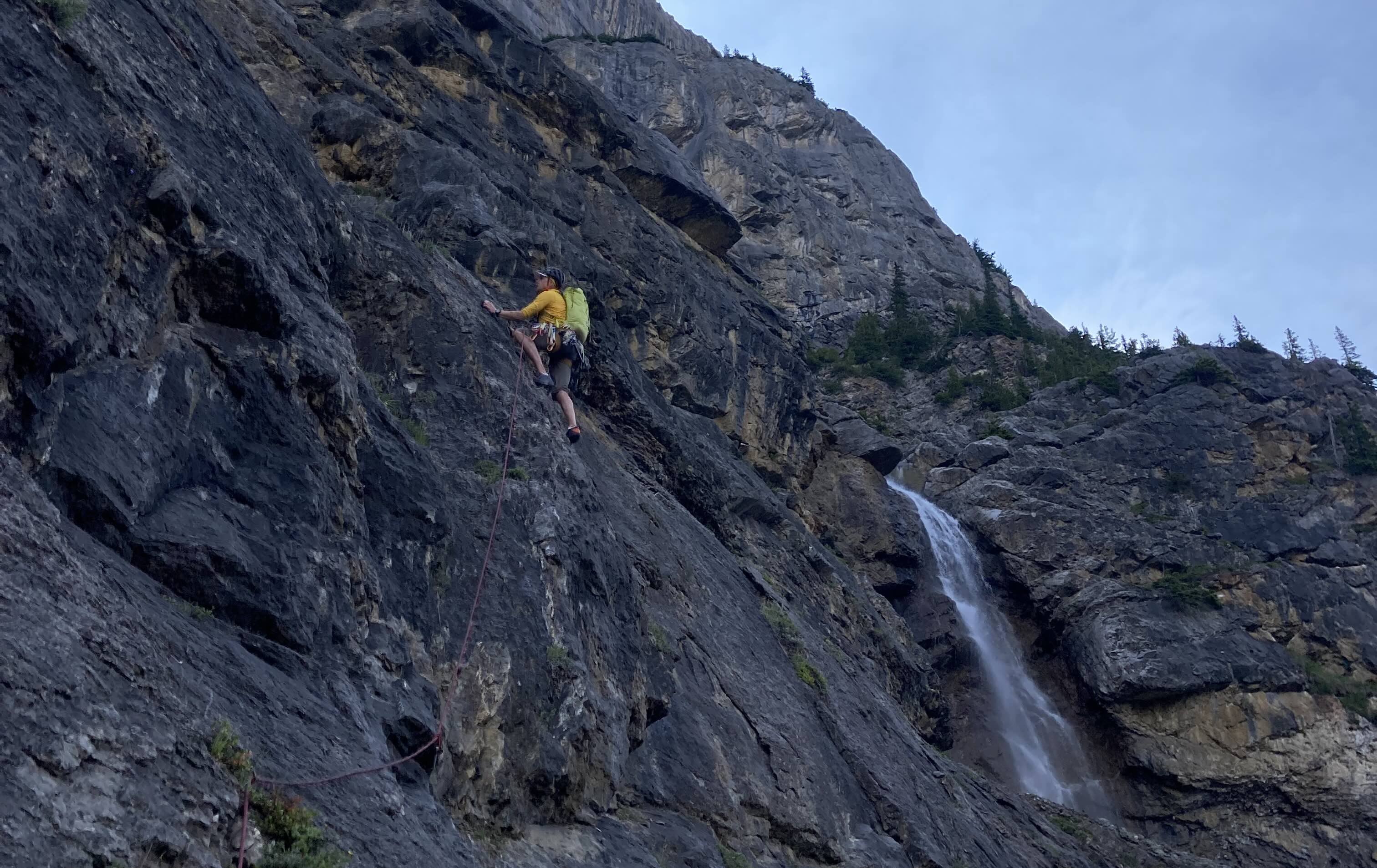
We put the ropes away and scrambled along toward The Pencil. It was tantalizing to hear the rushing water but not have a view of it. Eventually we rounded a crest and saw the torrent pouring through a sharp rock cleft and out of view into space below. An alarm on my watch sounded, the scrambling hadn’t sent my heart rate too high, but the view did.
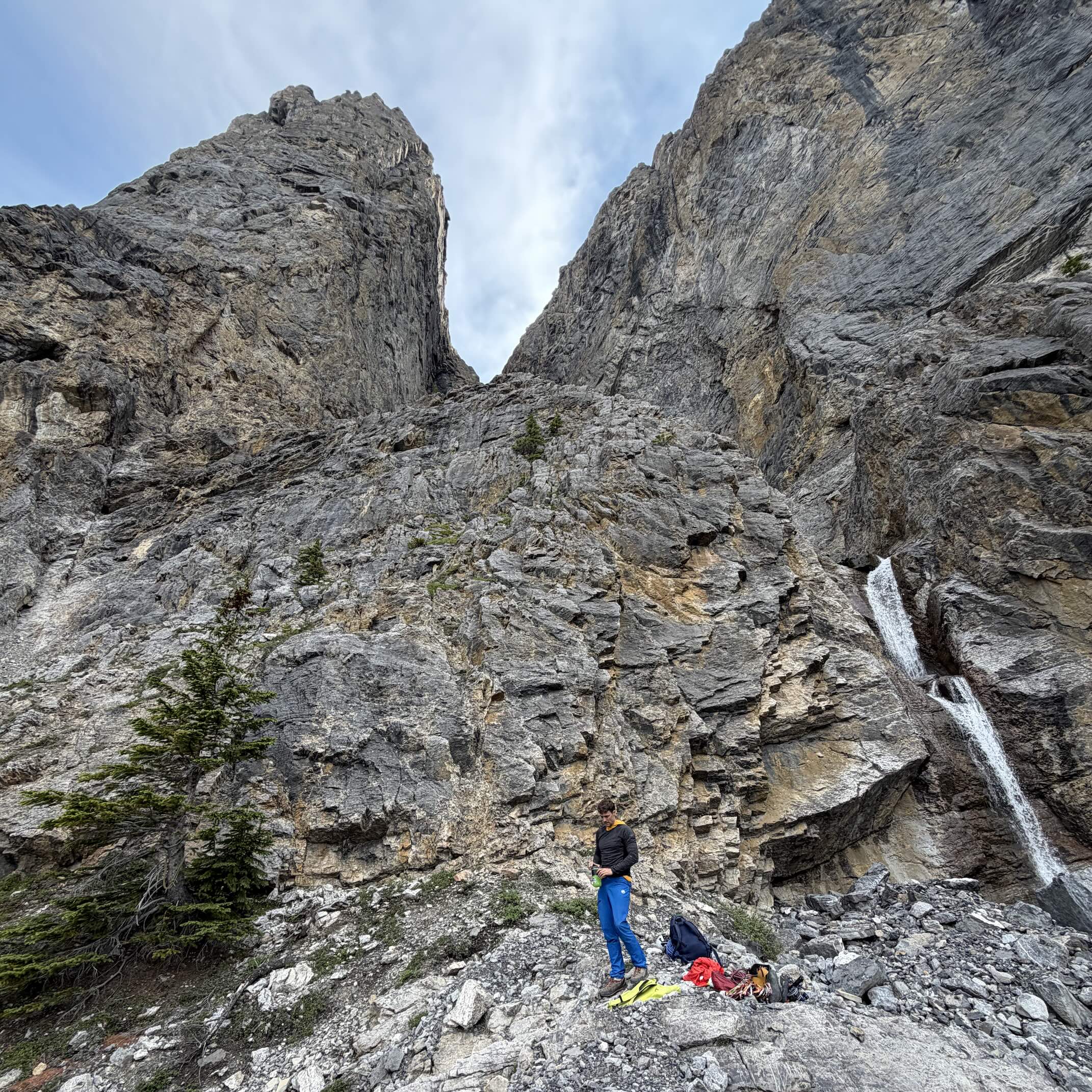
We made our way up to the ledge atop The Pencil and took our first proper break. The temperature was cool but soothing, the setting idyllic. A ways above us a chossy band loomed, guarding our passage to the upper headwall.
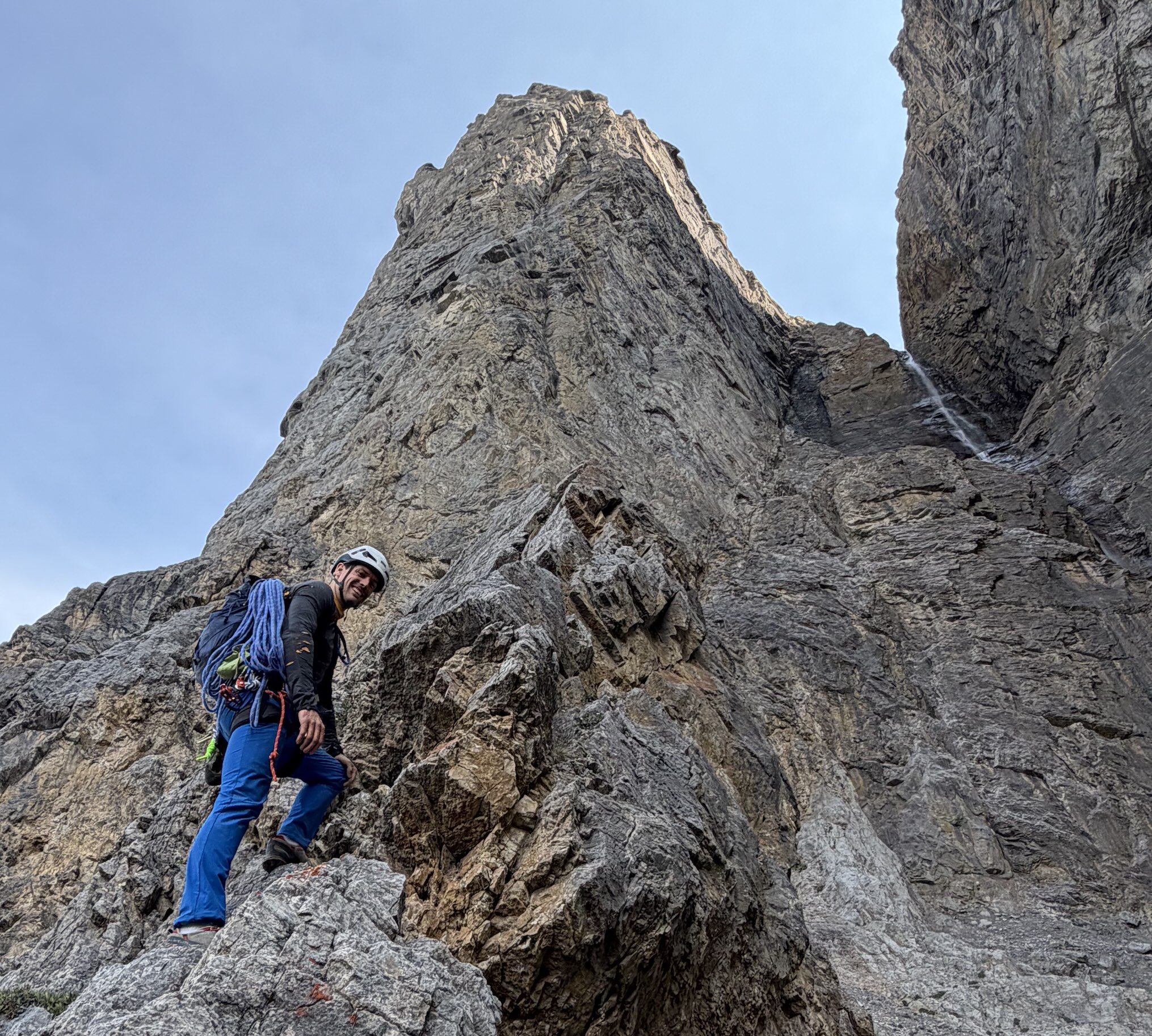
The scrambling continued up an approachable ramp, which gave way to beautiful arete climbing that felt like it belonged on a high mountain ridge. At its top we got our first proper view of the waterfalls pouring through the upper tiers, a view I’d been dreaming of since February. A narrow walkway in the sky led across to our choss band.
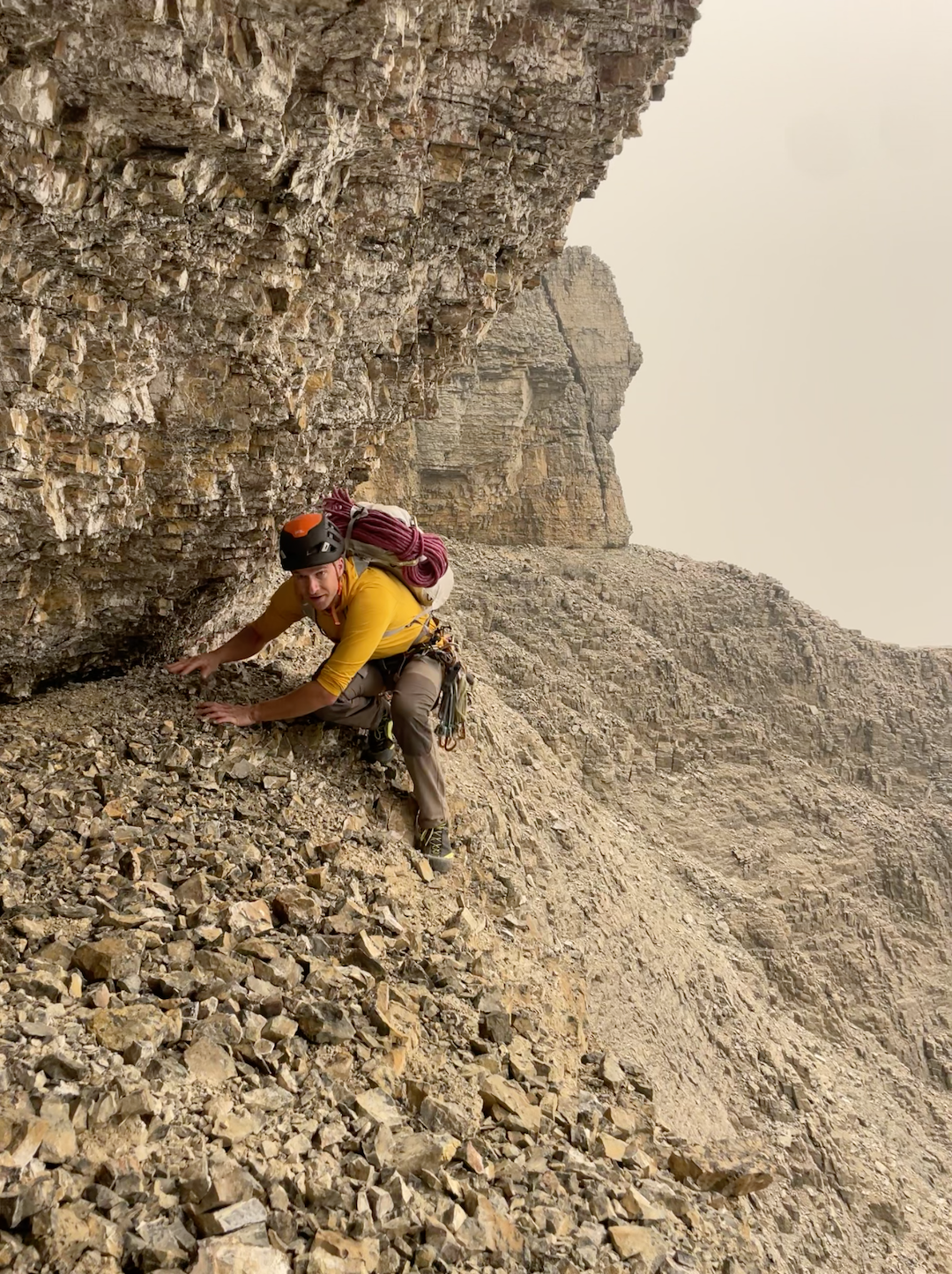
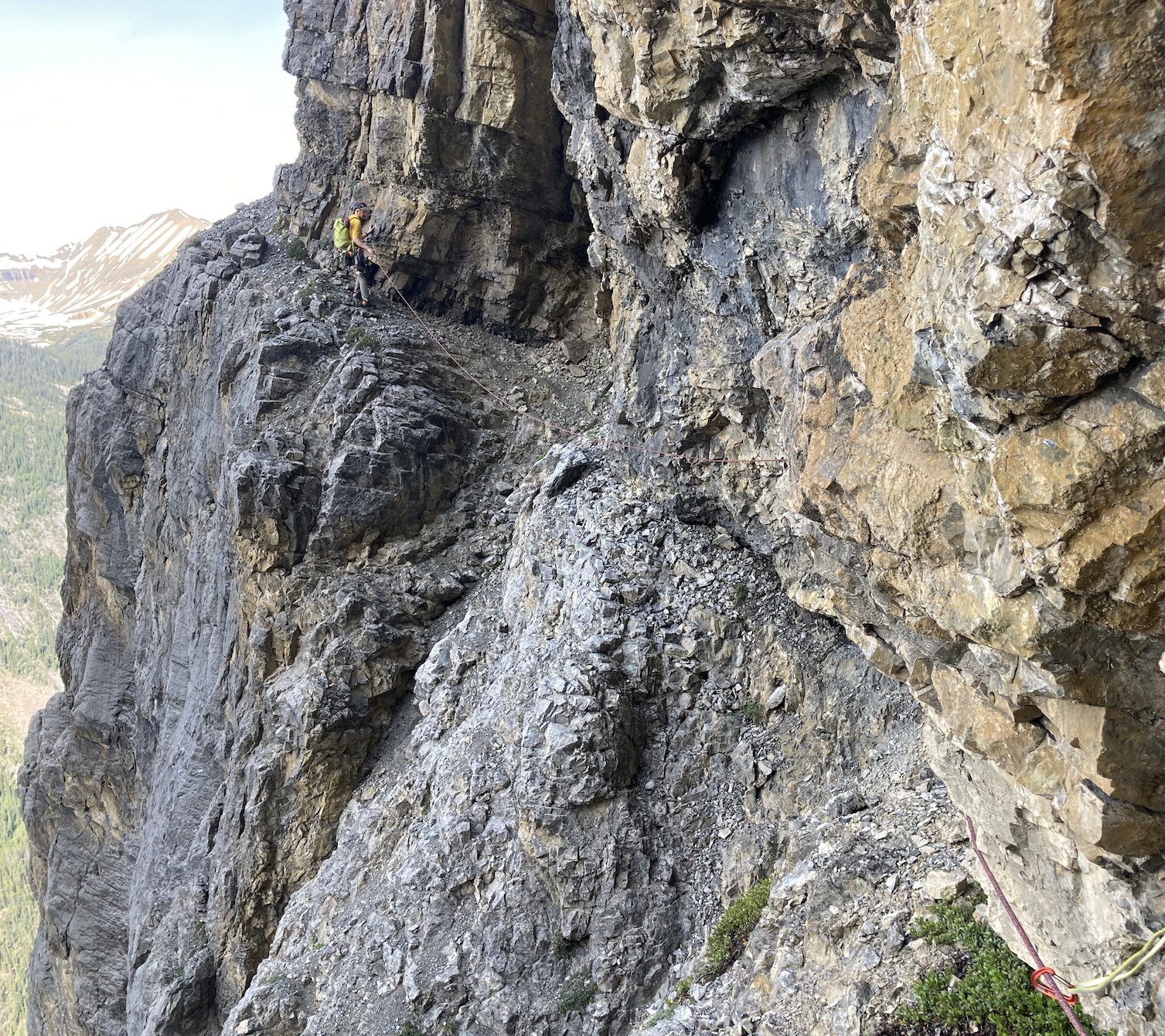
In true Rockies form, we decided to try to avoid climbing up the choss band by traversing across it. We popped the rope back out and tied in for a running belay. The ledge looked terrible, but it was more exposed and loose than it was difficult. On the other side we packed the rope away and kept scrambling up to the headwall.
An Imposing Headwall
There is freedom in choosing your own line, but also some anxiety about making the right choice. I tied back in and meandered up a moderate but somewhat runout pitch, keeping an eye more on where we were heading next than what looked good right in front of me. I built an anchor atop a pinnacle and brought Gavin up, looking across at the bold start he’d face on the next pitch when I handed over the reins.
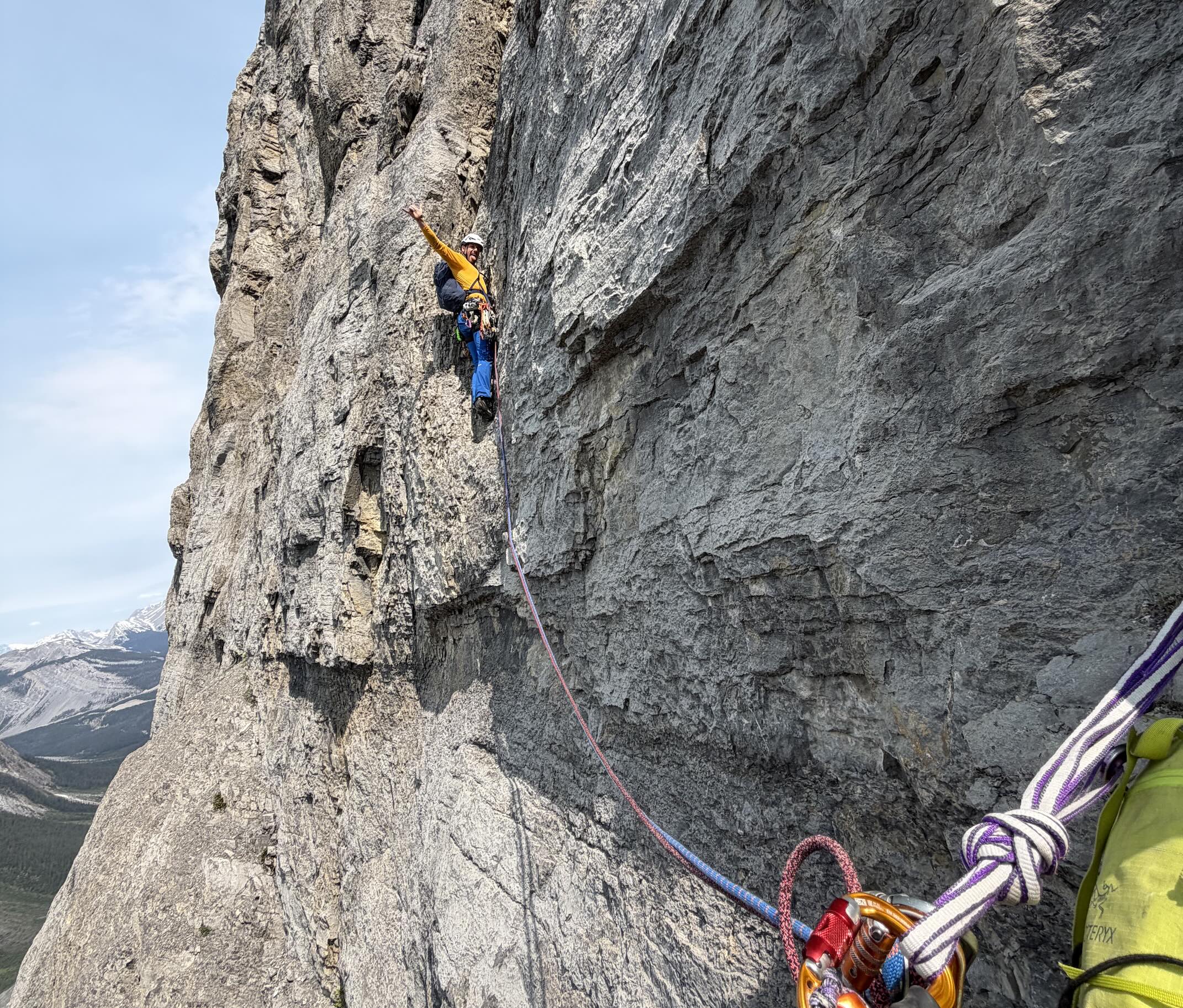
He stepped out sideways onto the slab, traversing beneath an overlap. A few burly moves surmounted it and led to a shallow corner and his first protection. I muttered something about the merits of the fixed point belay in this situation. He danced across a tower of loose rock and up a slab to gain a corner system we’d eyed up in February. Wanting to avoid too many transitions, he kept going, working his way up the tricky corner to belay on thin gear beneath a roof.
His next lead was technical. The corner continued steeply above us, but it was fairly closed off and didn’t appear to offer much in the way of protection or edges for feet. He quested rightward across the slab instead, moving further and further from his last good piece as he traversed. I kept nudging him to tag the drill over and place a bolt, perhaps more to put my mind at ease than anything else. He worked his way across a steep cleft, protected only by dubious tipped out cams. Finally he found a reasonable free stance to place a bolt from, and brought the drill over. He continued up a technical slab face, but at least now the protection was reasonable. He built a belay and brought me up.
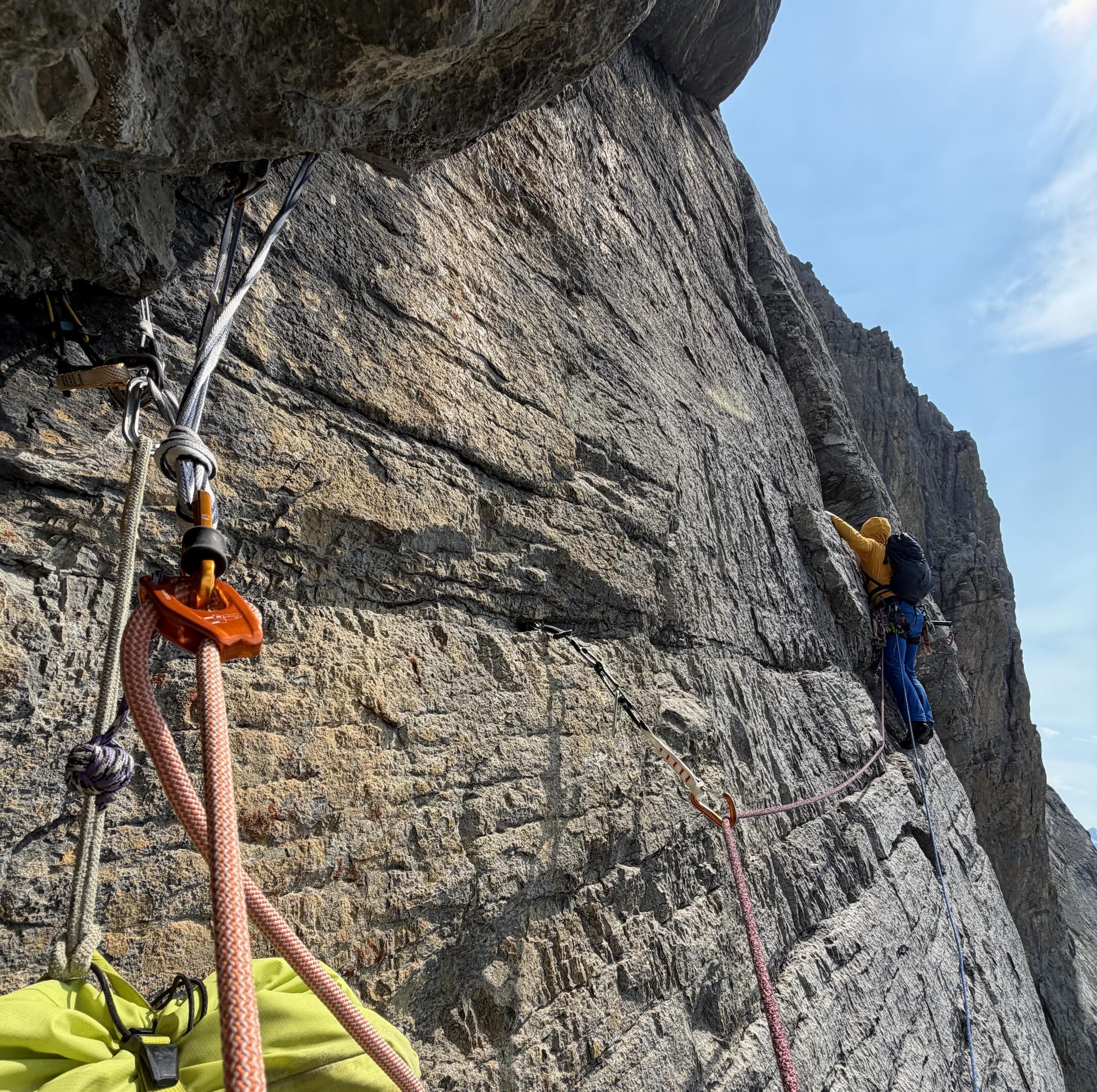
We’d come to the base of the blank gray wall that had been a question mark in our minds since we first looked at the line. Our fallback plan was to equip it in an aid climbing fashion. We could aid upward on bolts, alternating between proper wedge bolts and a removable bolt, which would let us keep the spacing logical. Then we’d pull the rope and try to free the pitch.
But I didn’t want to resort to those tactics unless we had to. I led off, running it out across a tenuous face and up an ugly but surprisingly stable pinnacle. I found some trad protection and continued carefully upward. Eventually I got to a solid stance, and stared up at an immaculate gray slab, and a right trending closed up roof/corner. The time had come for bolts, and I placed the first one before tip-toeing upward. Facing a relatively clean fall, I pushed onward to a more tenuous stance. I fumbled with the drill, alternately shaking hands as I placed the next bolt. Once it went in, I conceded to an ‘alpine red-point’. I told myself that if I could shake indefinitely at the stance, it was acceptable to sit on the bolt for a moment and rest my swollen feet, which were now cooking in the sun and feeling crushed by tight shoes.
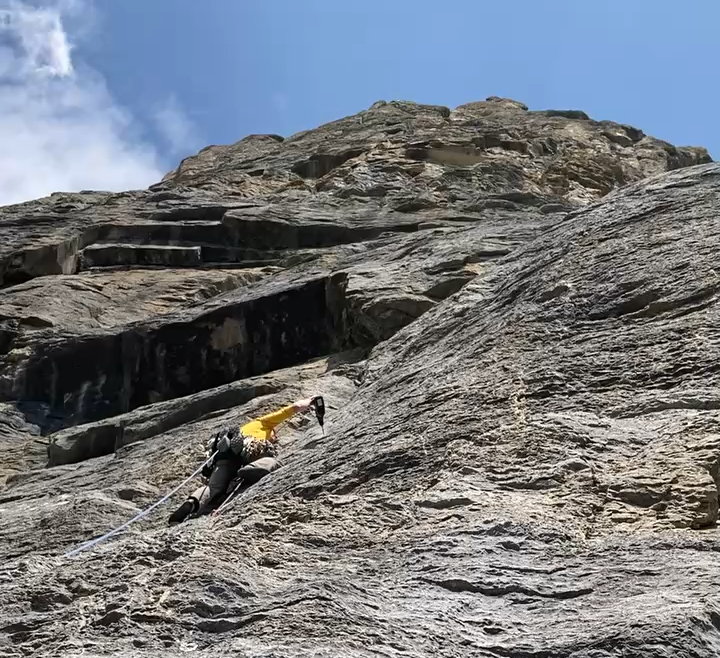
I tried to climb up and right across the slab, but couldn’t find enough edges to make it work. I descended back to the bolt. I tried again up and left, and climbed my way to a strange undercling, far enough from my last bolt that I had no interest in reversing the sequence. Again, I placed the bolt from a free stance, before succumbing to the temptation of resting my weary feet by hanging on it.
The next sequence was devious. I whipped twice trying to work out the beta. Falls are much more exciting when you’re on the side of a mountain with a double rack, pitons, and a drilling setup hanging from your harness. Eventually I put the moves together, and quested onward up the slab towards a better stance for a final bolt. The climbing eased, and a few trad placements led me to the top of the slab and a ledge where I could put in a bolted anchor. Our biggest question mark was now resolved, in a manner free enough for my alpine ethic. Gavin followed the pitch clean with a weighty pack, and talked me out of sandbagging the grade.
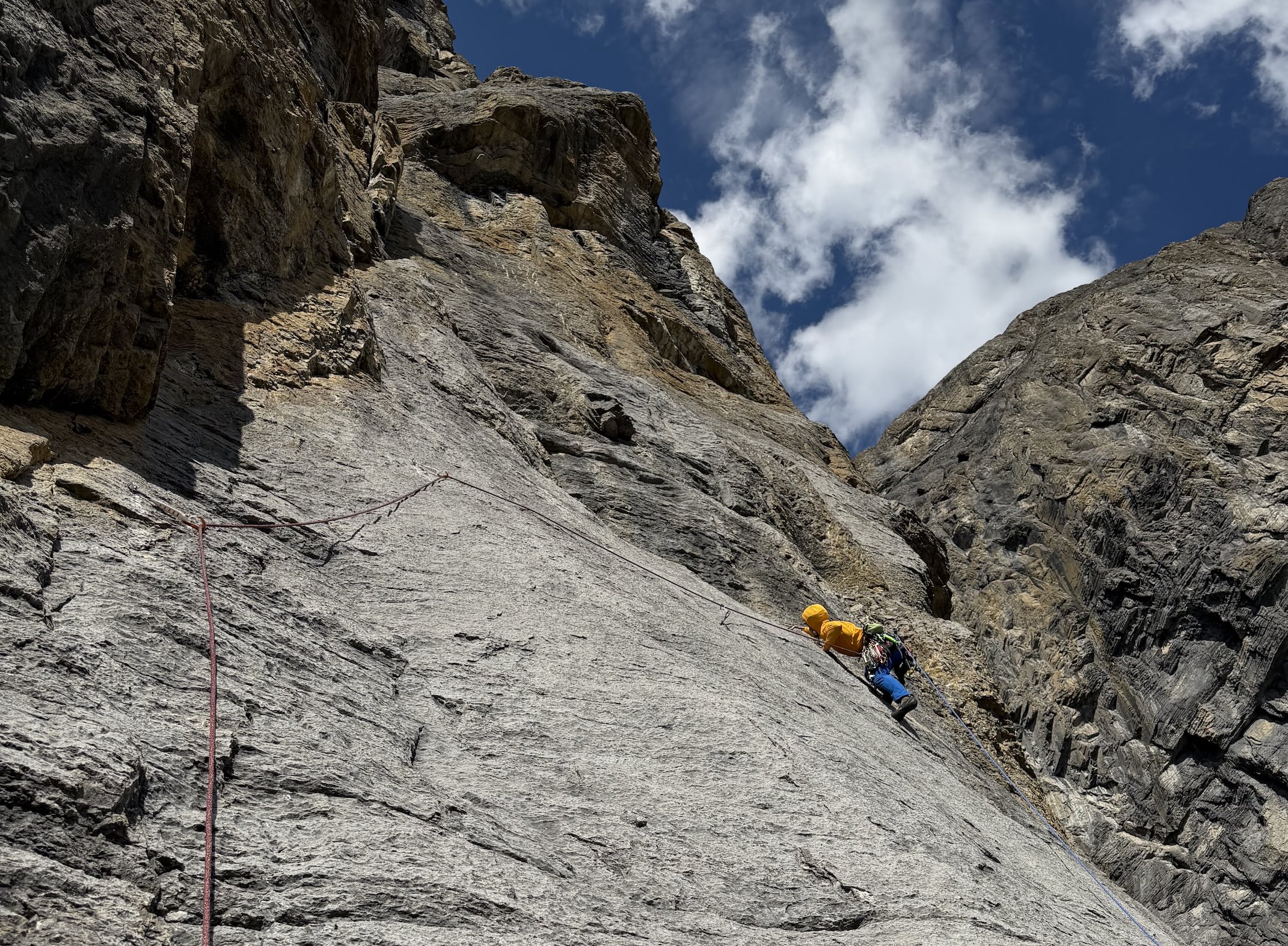
If there is one thing Gavin was fond of that day, it was putting ninety degree turns in the rope line. He started upward on a slab, placed two bolts from free stances, then ran it out straight sideways (and at times downward) across the face. He plugged in a cam, clipped it short, and headed straight back up. Technical bulges up a corner followed, and he put in a belay part way up a massive looming corner system.
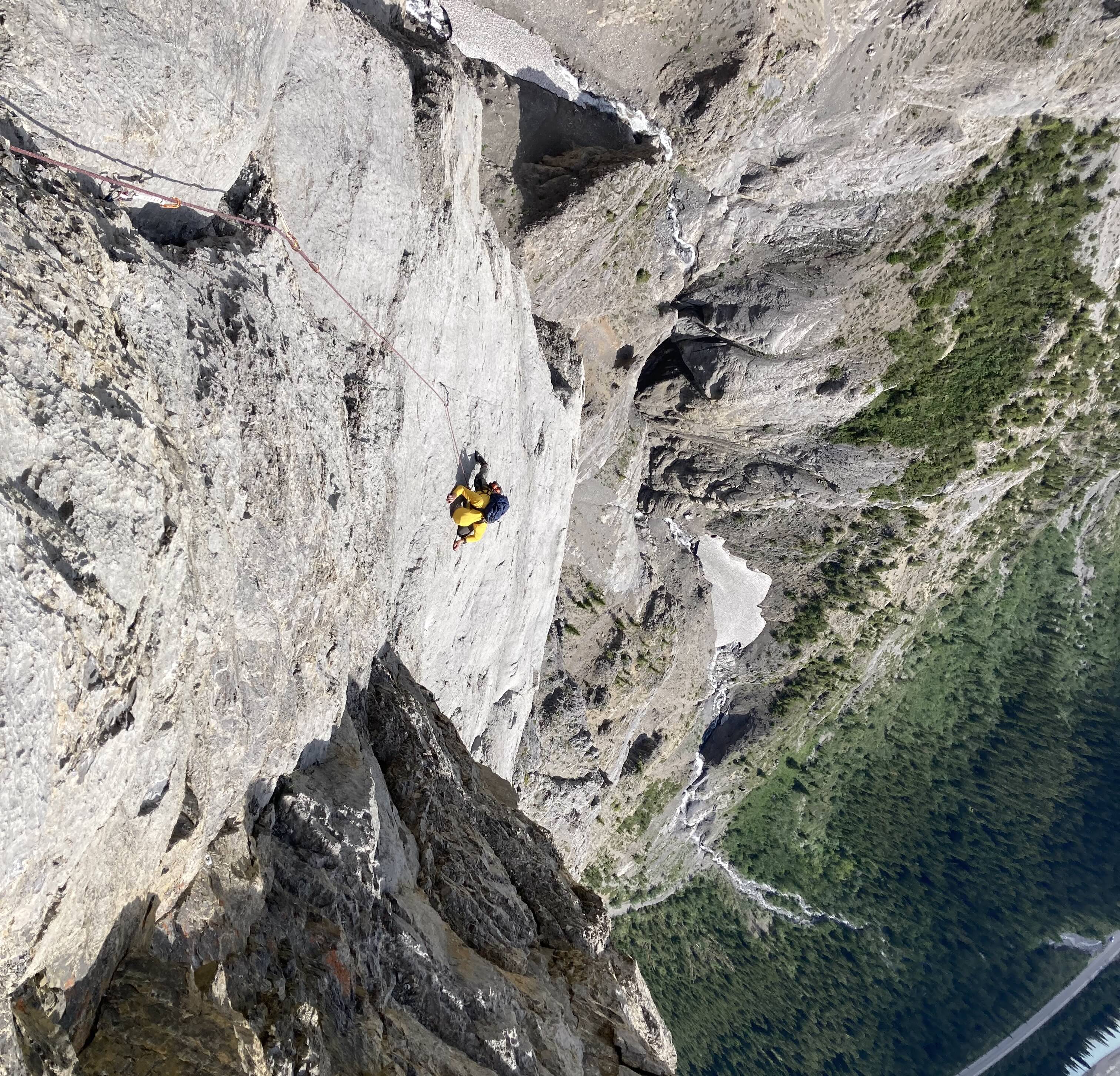
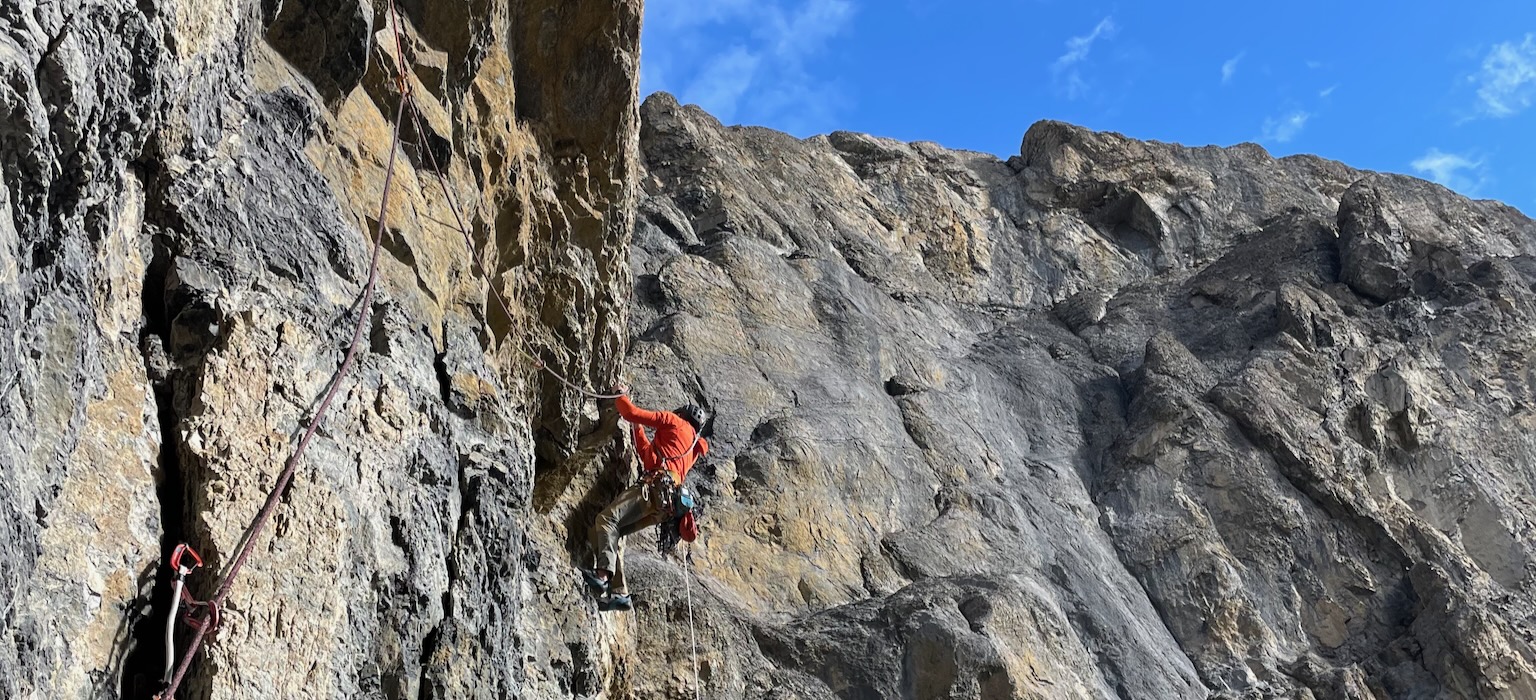
The next pitch looked awesome. Steep, often juggy, and most importantly, there was an actual crack that would take gear. I slotted in nuts and plugged cams. I reveled in the best protection so far on the route as I jammed and lay backed my way up. I came to the crux roof sequence and took my time fiddling in a few good pieces of pro before committing. Huge overhanging jugs on the left wall let me gain height before a powerful series of side pulls let me slide back right above the roof. A chossy ramp led to a beautiful belay ledge atop a tower. The top of our line was in sight, and to my eyes, the remaining terrain looked like a friendly alpine corner system.
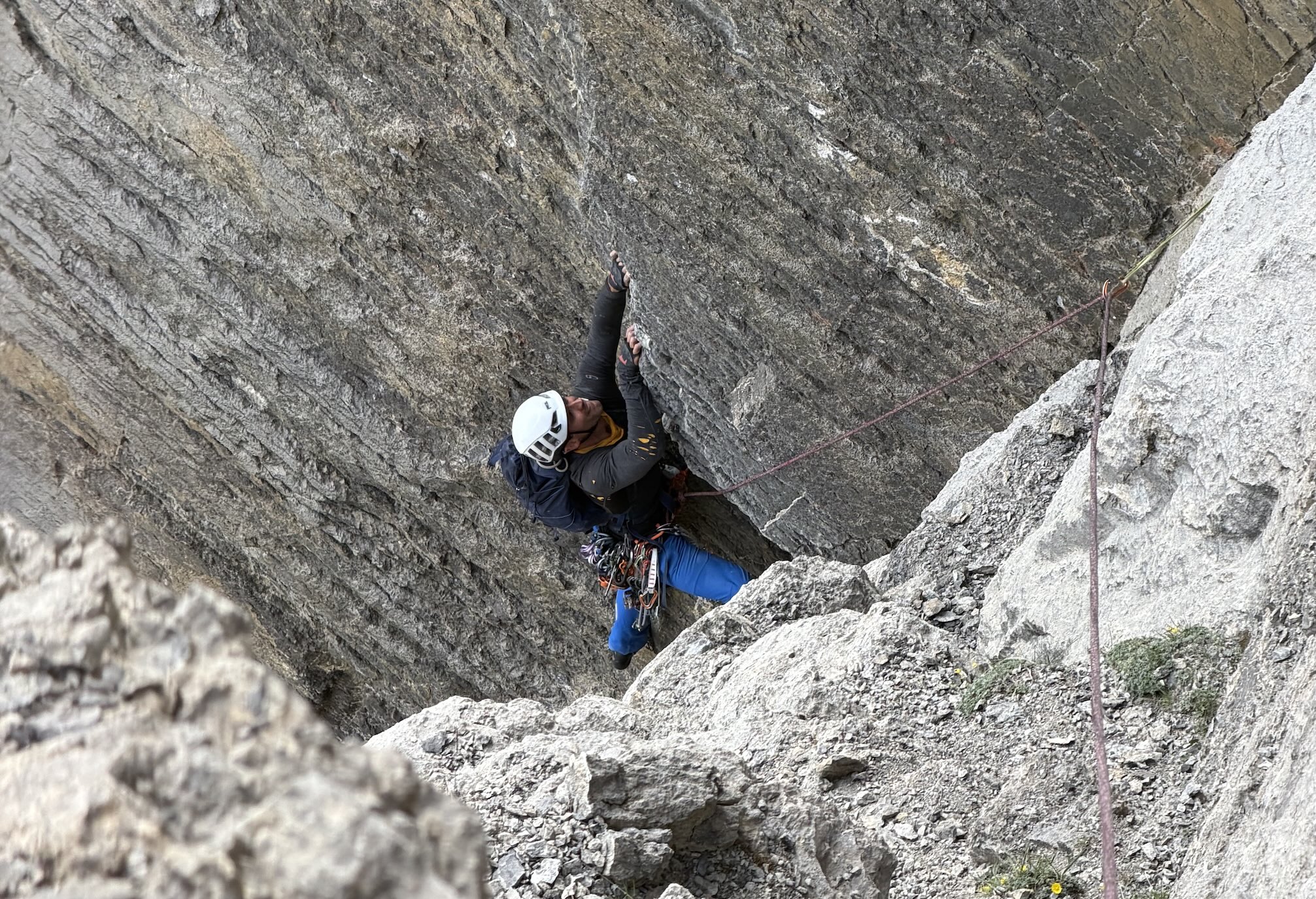
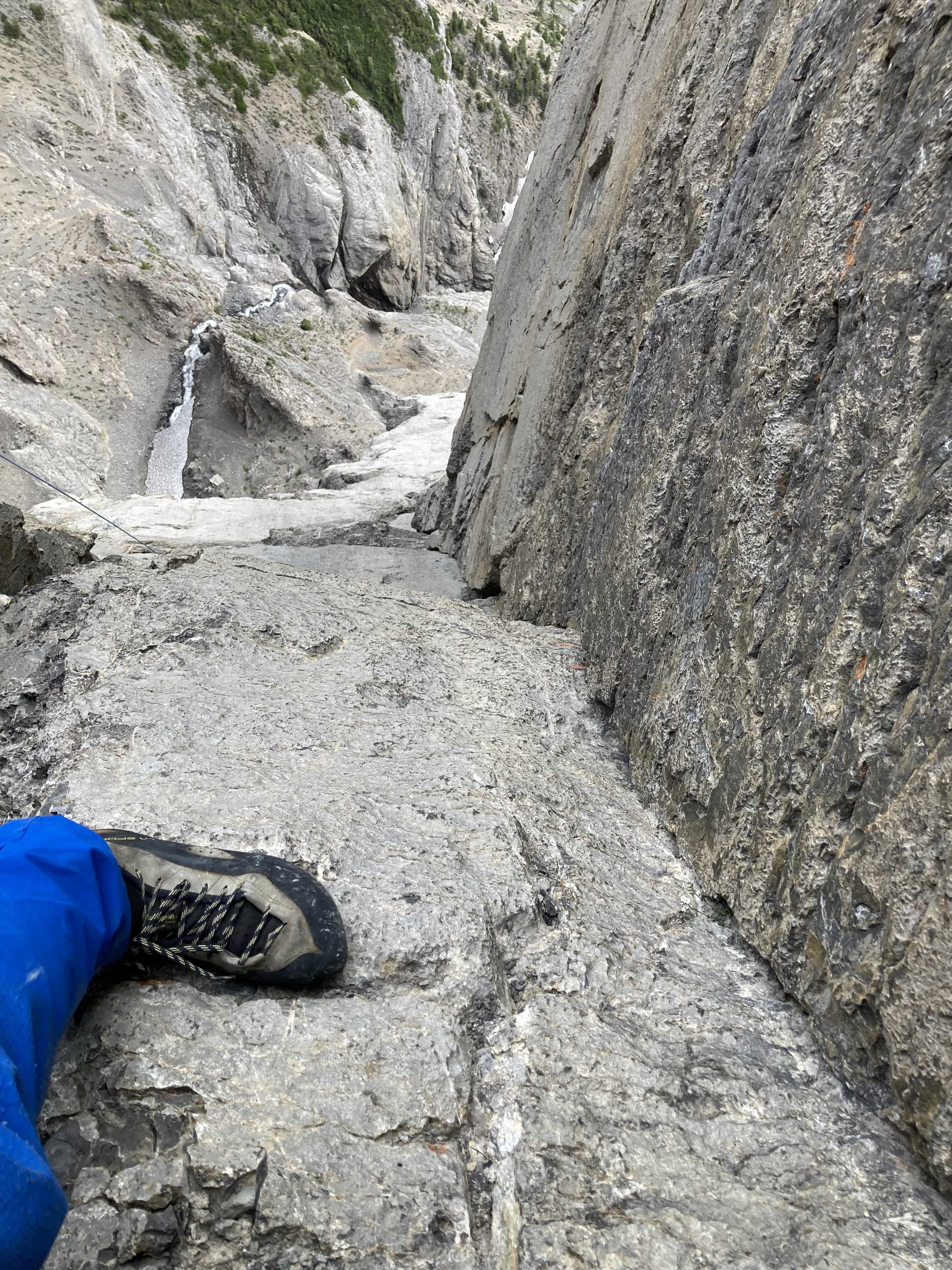
Gavin joined me, and his eyes accurately saw a much greater challenge. The rock on his lead was often terrible, and sporadic gear protected the easy climbing well and the hard climbing poorly. As the pitch steepened towards the end, the loose rock at least presented large, if suspect holds. He put in an anchor, and a large hold snapped off in my hand just before I joined him at it.
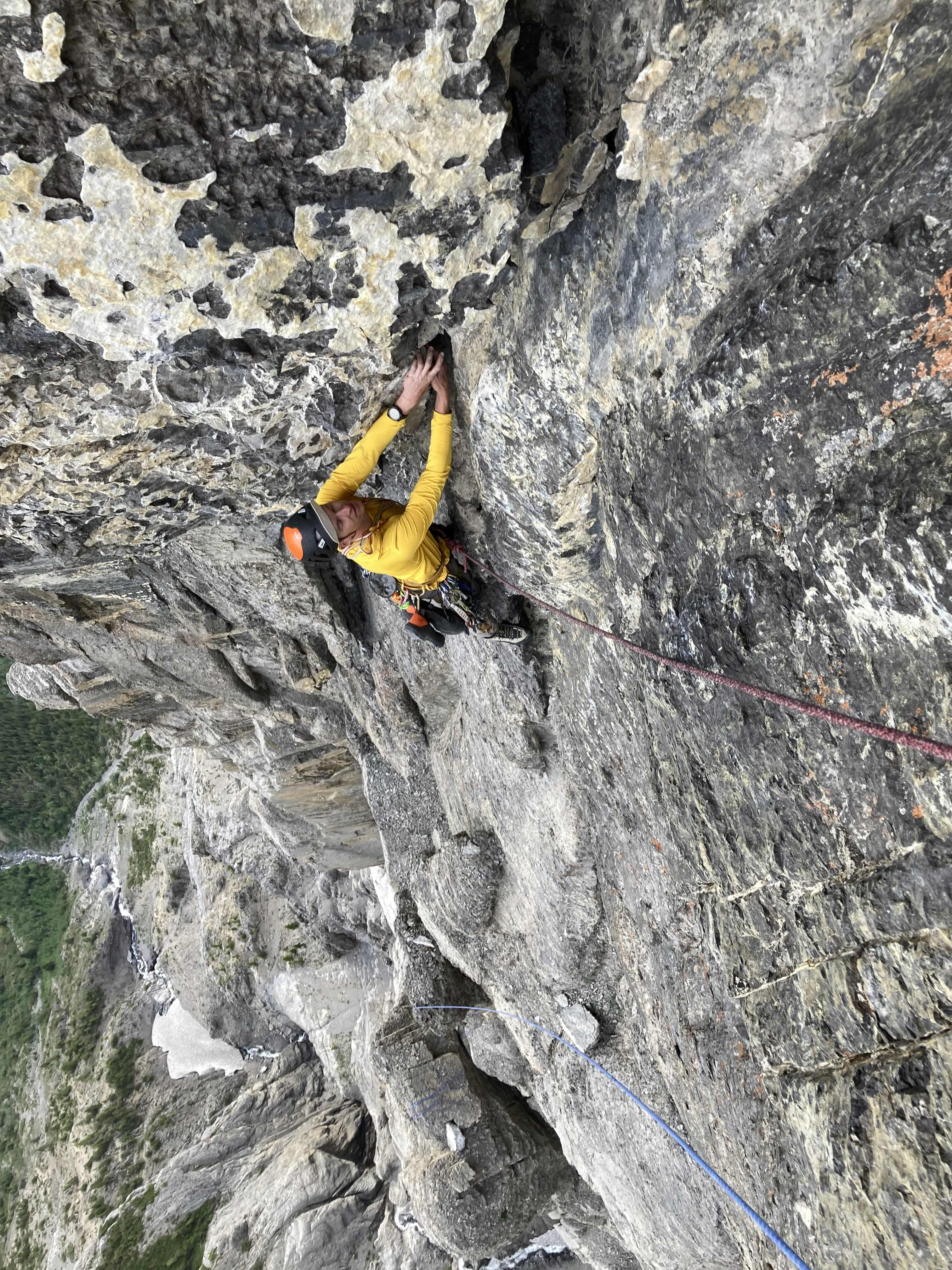
I went into our final pitch optimistically, but it was a true test piece for me. Tricky sporadic protection, technical movement, steep bulges, razor sharp jamming, and questionable rock integrity had me pondering every movement carefully as my breathing ramped up. I teetered up a final choss pinnacle, most of my large cams depleted, and spent long moments pondering my next move. I poked my head past a lip and saw that the rock above turned into fourth class downsloping shale. The drop off to my right wrapped back underneath me, overhung, with the top of the Polar Circus waterfall pouring down onto slabs below. I carefully positioned a number three and reached deep into a cold cleft to blindly wiggle in a point-five. I batman-ed back down my rope, back cleaned a number four, add it to my anchor, and brought Gavin up.
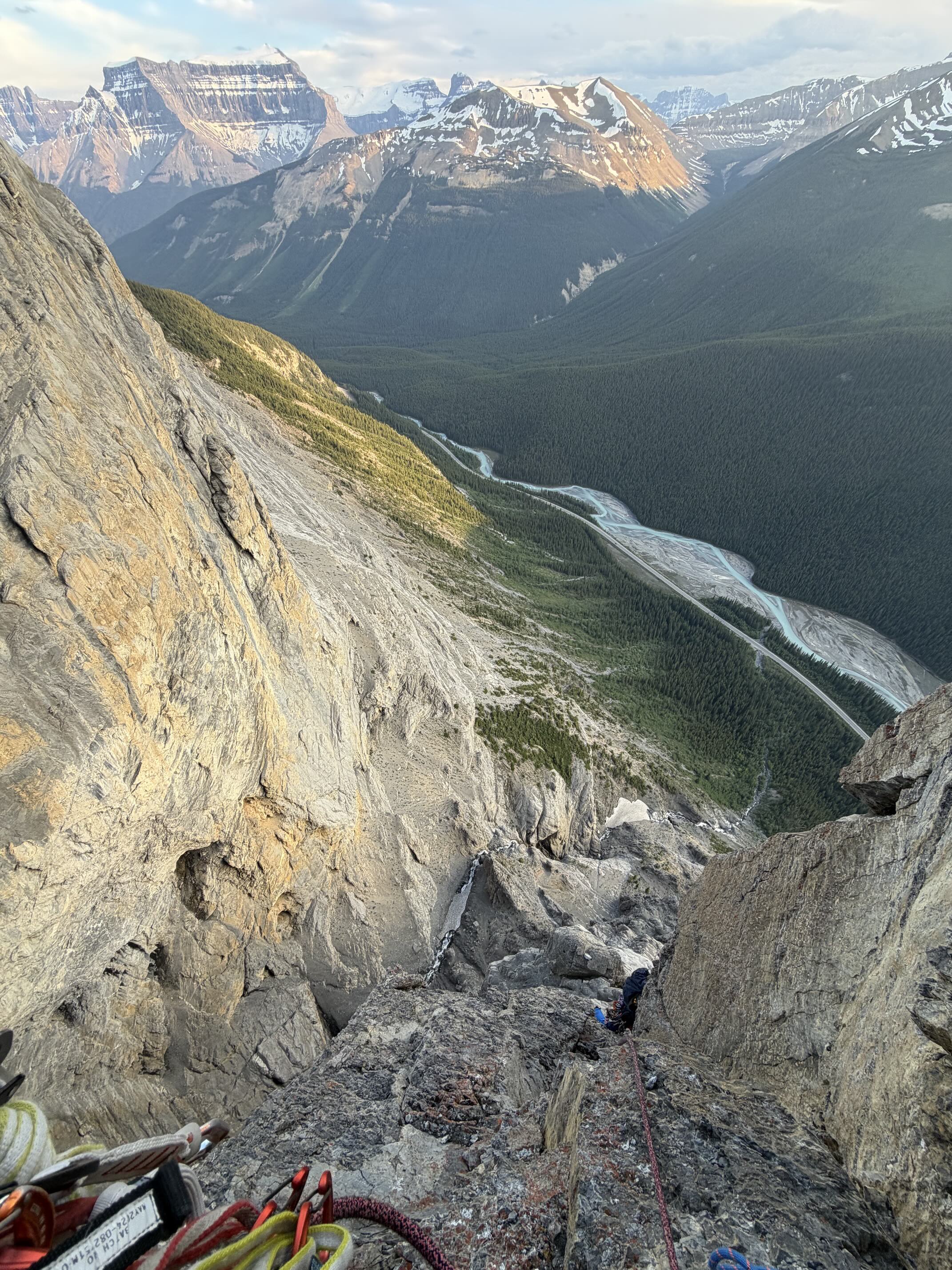
A Stunning Descent
In my head, we were going to scramble out the top on choss and hike down to the top of Polar Circus to begin our descent. Gavin never had any intention of going beyond this point, and suggested that we start our rappels. I’m damn glad he did. This is the first time I’ve fully appreciated and embodied this cheeky quote.
“Stopping at the end of the, ahem, difficulties.”
— Kelly Cordes
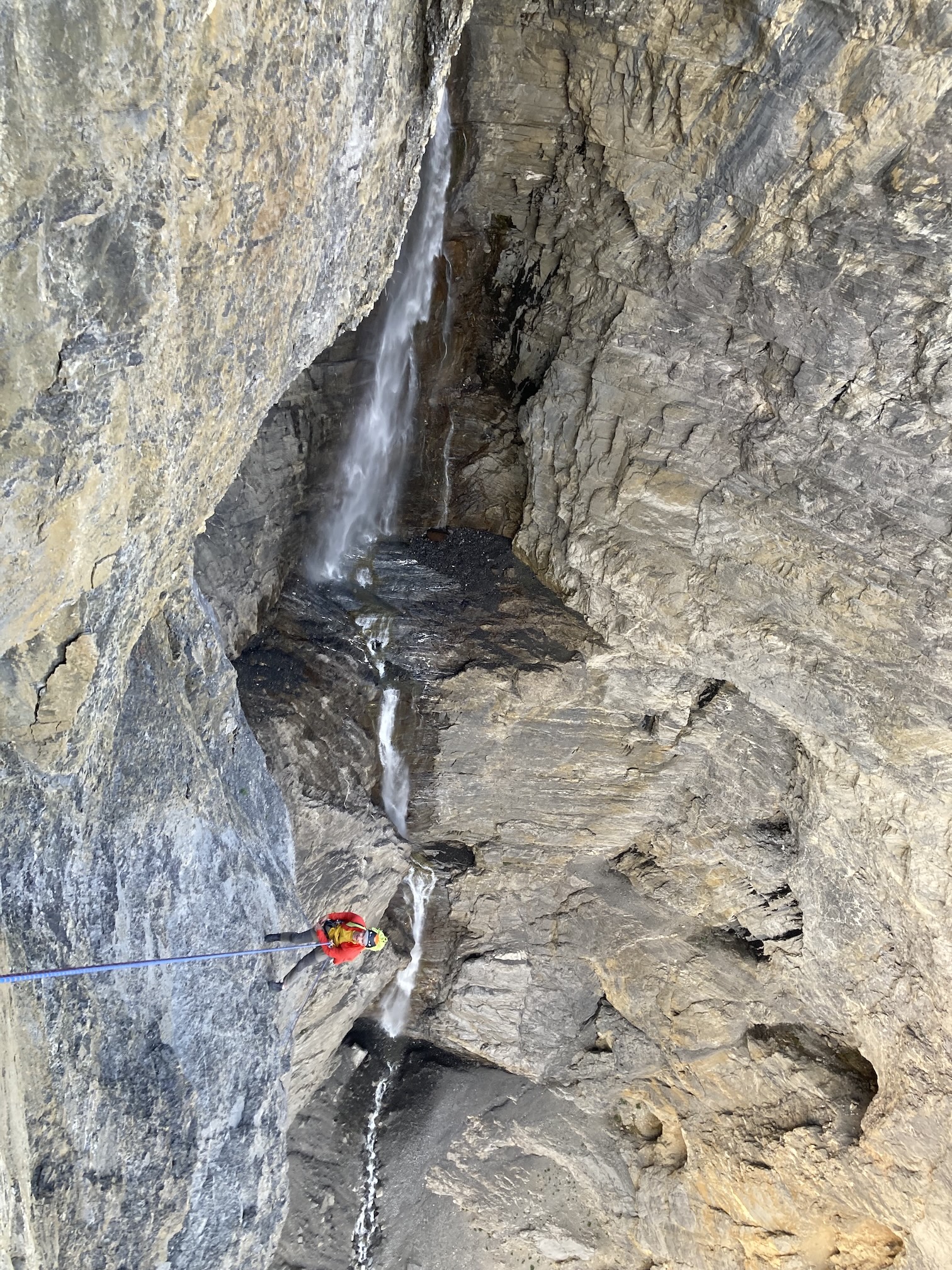
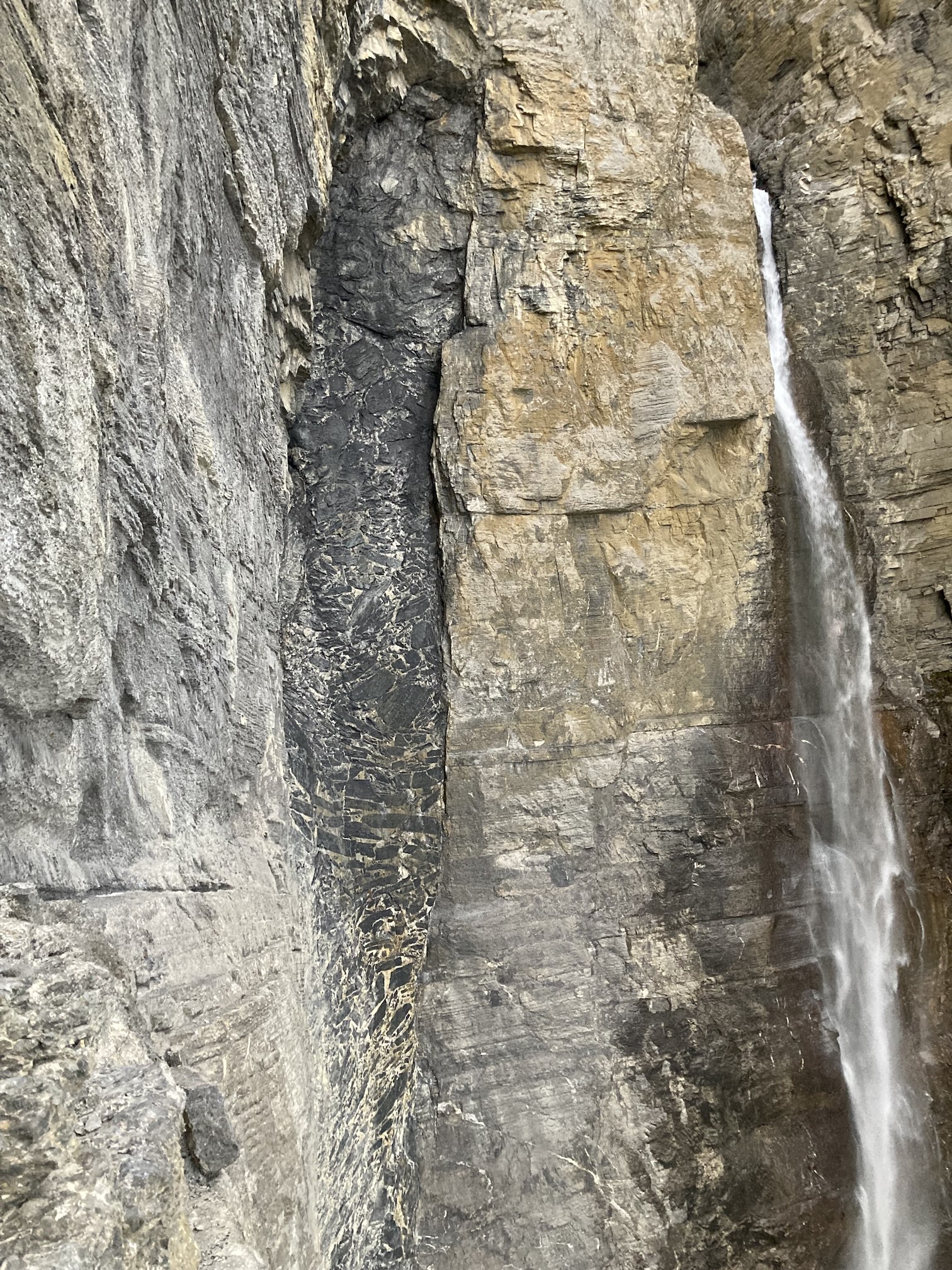
Two incredible rope stretchers took us down the overhung wall, with absolutely spectacular views of the whole amphitheater and its surging waterfalls all around us. A third rappel took us down rock slabs past the ribbon. It was ten o-clock, and our headlamps came out. We traversed on ledges before doing our final rappel in the spray beside the start of the upper tiers.
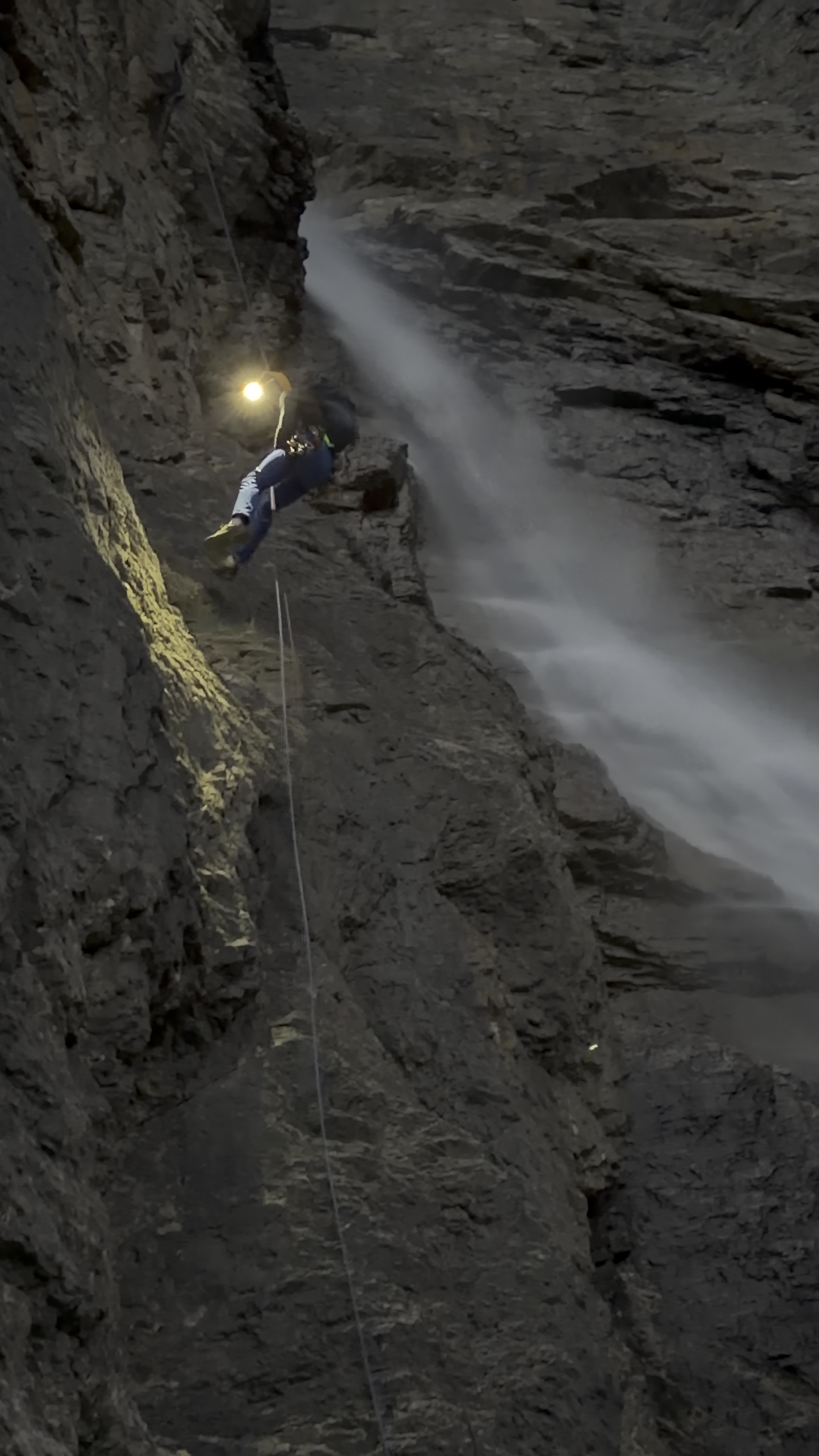
From here the adventure continued, but the excitement abated, and it became merely a mission to get home before sunrise. I found a lost ice tool as we hiked back out toward the pencil-turn ledge. I bet there’s a bunch more lost gear scattered around, slowly being swept toward the road by avalanches. We descended ledges skiers left of Polar Circus, alternately scrambling downward and rappelling off trees as we encountered cliffs.
Eventually we came to the top of the first pitch of Polar, and did a final rappel off a single ring bolt to land at the base of the falls. The tails of our rope were swept downstream in the current. We packed them away for the last time and hiked back across the traverse ledge and down the avalanche gulley. It’s much less fun when it’s thin scree atop hard packed dirt. We dreamed of winter butt slides as we struggled downward.
Finally, we arrived back at the car, eighteen hours after we’d left it. It was a long day, but it felt civilized compared to our twenty-six-hour saga on Confessions of a Choss Gobbler the year before.
Musings
I’m proud of how we executed on this vision. It was ambitious and taxing, both physically and mentally. But everything went more or less ‘according to plan’. The climbing often felt bold and audacious, but never out of control. We prepared well and brought the right skills and tactics to bear. First ascents in the alpine always carry heightened risk, but it didn’t feel like we got away with something we shouldn’t have been doing.
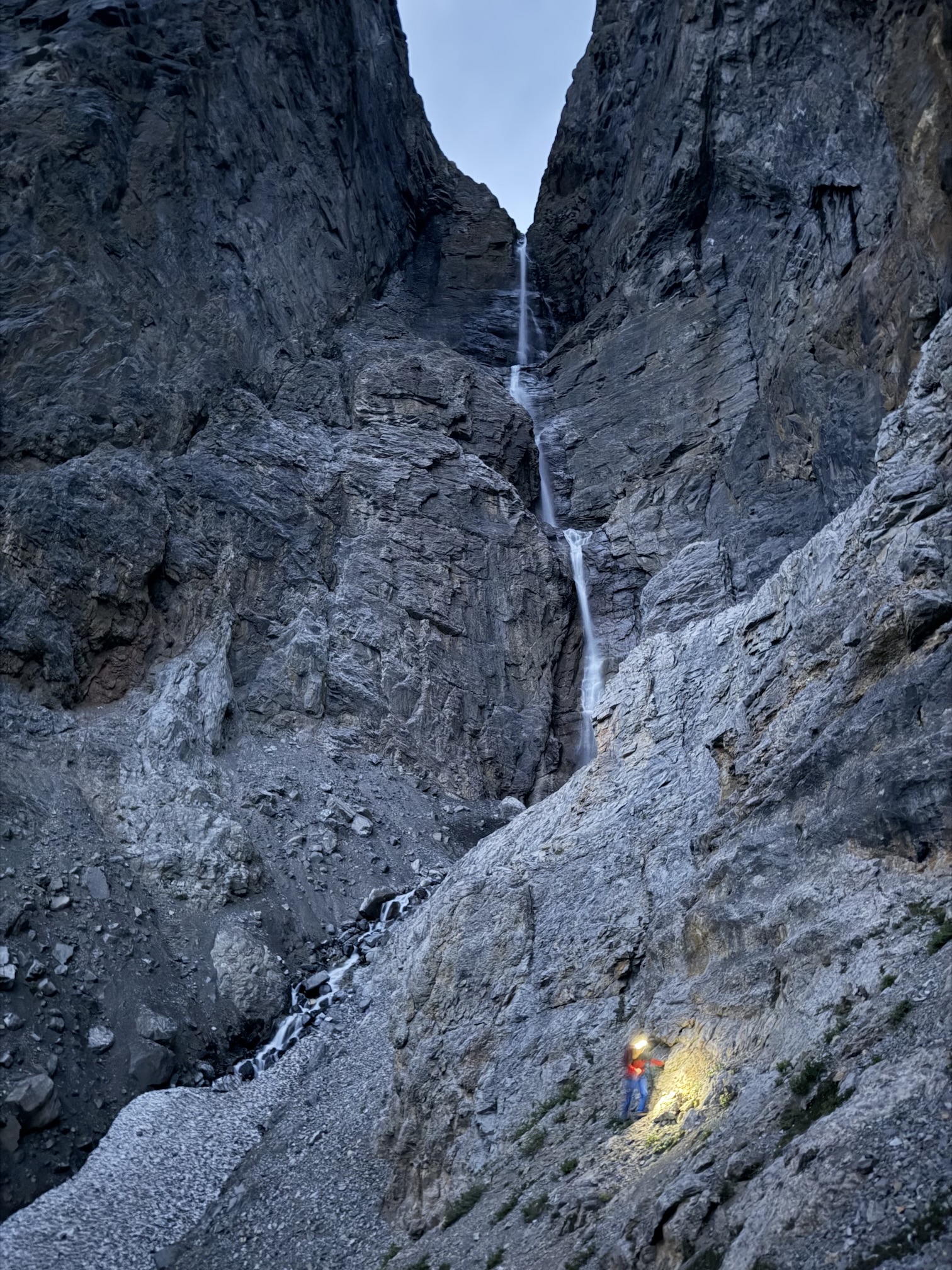
Strangely, a part of me feels almost like something is missing because it went so smoothly (in a relative sense). It’s as though I was waiting for the hammer to fall the whole time, and when it never did, it made the adventure feel almost incomplete. It’s not that I wanted something to go wrong, more that there was no singular point of adversity to identify as the obstacle we had to overcome or endure to succeed. There was no point of climax, just a steady siege.
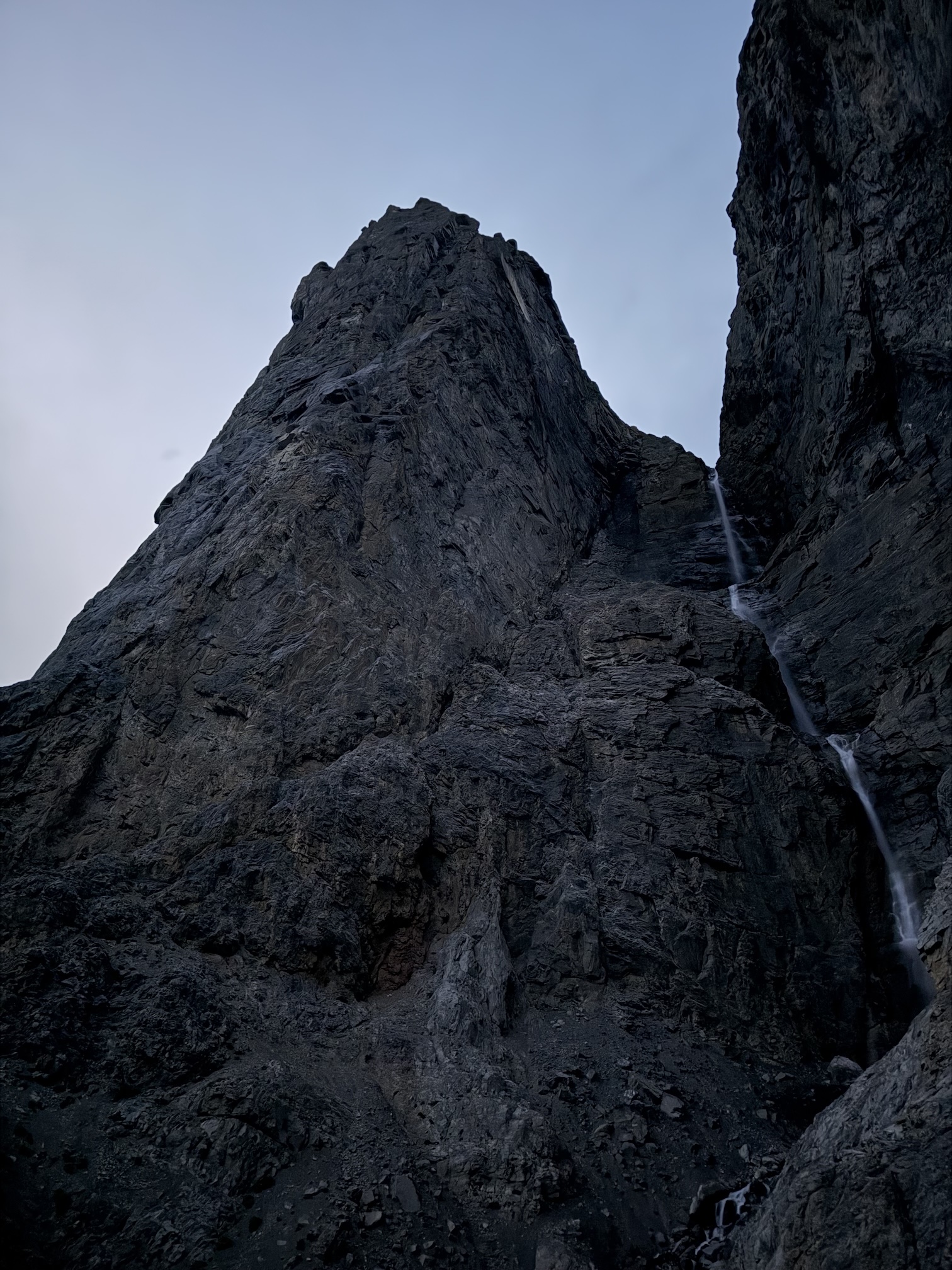
All the same, this is another adventure which I’ll cherish for a lifetime. I’m going through the Apprentice Alpine Guide courses, training, and exams this summer. The process leaves me without as much time to do ‘personal’ climbing. So, I’m trying to really make those days count. For me, a day in the alpine is worth ten at the crag, and I’ll always be grateful for Gavin’s supportive, curious, and eternally positive vibes when we’re out there together, looking for trouble.
Route Description
Solar Circus
Cirrus Mountain, Icefields Parkway
5.11- R 415m TD
Gavin McNamara, Greg Barrett
July 6, 2026
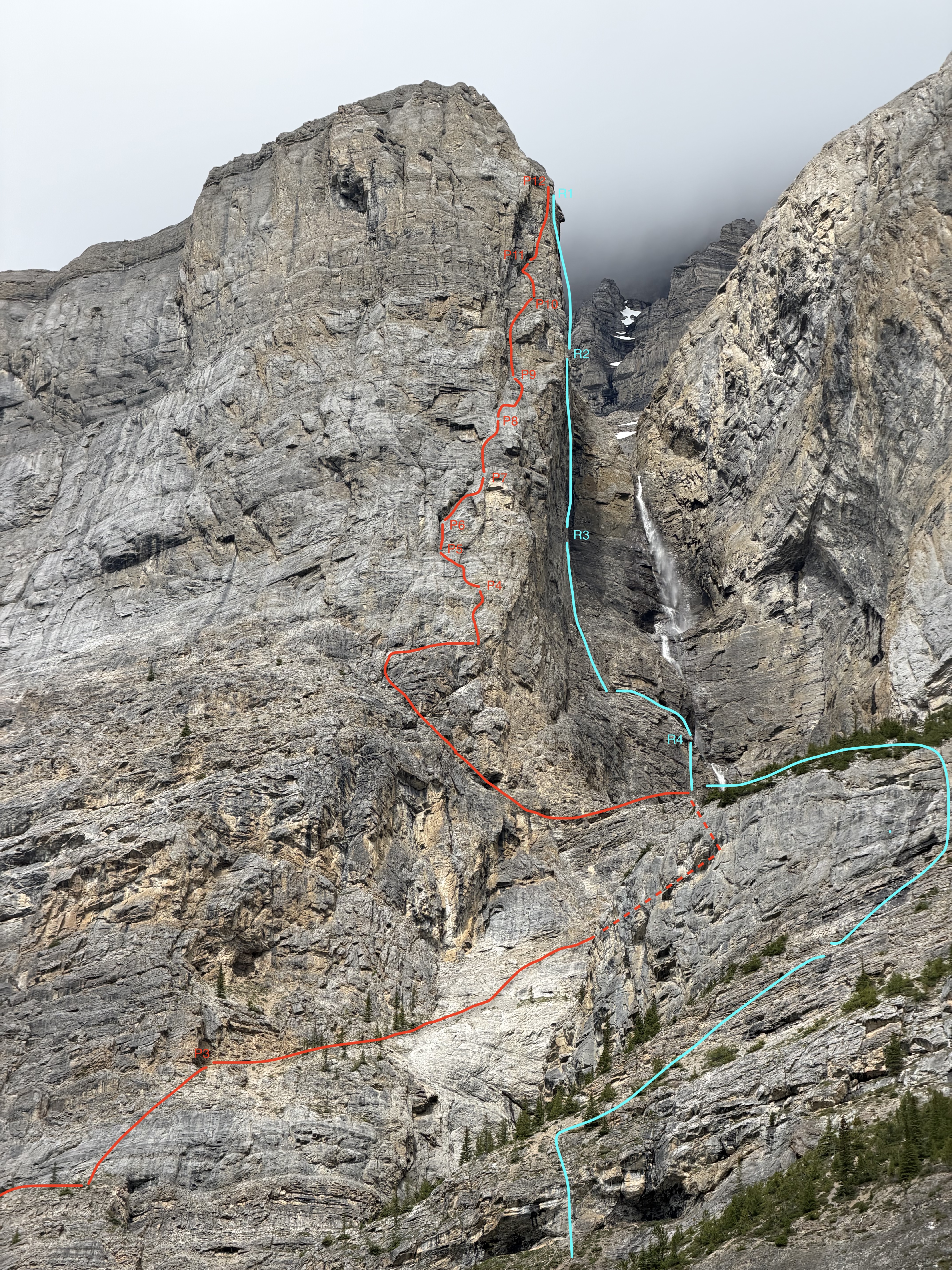
This is the first route on the prominent buttress left of the classic ice climb Polar Circus. The position beside the surging waterfalls is spectacular. While close to the road, it carries a very alpine character. Many pitches contain excellent climbing on steep and at times high quality rock. However, despite eight protection bolts, many also contain extended runouts on difficult, insecure, and loose terrain. The climbing is stimulating for those who seek out these challenges, but it is a serious affair.
Start of climbing (52.13964, -116.98590)
Approach
Park as for Polar Circus. Head up a trail on the right side of the creek until it becomes faint. Drop into the creekbed and follow it until just before the first significant waterfall. Cross to the left side. Continue following the path of least resistance up rock slabs until you arrive at the traverse ledge normally used to bypass the approach ice in winter. Pitch one starts from a high point on a dirt cone beneath an obvious weakness.
Pitch Breakdown
Pitches 1-3 below are described as the FA climbed them. Tim Taylor’s ‘Solar Delight’ now climbs terrain ever so slightly right of these pitches. You may wish to follow his version instead, with bolted anchors and some bolted protection. For all three pitches, when in doubt, look up and right for bolts. I’ll link his route description when it’s posted.
P1, 5.4, 35m
Follow the path of least resistance through two small dish features. Continue with minimal protection to gain a large dirt ledge and a gear belay.
P2, Low Fifth, 45m
Climb a loose but juggy weakness at the right end of the rock ledge. Continue up until confronted by a steeper wall. Either climb this wall or head leftward across an easy ramp to gain a large dirt ledge system. Belay off a tree.
Coil the rope. Walk rightward around the prow and scramble up a loose gully until near it’s top. Step left onto a blunt arete. Scramble up this arete until at the base of a blank slab.
P3, Low Fifth, 60m
Climb runout but high quality slab. Eventually the angle eases. Continue straight up on easier ground to a gear anchor below a steep wall.
Pack up the rope. Hike and scramble up and right some distance to gain the large ledge above the pencil. Top up on water, then continue up the ramp system on the left of the stream. Scramble up a beautiful arete. Keep scrambling on good rock until you reach a ridgecrest and your first view of the upper tiers. Traverse left on a walkway in the sky until you come to the base of the steeper rock. This section has lots of enjoyable scrambling with great position.
Continue traversing hard left on dubious ledges (not as bad as it looks, but consider a running belay) until you reach a gravely prow and can see reasonable scrambling above you (coil the rope again). Trend up and left until you reach the base of the headwall. Traverse all the way right across its base until you’re overlooking Polar Circus again.
P4, 5.5, 35m
Head up and right in a broken corner. Follow the path of least resistance (runout) until you encounter a steeper blank wall. Avoid it by traversing left on jugs to gain a loose bowl. Ramps head left and right from here, take the right one to it’s top and belay on gear.
P5, 5.7, 25m
Step left off the pedestal onto a steep face. Pull through an overlap (runout) to gain the shallow right facing corner above. Continue up the corner until level with a small choss pedestal on your left. Move left around the pedestal and continue diagonally up and left to the base of the major right facing corner system. Belay here.
P6, 5.8+, 15m
Climb the corner towards the series of small stepped roofs. Traverse to the right end of the first roof and belay on small gear. This pitch was linked with P5 by the FA party, but could be linked with P7 instead.
P7, 5.10-, 30m
Head right across the face to a series of small ledges (gear). Continue up and step right into a steep gash near it’s top. Traverse right (runout), clip a bolt, and continue a ways up and right to a gear belay in a corner. Alternatively, continue up the steep roof crack from the start, rejoining higher up.
P8, 5.11-, 35m
A high quality pitch. Continue up the corner a short distance before stepping left onto the face and hugging a tower of surprisingly stable choss (runout). Climb up and right from here on steep immaculate stone occasionally punctuated by stances and bolts. Keep going up and right as the difficulty eases and arrive at a two bolt belay below the massive right facing corner system.
P9, 5.10, 20m
Climb up the slab just right of the belay past a bolt. At a second bolt traverse hard right (runout) to gain a larger right facing gulley. Continue up this gully to pedestal. Alternatively head straight up from the belay to the same location.
P10, 5.10, 50m
The money pitch. Continue up the steep corner with good gear past a bulge. Easier but steep ground leads to a remarkable roof pull sequence. Once past it, diagonal up and right on scrambling terrain to gain the top of a pedestal.
P11, 5.9+, 35m
From the pedestal climb poor rock, heading towards the right side of a yellow pinnacle. From the top of the pinnacle head left into the main corner and follow it until under a large roof. Questionable but interesting rock, sometimes runout, but also sometimes quite cool.
P12, 5.10, 30m
Continue up and right with some difficulty past numerous bulges. Eventually gain a small stance with a two bolt anchor, just before the rock turns from yellow to black. The climbing is fun and burly but the rock is loose and at times marginally protected.
Descent
The FA party descended from this point. The rock above is lower angle but gross, and the rap line from here is beautiful. If continuing above, you can descend back into the bowl as for Breccia (Betcha) Won’t Do That Again.
Rappel 1, 70m
Down and moderately right to reach another ring bolt station on a ledge. Absolutely stunning views of the upper Polar tiers.
Rappel 2, 70m
Rappel the overhanging face, mostly fall line. Use trad gear to keep yourself into the wall. There is a significant roof partway down. The FA party used a removable bolt on a ledge below this to stay close enough to the wall, but you may need to get more aggressive with the trad gear or use swinging momentum past this point. Magical position.
Rappel 3, 70m
Rappel down to the left of a loose a gulley, finishing on a ledge in lower angle terrain. Pull your ropes and drag them across a friendly traverse ledge back toward Polar Circus. Turn the corner, gaining a view of the base of the ribbon pitch. Scramble down a short distance on easy ledges to reach another ring bolt station.
Rappel 4, 70m
Rappel to the ground, with some waterfall spray. Again, absolute magic being beside the falls.
Hike down towards the notch above the pencil.
Rappel 4, 20m There is a bolted station on the wall high and left in the notch. Rappel down to the ledge atop the pencil. Keep your ropes out of the water.
From this point, reverse the way you came, scrambling downwards and rappelling three times.
Gear
- 70m ropes. Either half ropes or single/tag, both have advantages in this terrain. The FA party mostly used single/tag configuration and hauled packs frequently, but they did have a drill to contend with.
- 10 draws, mostly alpine. Extra double and triple length slings, especially if climbing on a single rope.
- Single rack .2-4, doubles .3-2.
- Some nuts, especially medium to large.
- Pins could be useful, particularly blades / peckers. The FA party placed only one due in part to having a single hammer.
Topo Photos
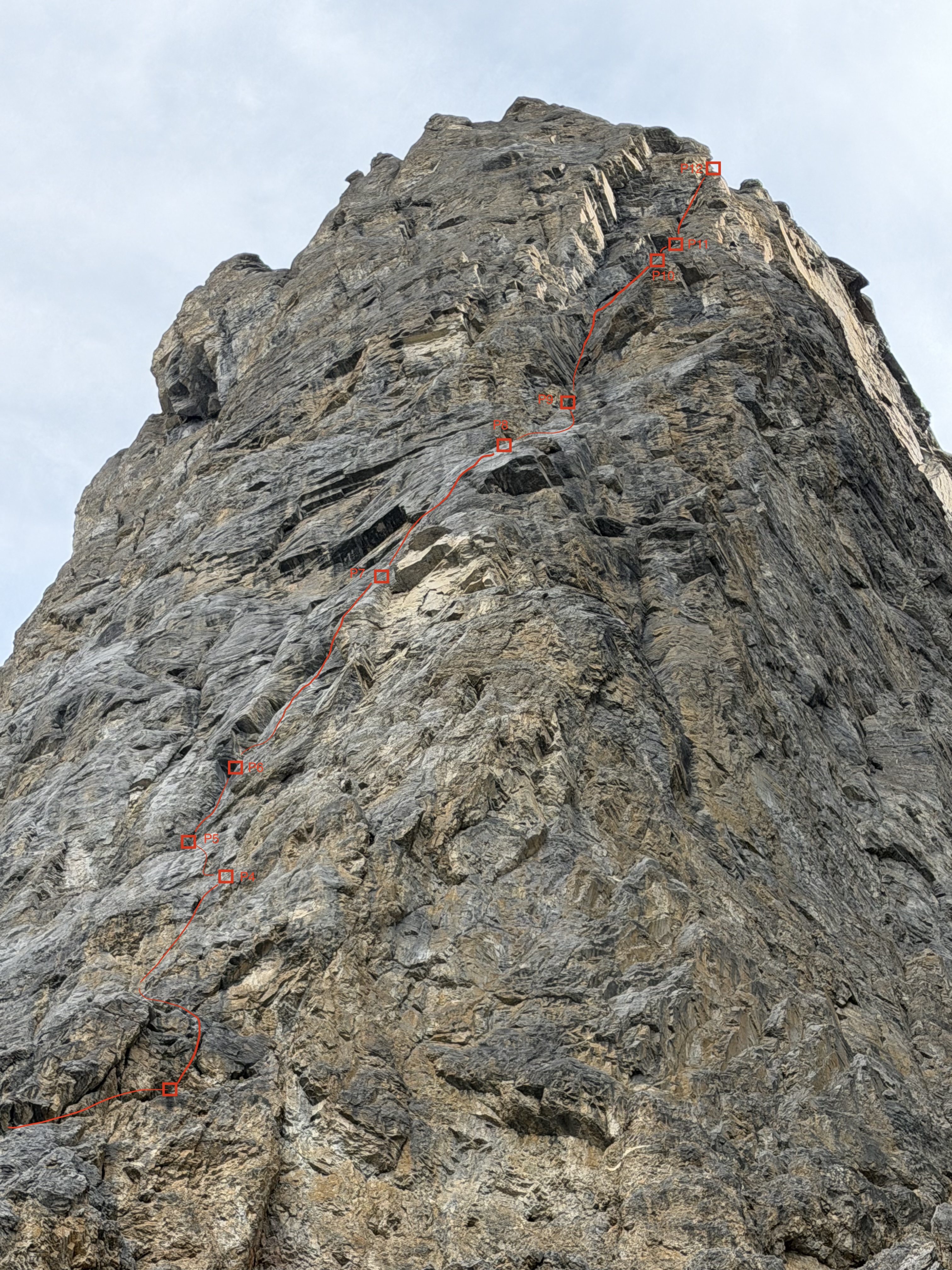
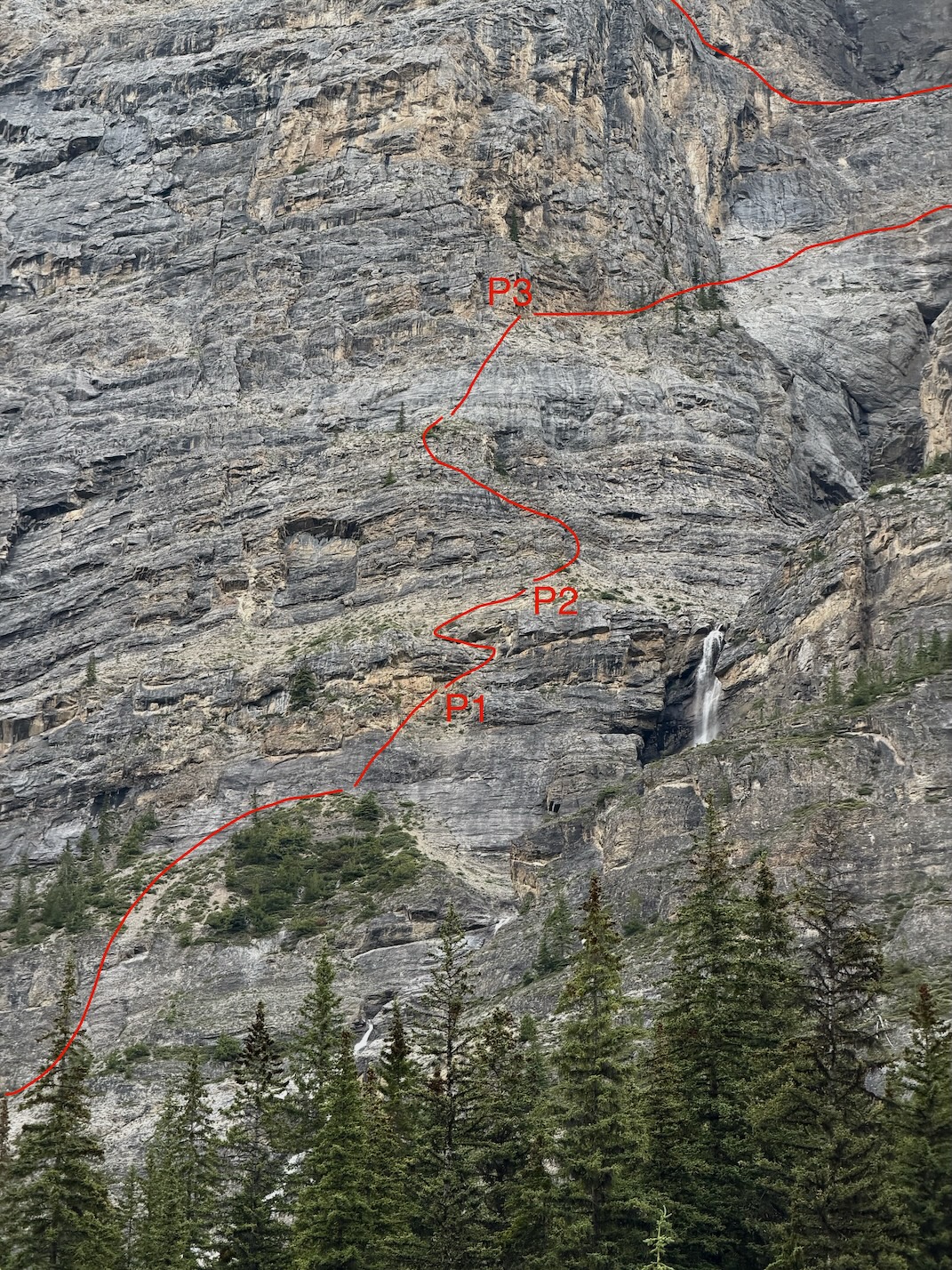
Solar Circus Route Description and Photo Topo by Greg Barrett is marked CC0 1.0