Load cells are a great way to measure force for no-hangs (or tool-hangs), but they can be pricey. I hacked my own together, and shortly after discovered a couple other good options.
My goal with this was to be able to train tool-hangs with higher than bodyweight loads, without involving a bunch of iron plates.
Three options
Real cheap and hack-job ($35)
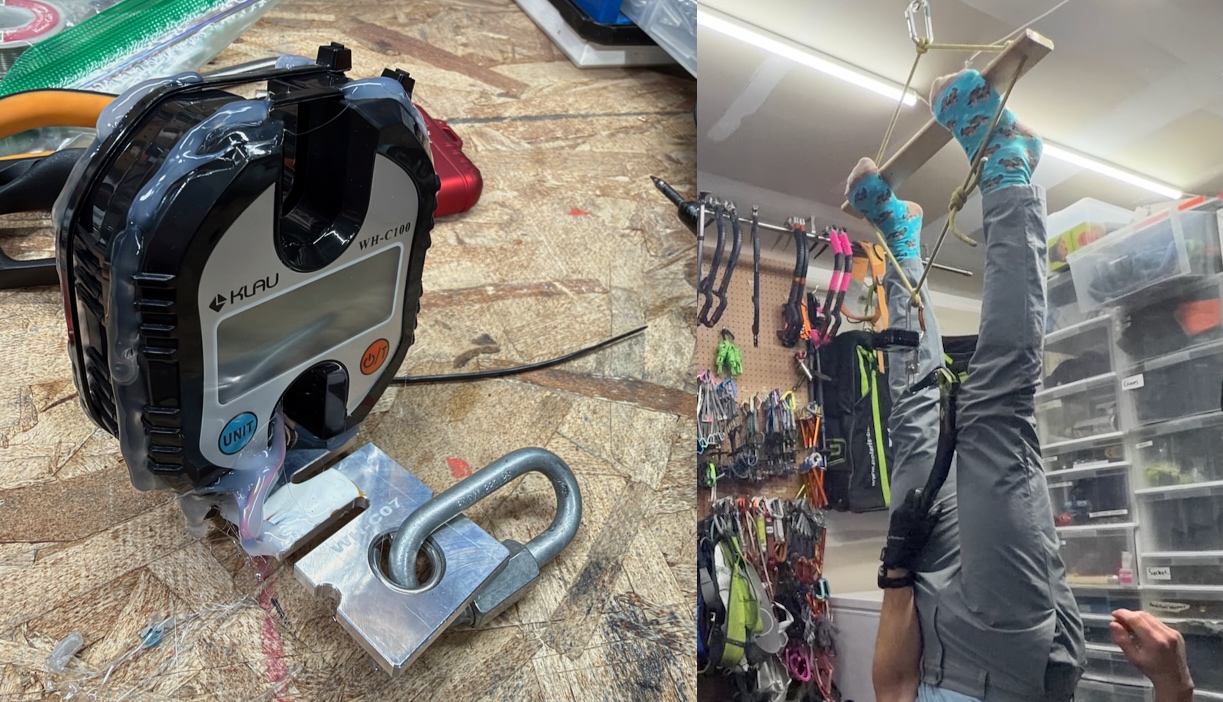
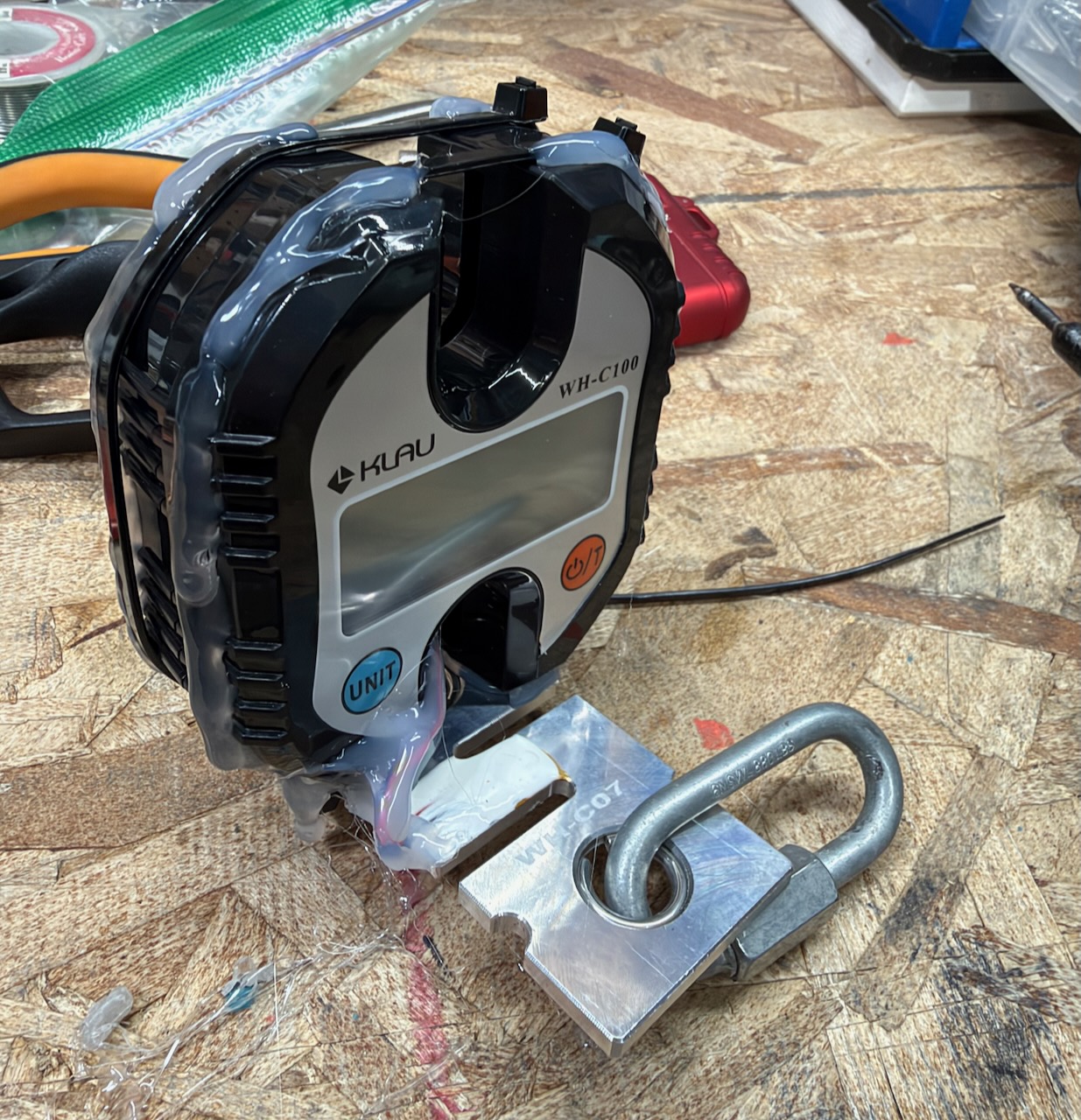
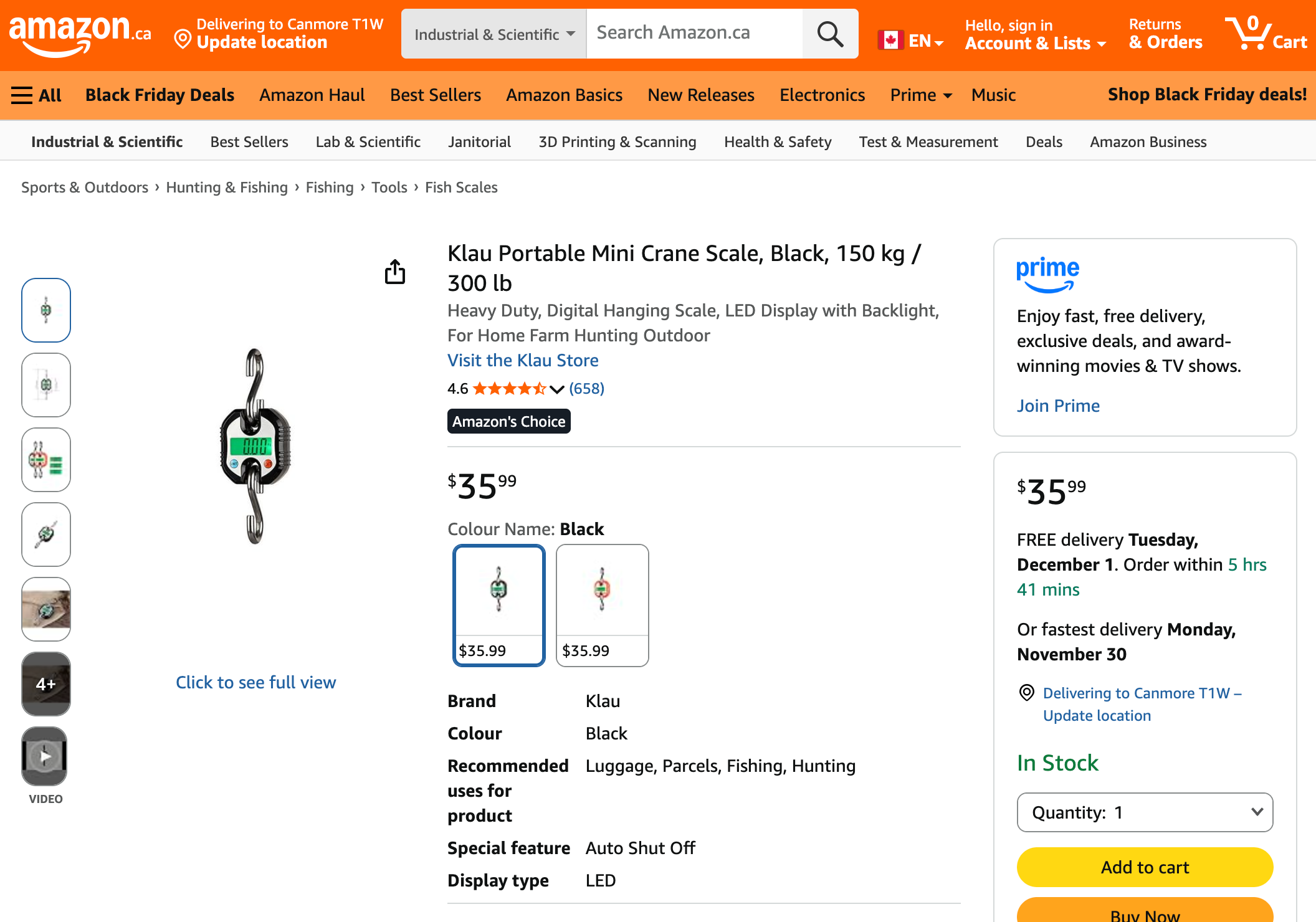
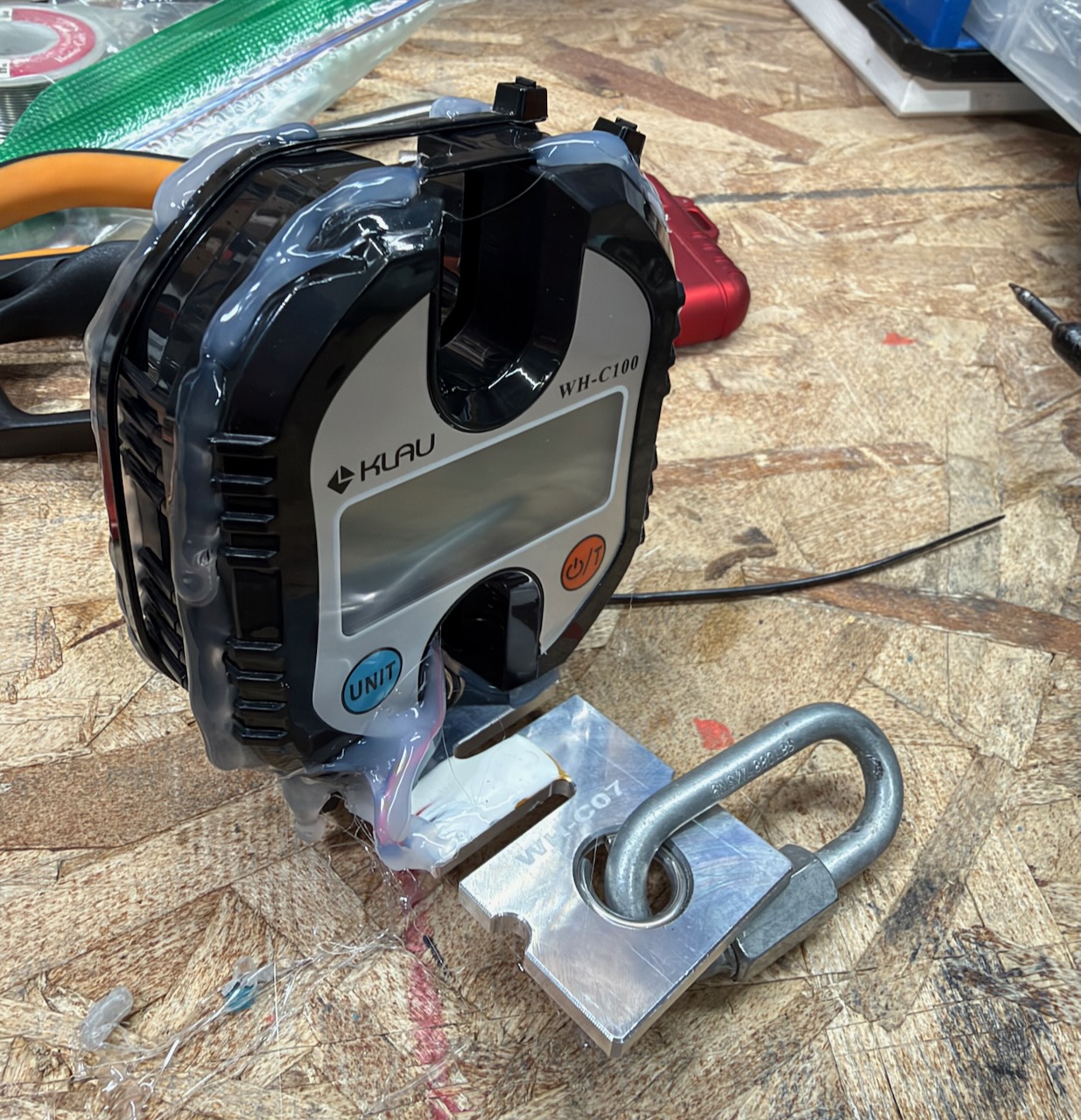
You can mod this $35 WH-C100 scale to make the display face you. Cheapest option I can imagine. Directions for the build below. 100% of the credit for this idea goes to u/FauxfauxB on Reddit, I’m just documenting exactly what he suggested.
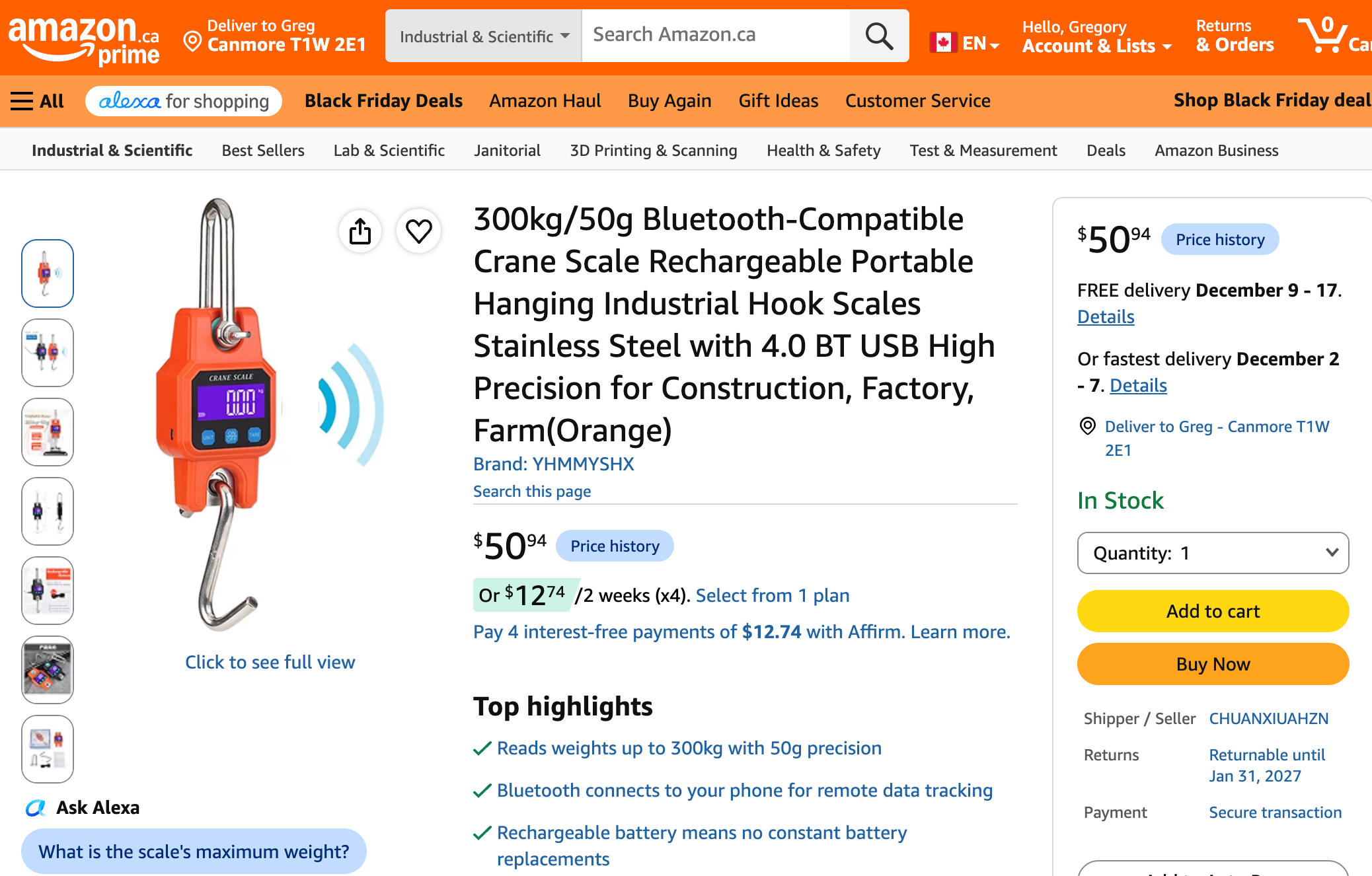
You can buy this $50 WH-C06 Bluetooth scale, and hook it up to the Frez App. As far as I can tell this is the right model. In all likelihood, you could do the same display-turning mod as I did on the $35 one here, but I can’t say for sure.
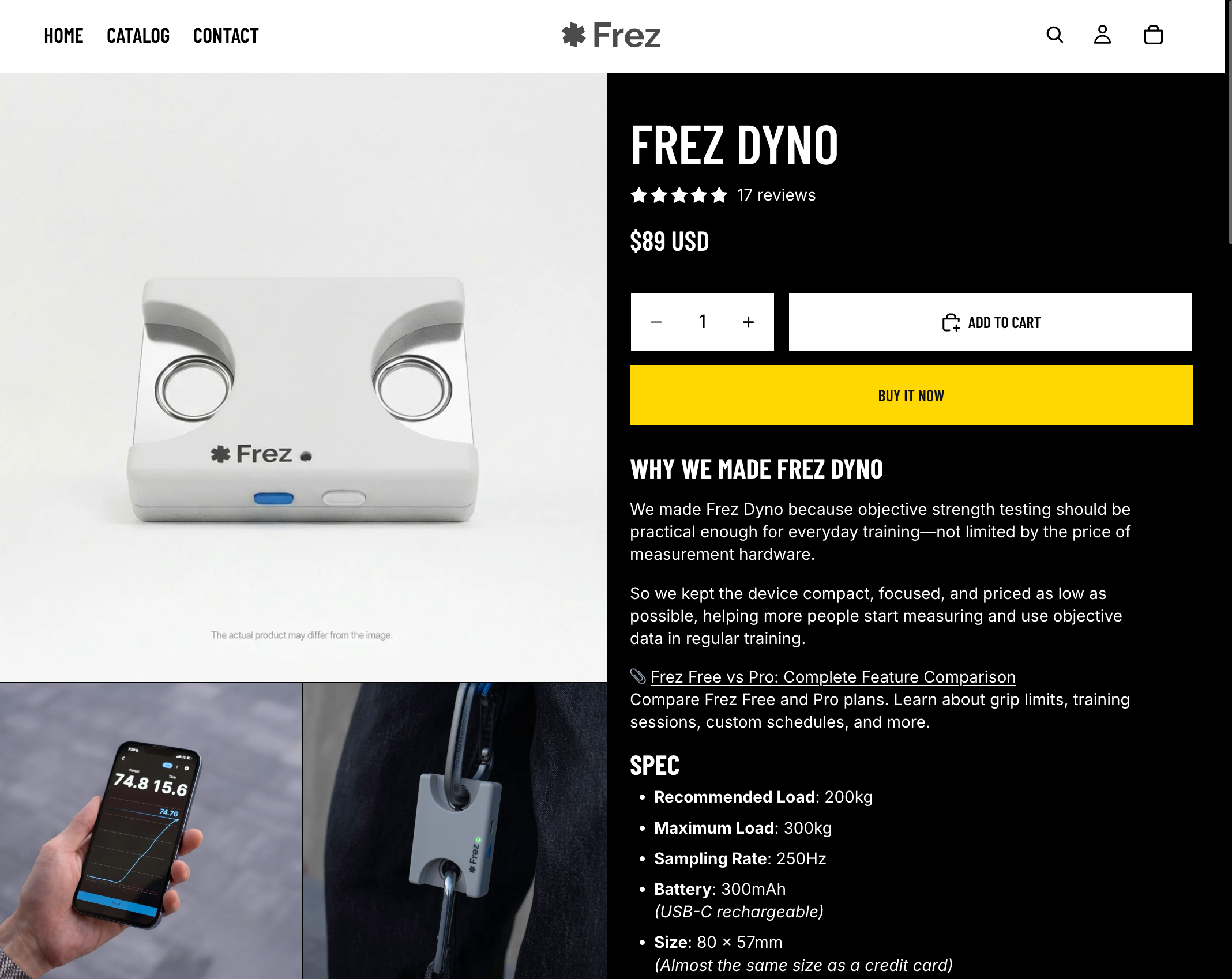
Frez makes a Load Cell that they sell for about $130 CAD. I have no affiliation with them, and have never tried it. But it seems like the project originated as a app to help people use off-the-shelf load cells, and evolved into wanting to provide people with a more refined product. I’m very supportive of that.
The $35 Build
At a minimum, you’ll need a small Phillips head screwdriver and some tape. Ideally, hot glue, zip ties, and either diagonal cutters or a soldering iron as well.
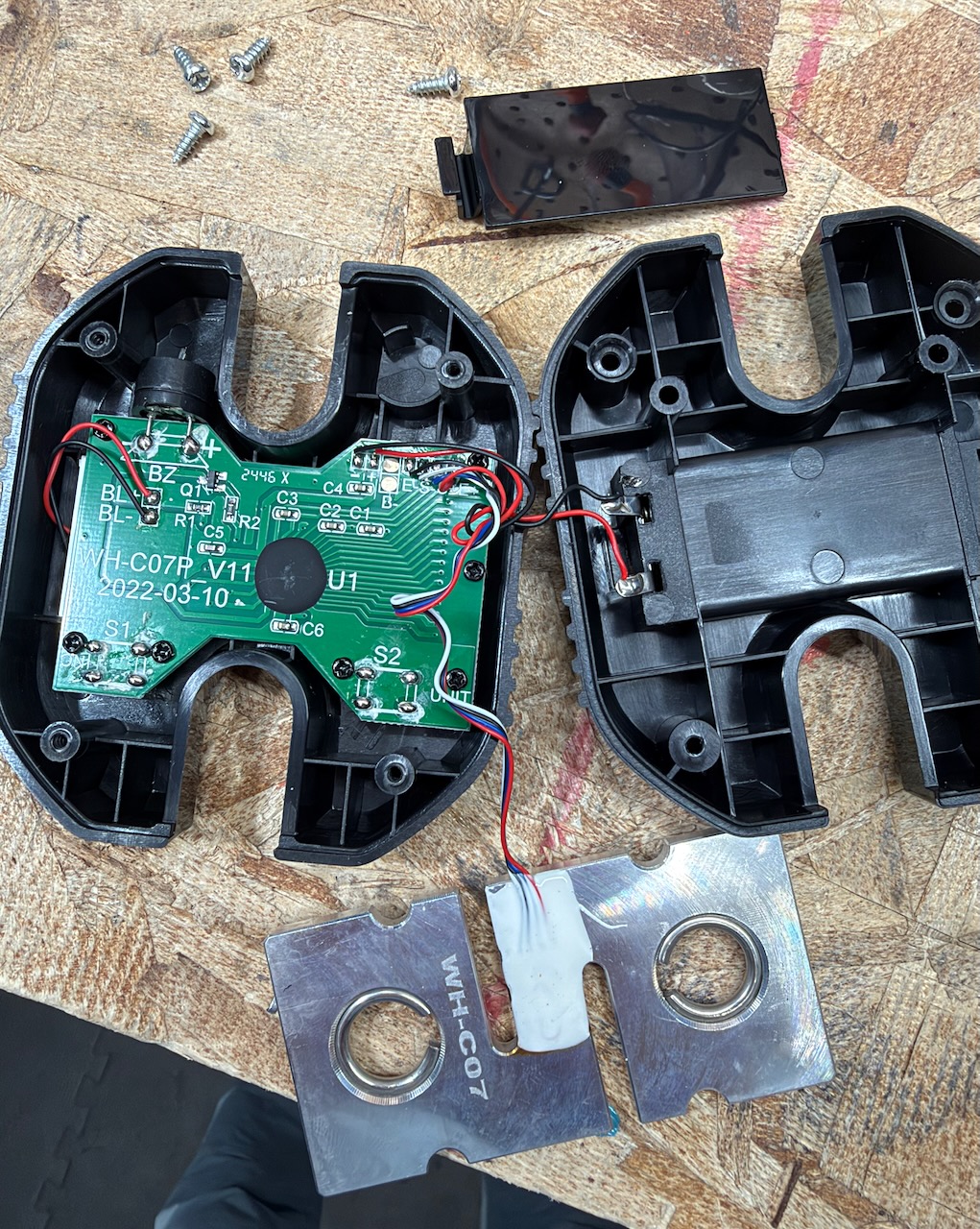
Remove four screws from the back of the case and open the unit up. Be gentle, the little cable isn’t that durable.
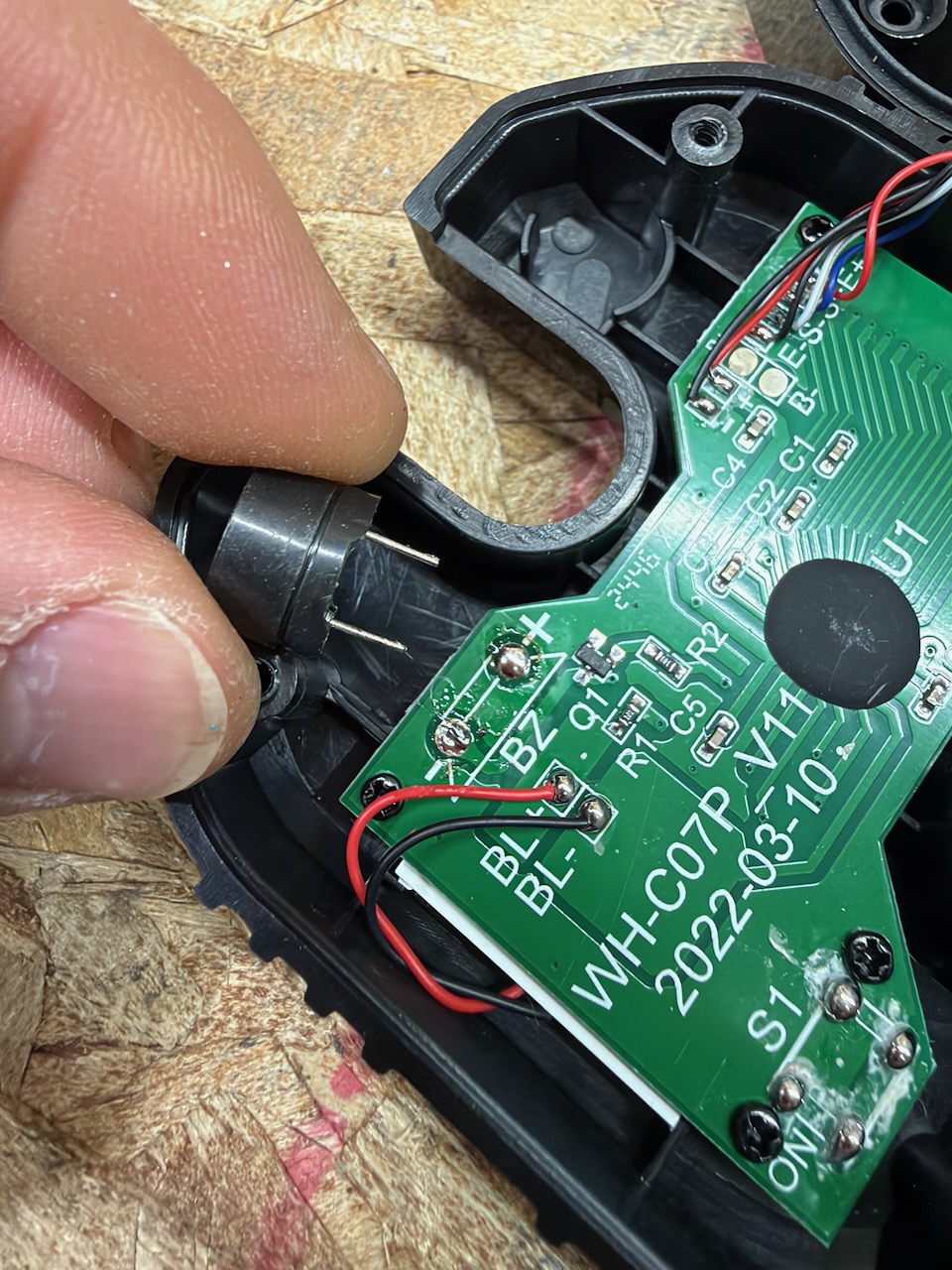
This speaker just makes loud useless noises. I’d suggest removing it, either with a soldering iron and solder wick, or diagonal cutters to snip the legs, or probably just snapping it off would work fine.
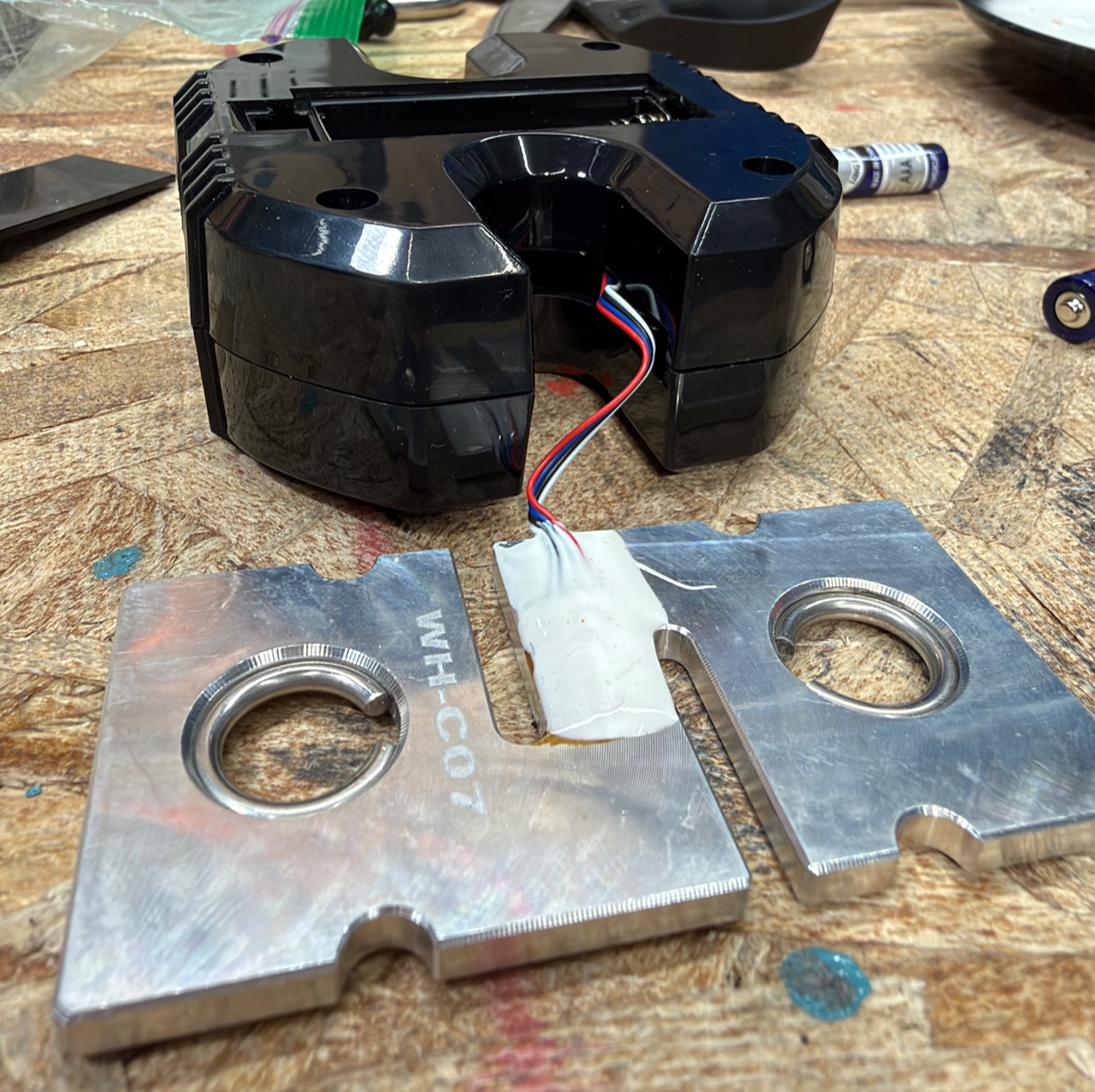
Route the delicate cable out the bottom of the unit and close it back up.
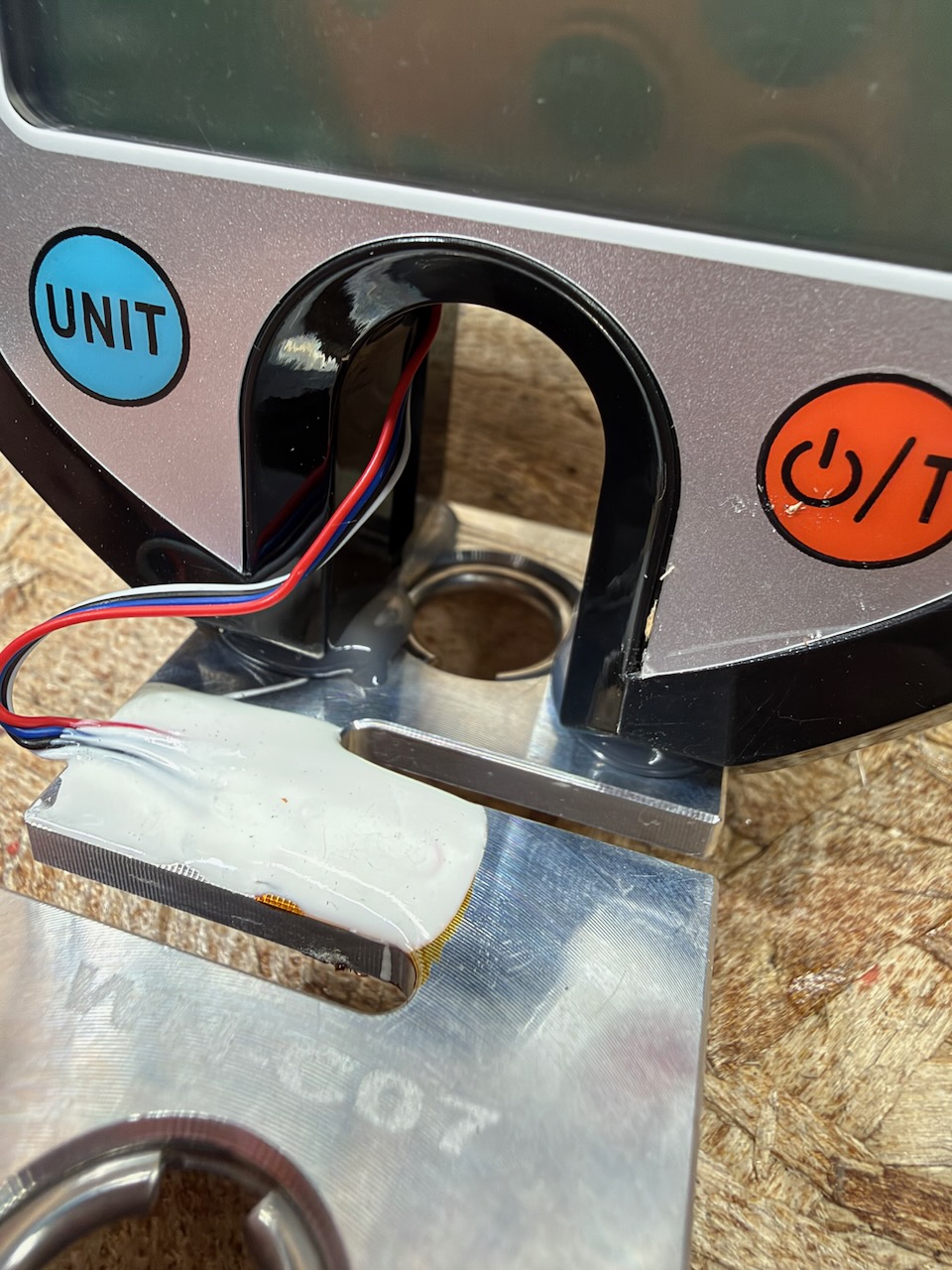
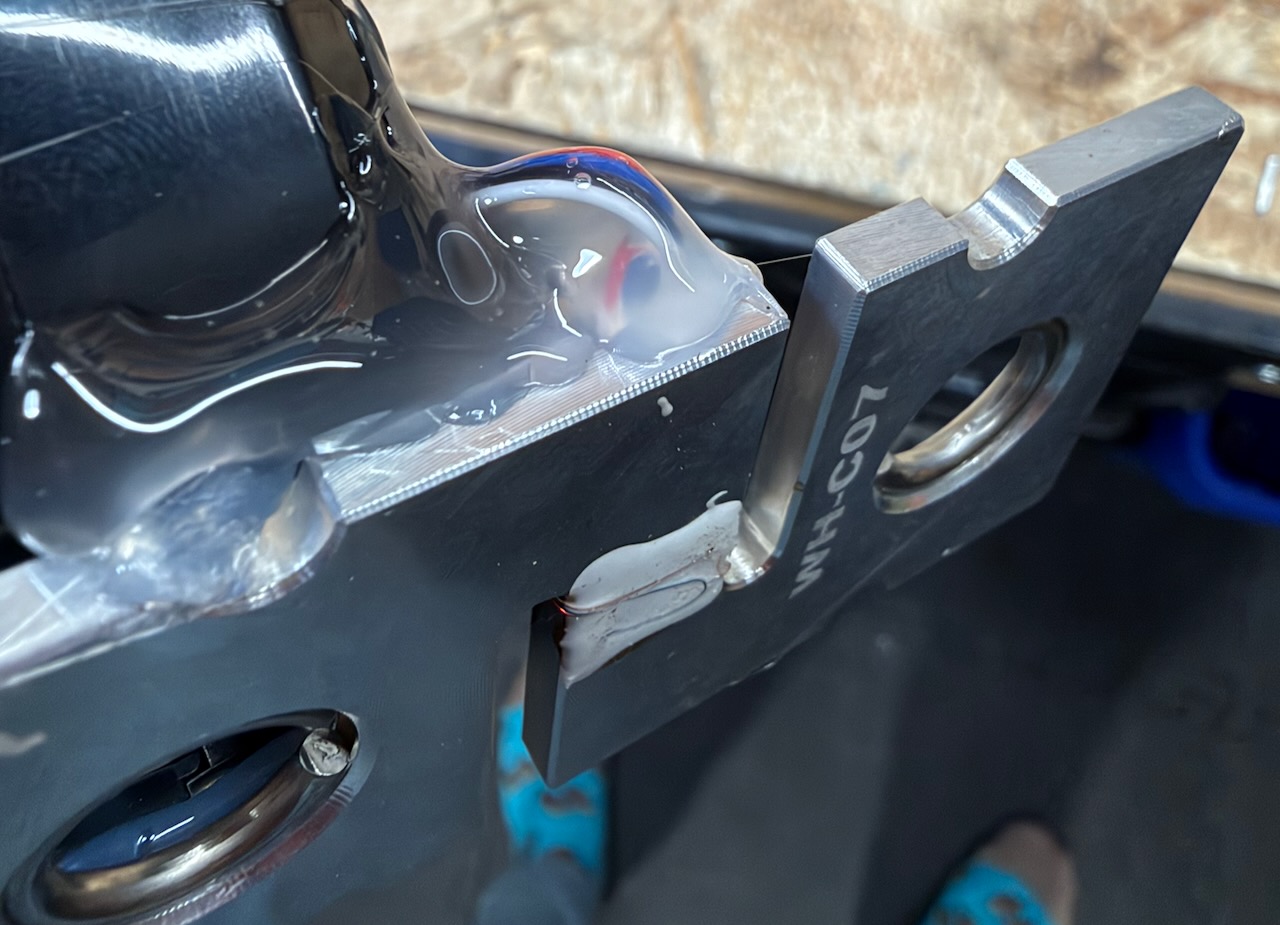
I used hot glue to attach the display to one side of the metal bar. It doesn’t really matter how you accomplish this, the important part is that it’s only attached on one end of the bar like this (not interfering with the white part), and that it doesn’t fall off and destroy the cable. Later, I added zip ties around the whole thing, and tacked them in place with more glue. An alternative would be to just use a combination of zip ties and tape.
If possible, do something to protect the cable. I just surrounded it in glue.
That’s it, it’s just not that complicated. I’ve attached a quick link, but you can use carabiners or cord or whatever.
This is key, you need to turn off ‘data lock’ by holding the ‘Unit’ button for two seconds. Otherwise, it will just stick on a reading.
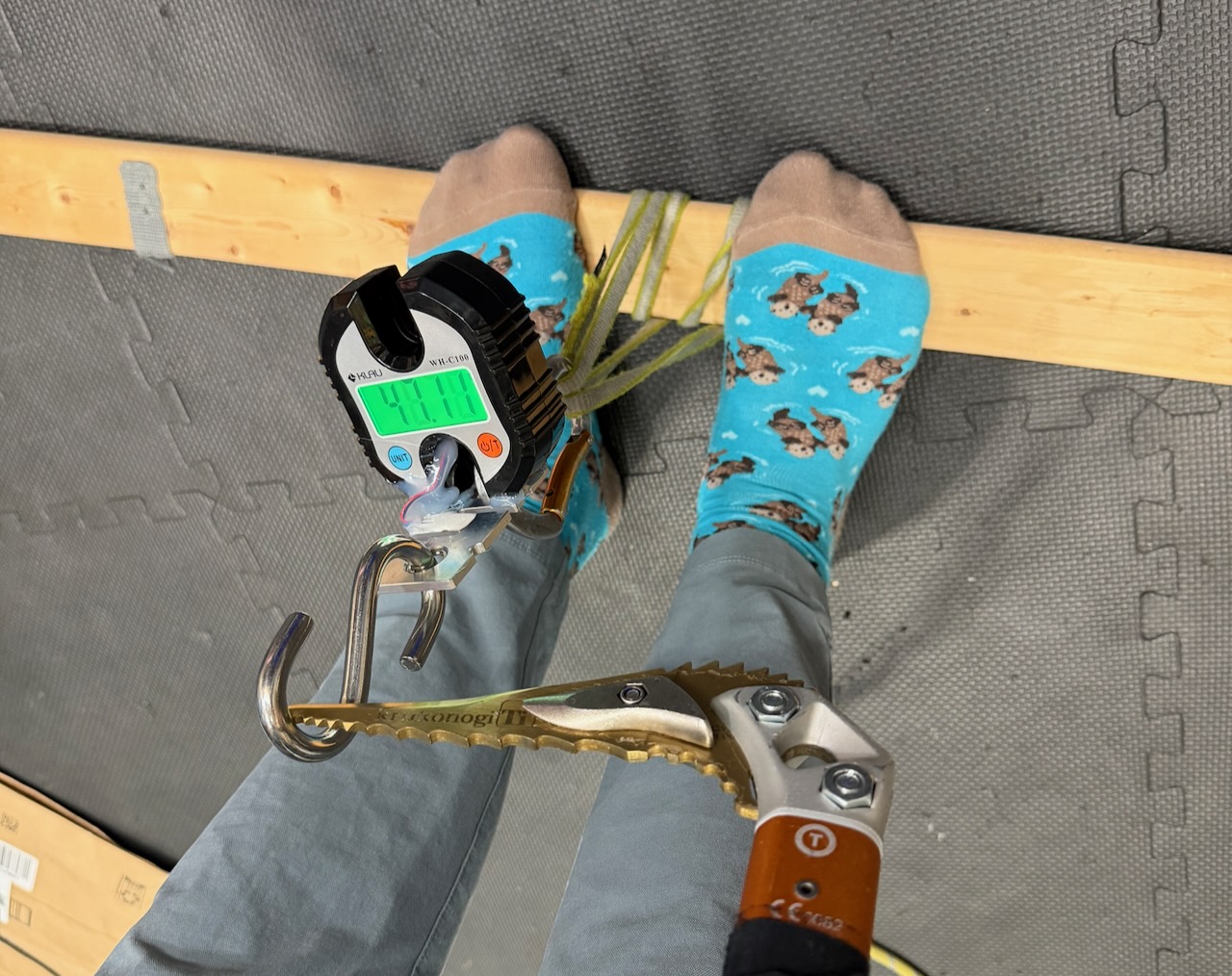
Simplest way to pull on it is to wrap a sling around a board and stand on it. Hook up your hangboard, ice tool, whatever. A million other options exist.
Overloaded tool-hangs
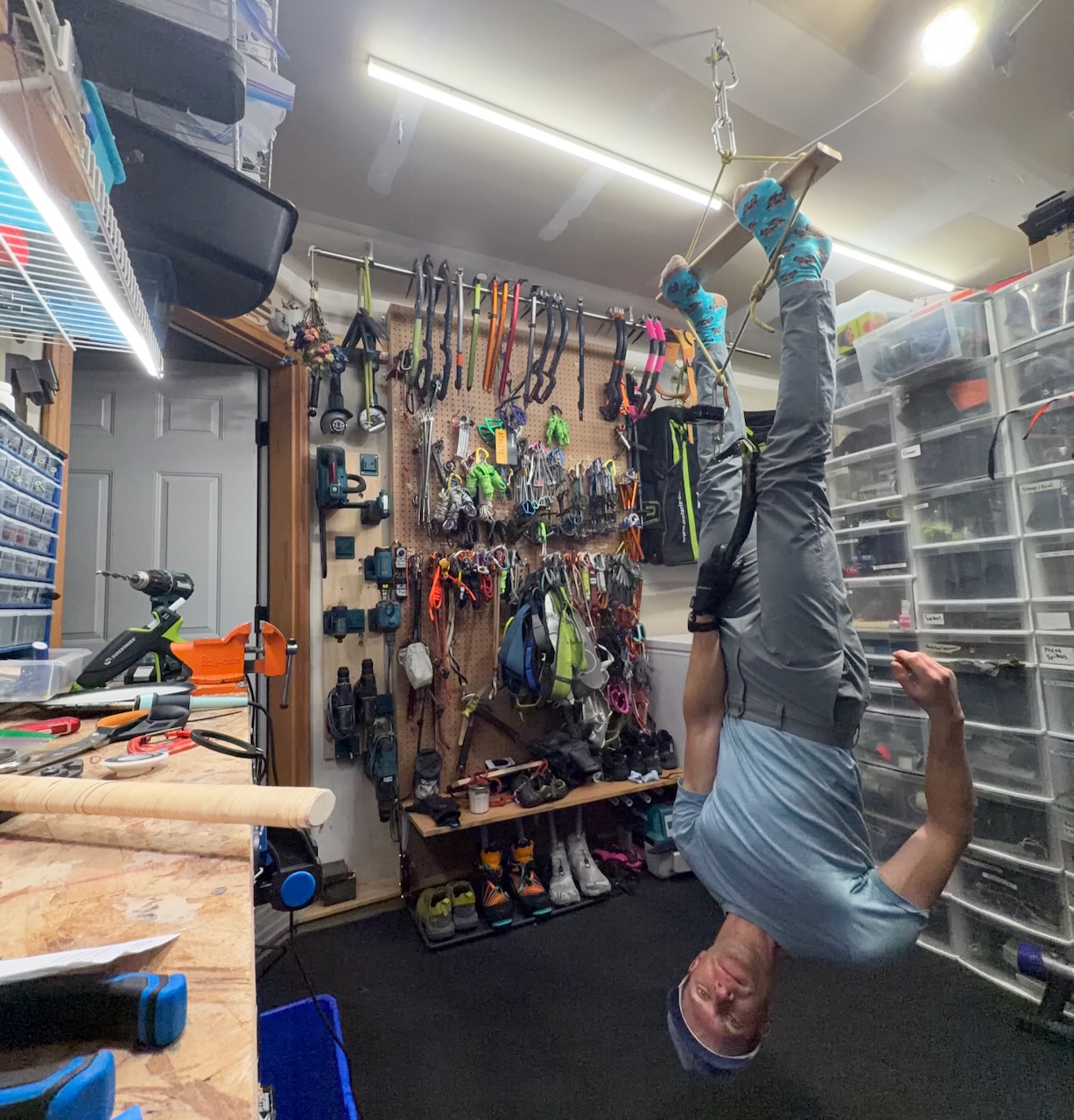
This was my end goal. It’s hard to exert loads higher than body weight through one hand without it turning into a one-handed deadlift. By inverting and pushing upward into a board I can train at over 1.5x bodyweight with the limiting factor being grip, not deadlift power. Perhaps someday I’ll discover how true this quip is: ‘With enough power, there is nothing to endure.’
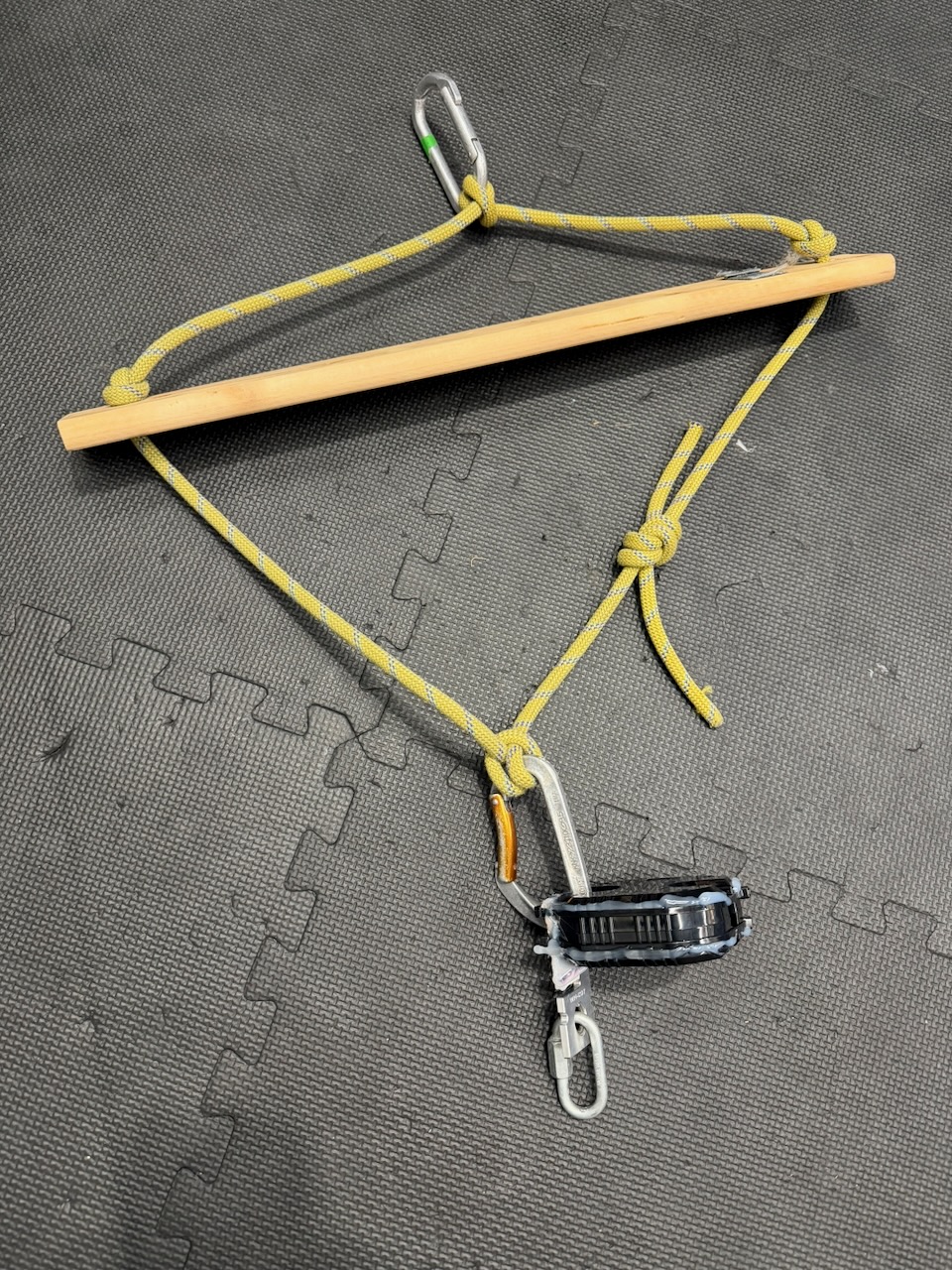
This is my rig for inverted tool hangs. The stopper knots are key to keep the board from sliding up, and the clove hitches keep the whole thing from rotating around. The tricky thing to dial in is the length of the legs going to the load cell. Try to figure out those distances while standing upright on the board, before you hang it from the ceiling. You’re shooting for a length where your body is mostly, but not fully, extended.