I think a lot about the stories we tell ourselves, about why we do things. I’ve been trying to keep my stories in line with my reality, and keep my motivations more internal than external.
I saw a cool overhanging cave with ice in it. I want to climb a cool overhanging cave with ice in it. I will drag partners along, and put in a bolt line, leading to a cool overhanging cave with ice in it.
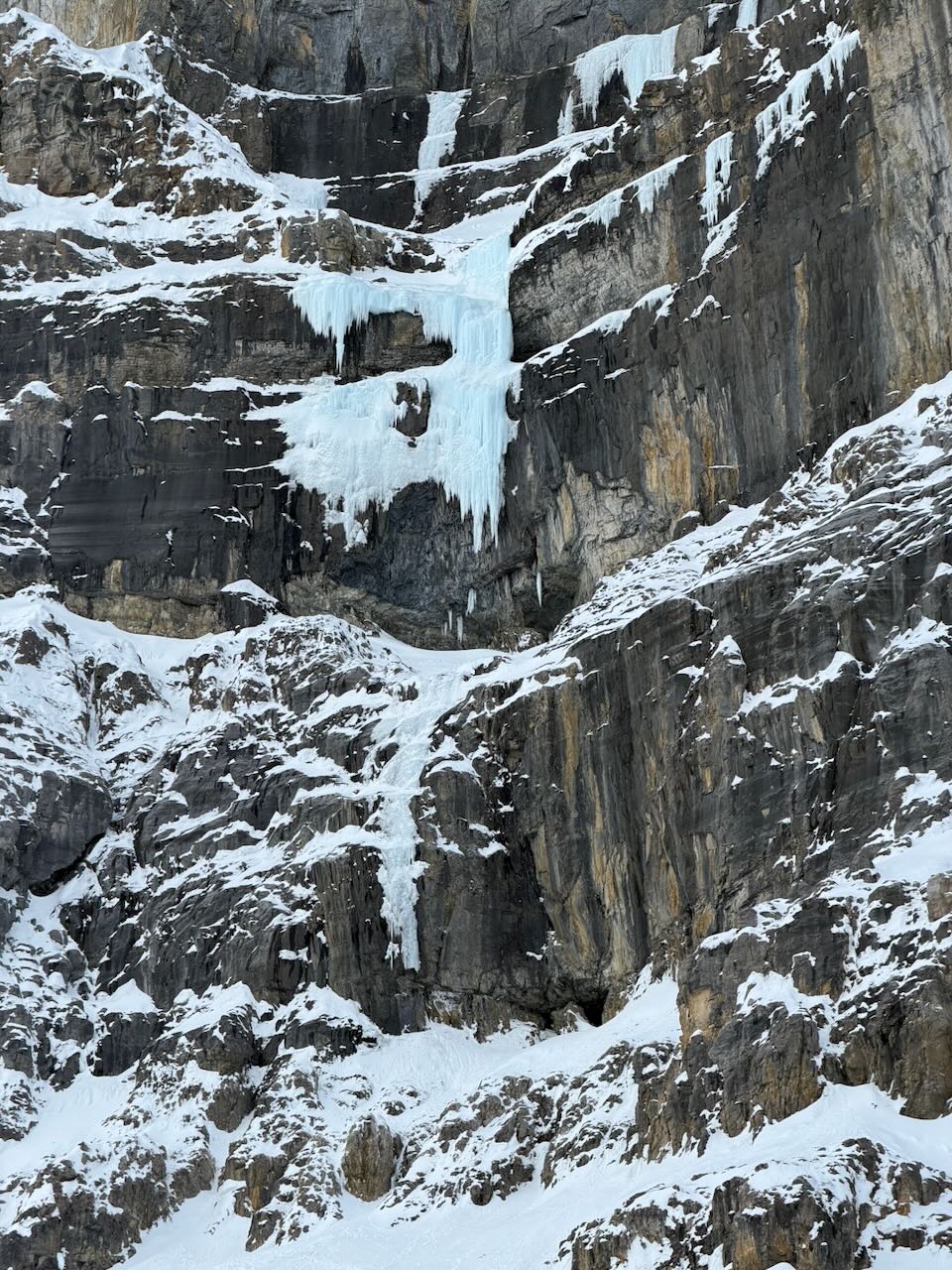
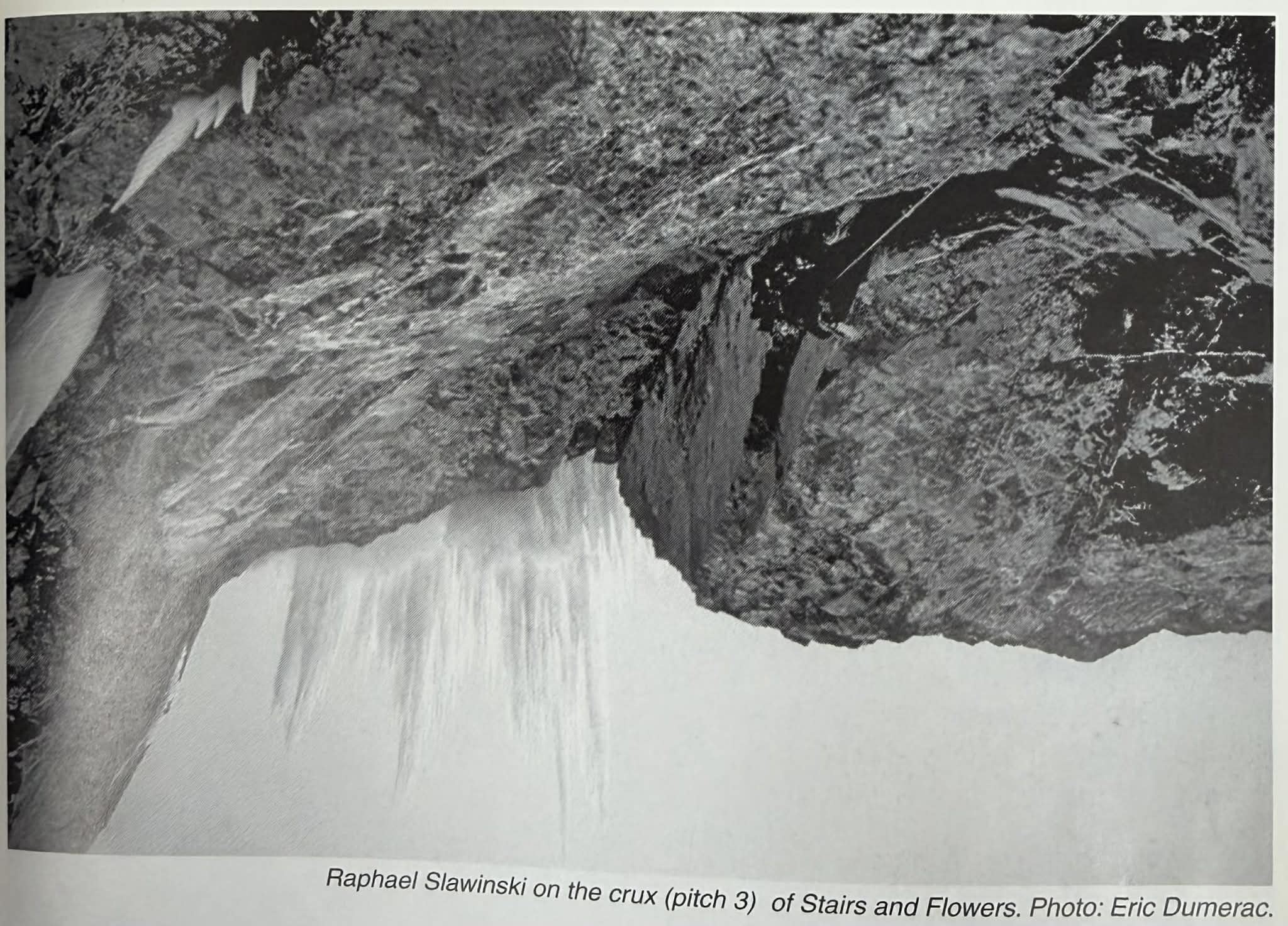
Sure, there are other motivations too. Matt Edgerton and I were exploring Stairs and Flowers on the Stanley Headwall, a mixed variation to the rarely formed Acid Howl. It’s a big piece of ice, and I was always surprised it didn’t see more action. As it turns out, the lack of action was due to half the mixed route falling off. A chunk of rock the size of a shipping container has parted ways with the wall, and a solid portion of the bolt line fell off with it.
So, by chance, there was now a solid stretch of routinely formed but completely inaccessible WI5 that needed a mixed pitch for access. It’s been a couple decades since that was the case anywhere on the Headwall.
Exploring with Edgerton
On my first day up there, Matt and I brought a drill to retrofit some single bolt anchors. Right away, an opportunity presented itself. While pitch one didn’t come down low enough to climb as a pure ice line, it did come down much further than it had when Raph Slawinski put up Stairs and Flowers. I headed up the first couple bolts of S&F with the drill, and added a two bolt variation that let us gain the ice more directly. I offered Matt the first crack and he dug deep to get it done. It’s a short sequence, but it packs a punch.
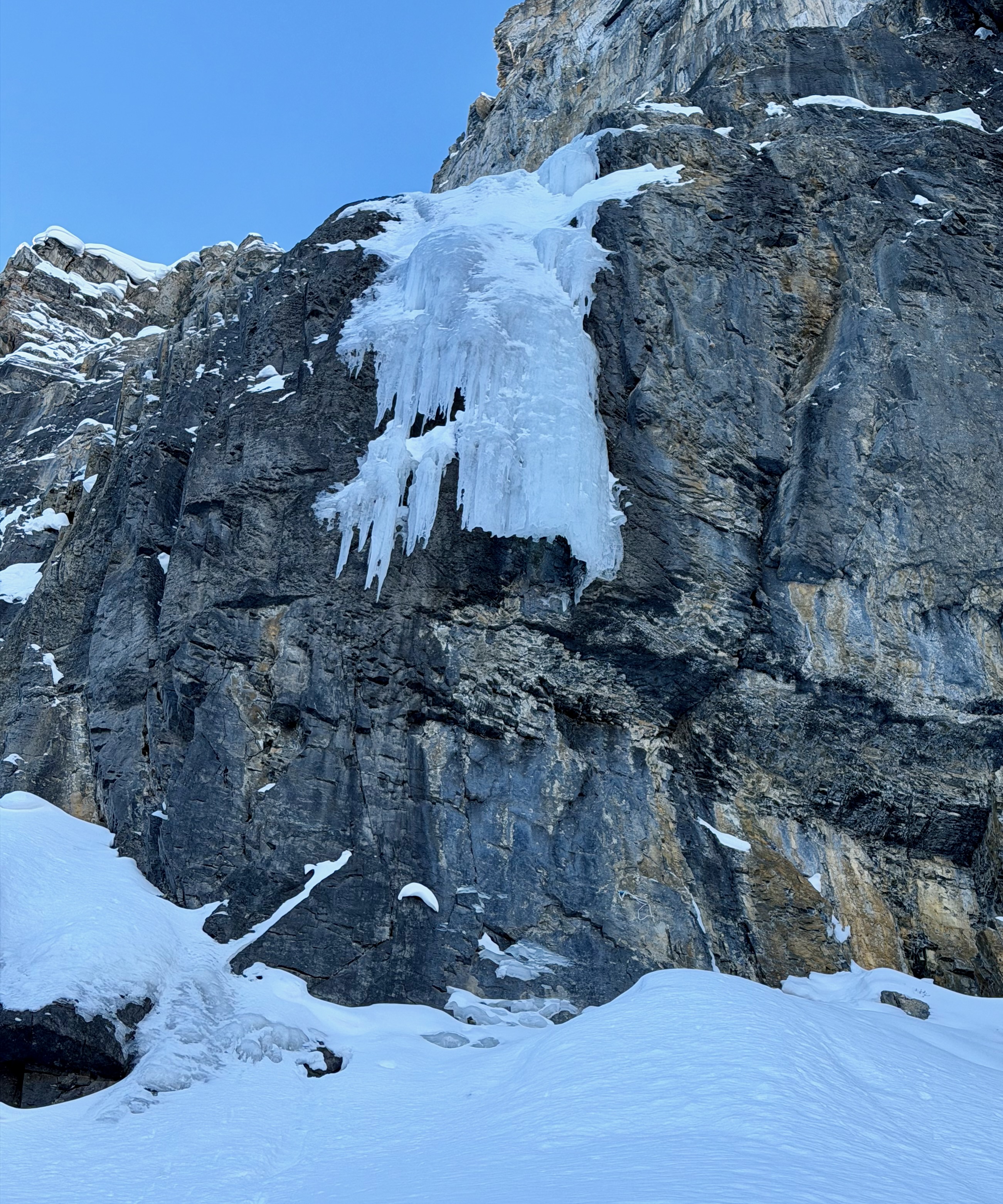
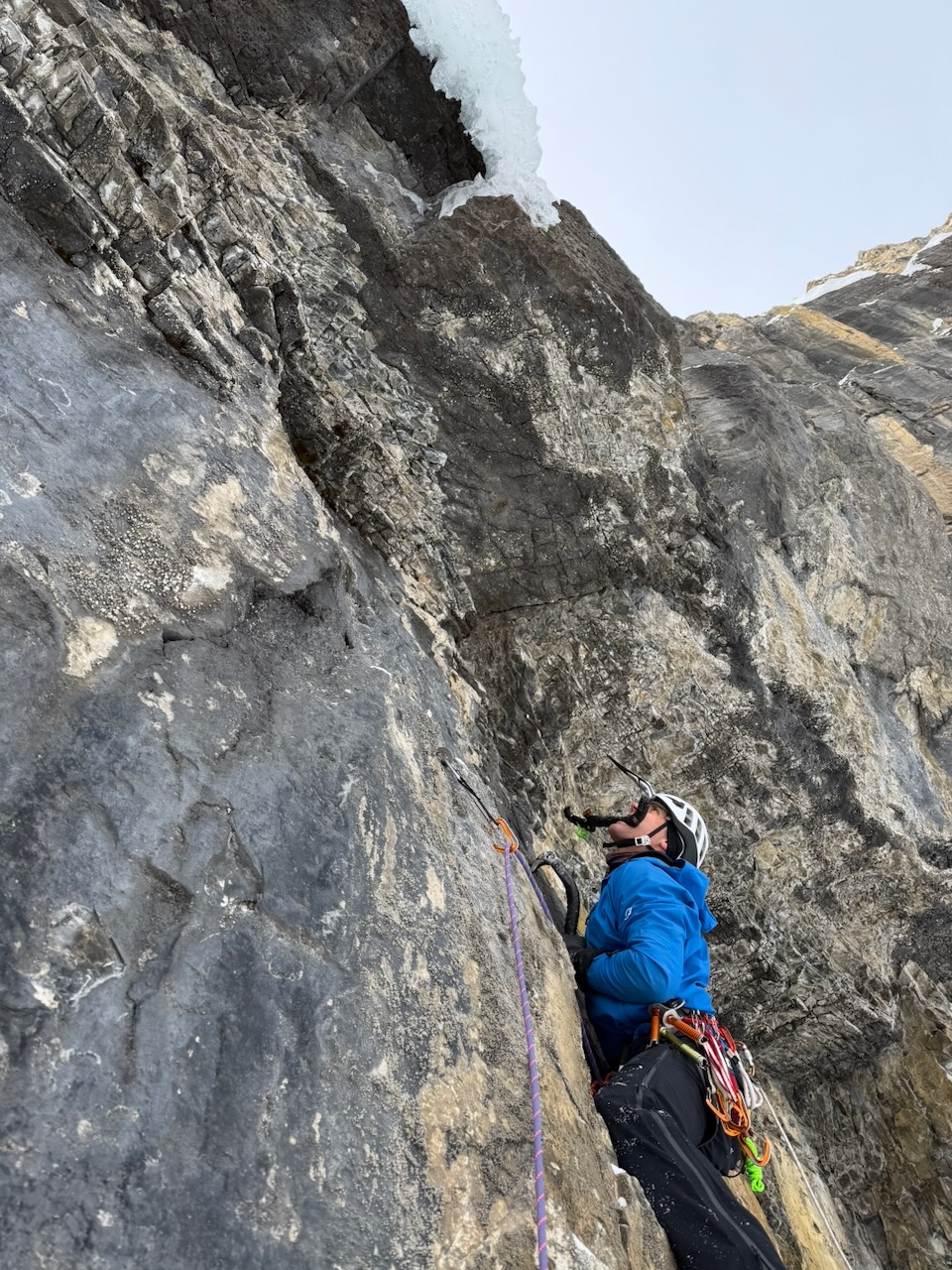
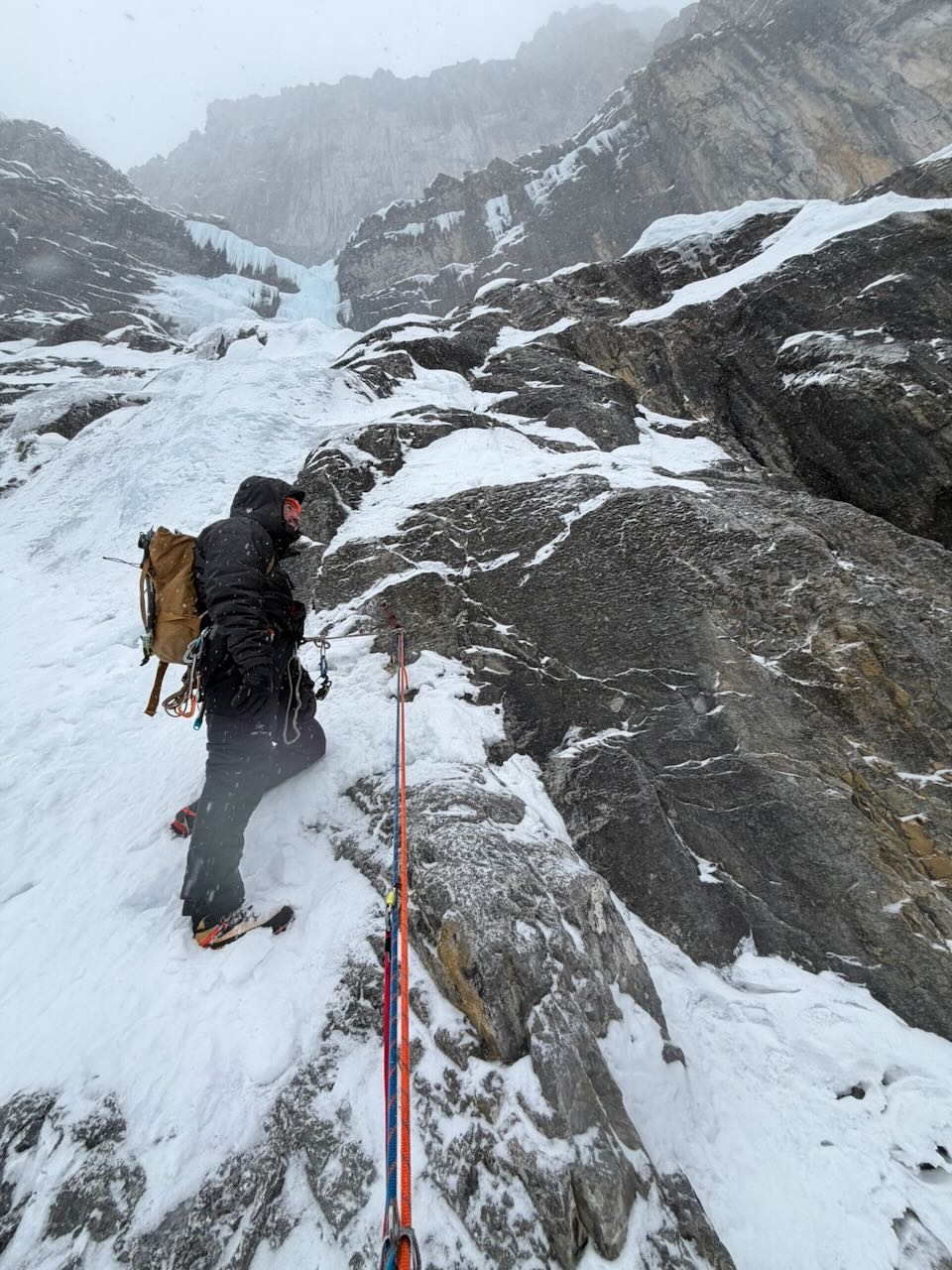
We continued up a pitch of thin ice to gain the next snow bowl. I had no idea what I was looking at on the wall above. The route description just did not line up with reality. Eventually I found the S&F bolt line, which went up a blank face instead of the described deep right facing corner. I aided to the top of the bolt line, and it seemed loose and borderline unclimbable. We had thought we might need to replace missing bolts on it, but it became clear that there was no point. We later established that indeed, half the route had fallen off.
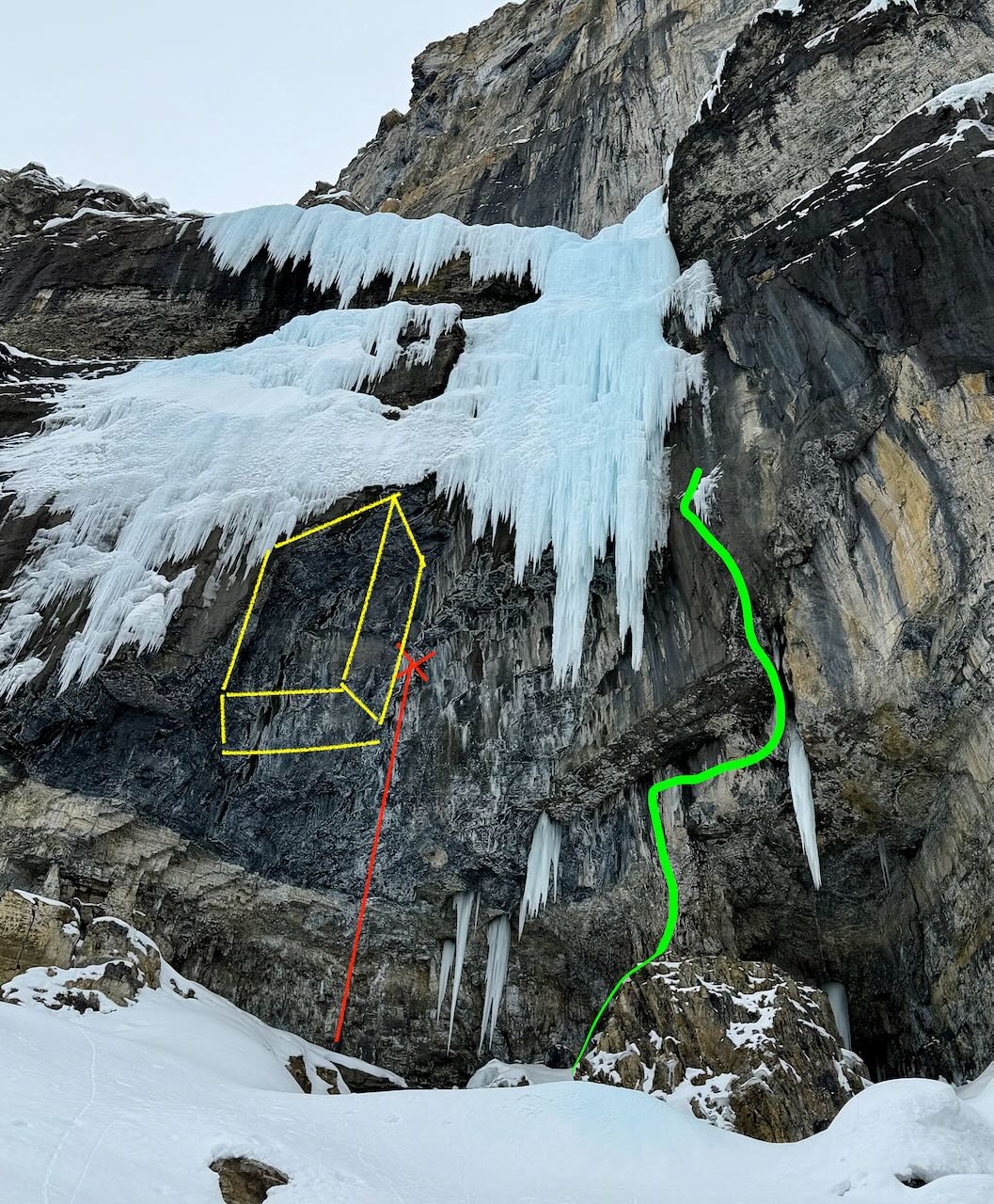
My eyes wandered around the cliff, eventually piecing together a concept of a line that would climb through an overhanging cave with a tongue of ice pouring out.
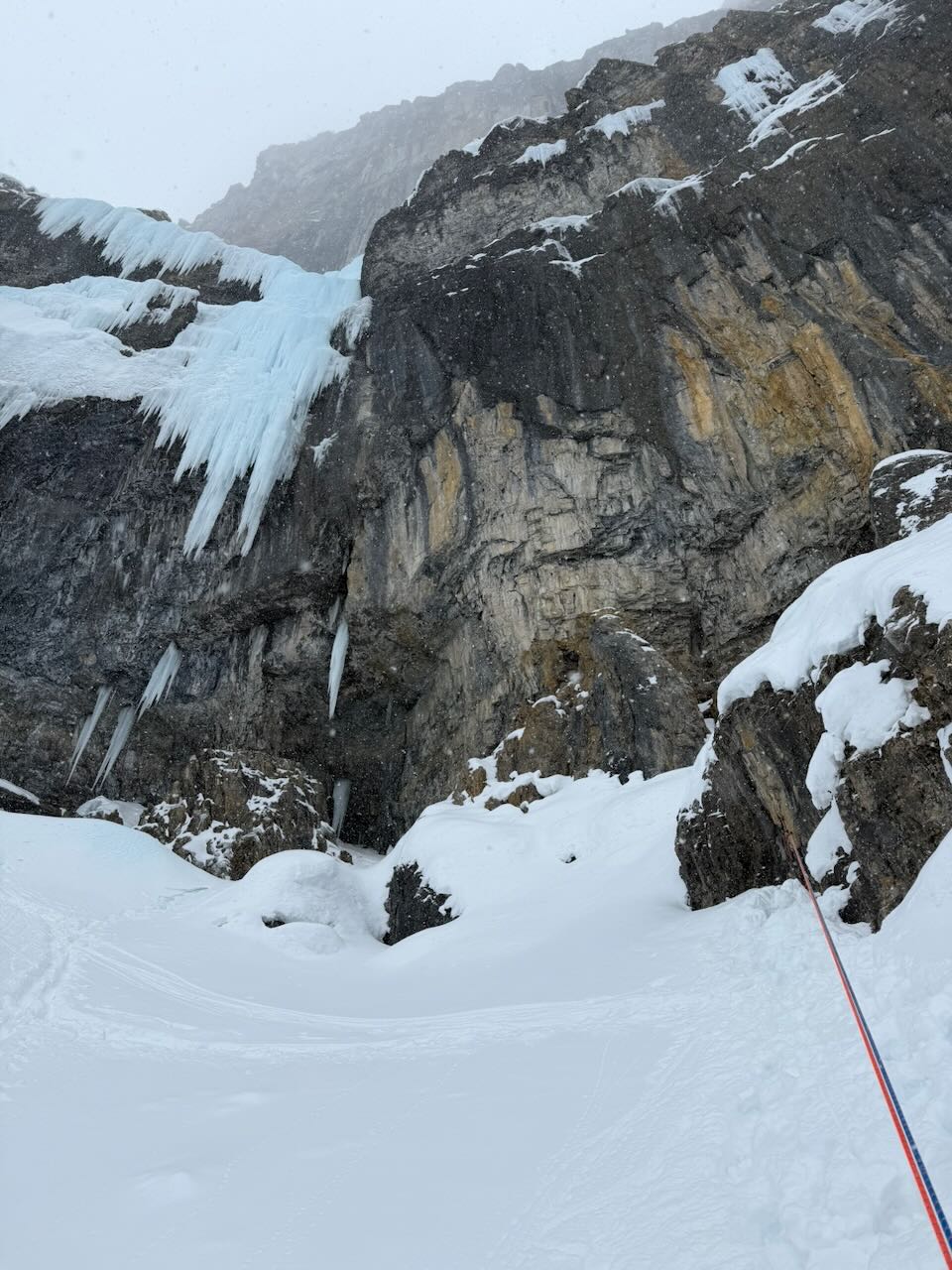
Making it happen with McNamara
Gavin McNamara and I had stalled out on a project elsewhere on the headwall, and we decided to take the first crack at establishing a new third pitch for S&F together instead.
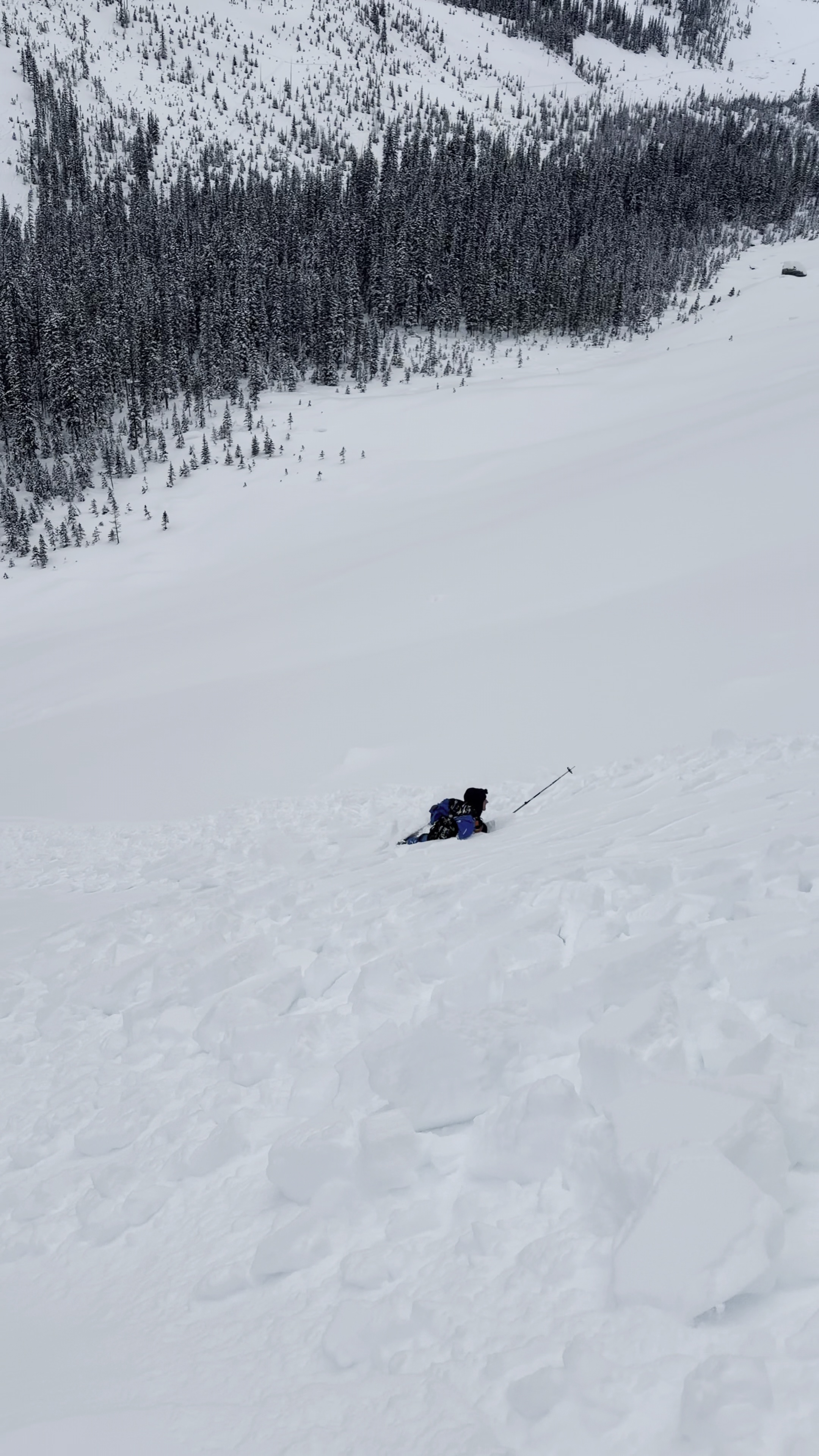
On the drive out, Gavin mentioned that I would always say things with such confidence that he’d go along with them even if they were a bad idea. A few hours later, I was prodding him across a touchy slab, when it ripped out and carried him with it. No exclamations of ‘Avalanche!’ were heard, only my giggling and a dejected ‘Aww, Greg…’. Fortunately the only harm done was some snow getting into his boots.
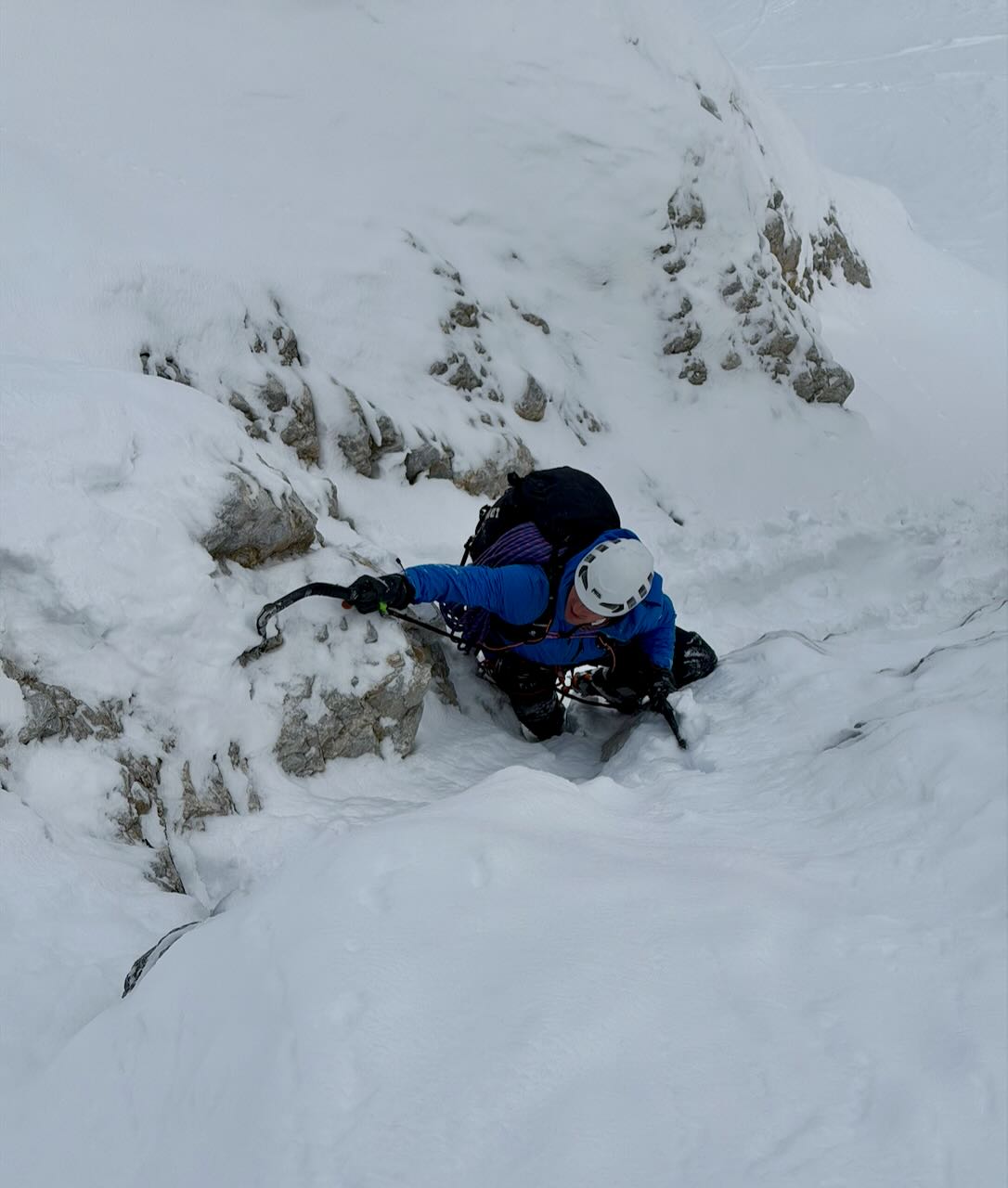
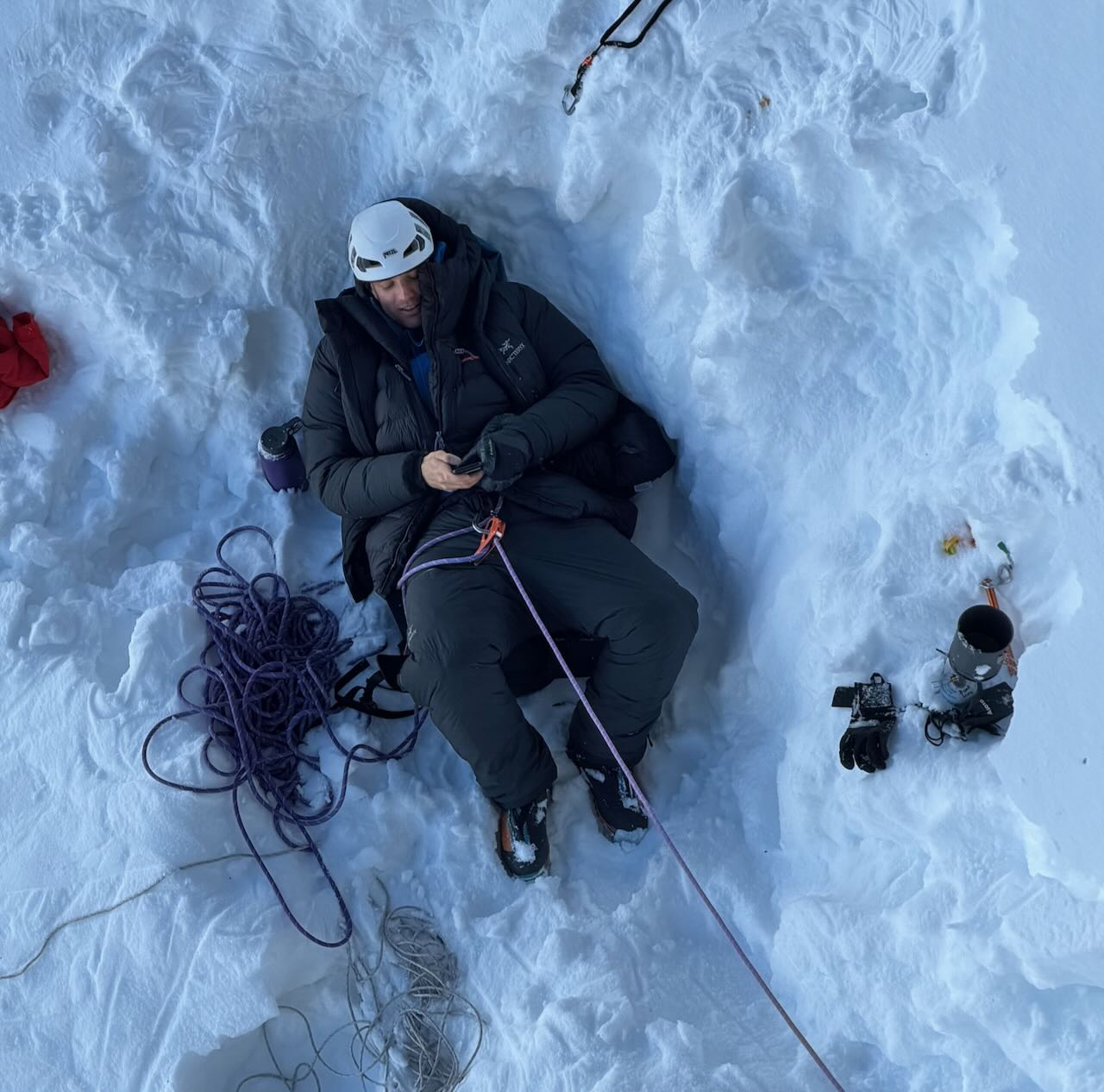
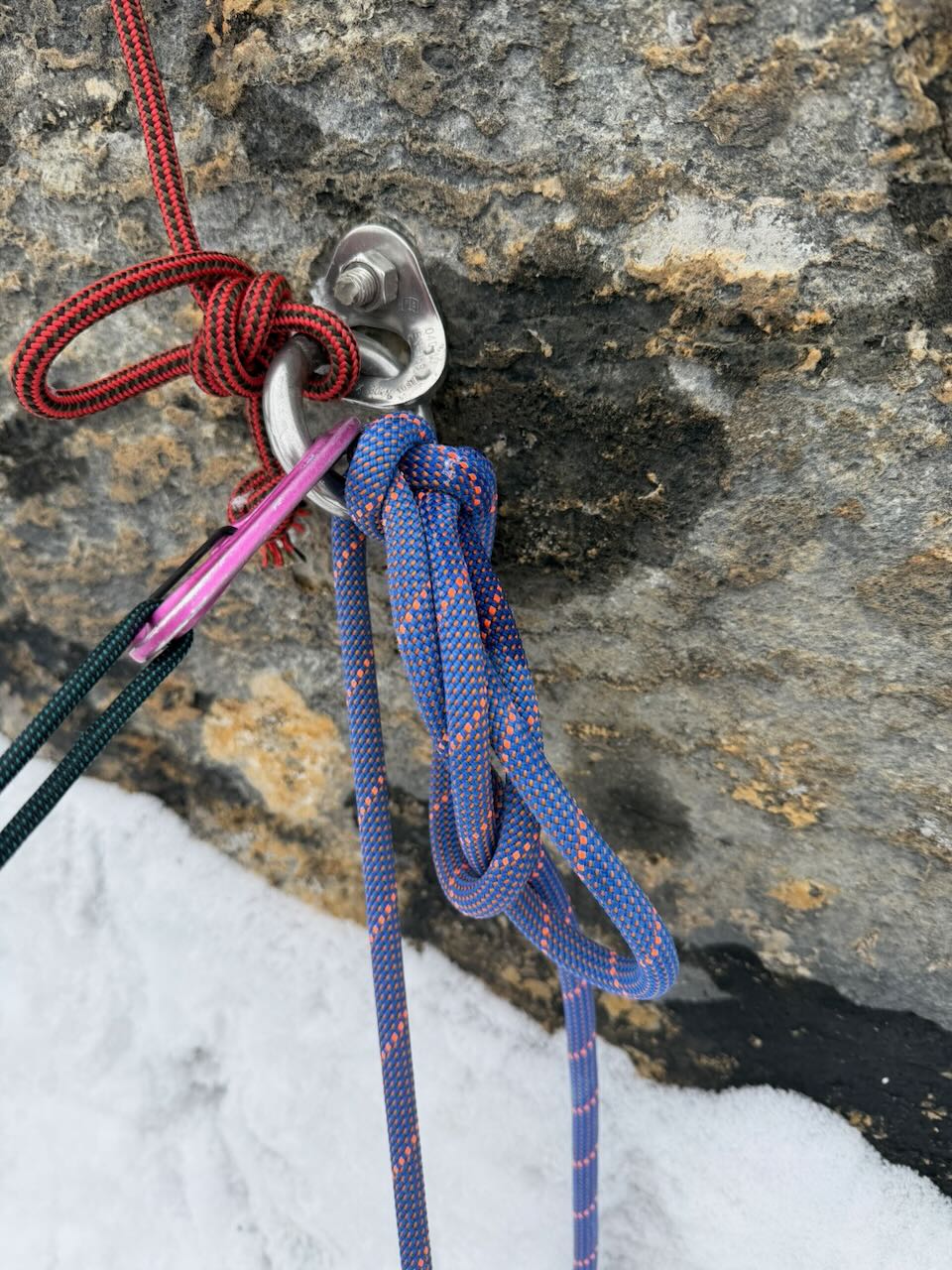
I feel like I’ve fully dialed in how to handle this sort of development. A big wall harness, two connect-adjust lanyards, an alpine aider, an 8mm removable bolt, a big battery, and a pile of studs and hangers. Mix in an ice screw and a bit of tool aid, and your belayer can be a passive potato while you get the work done fast.
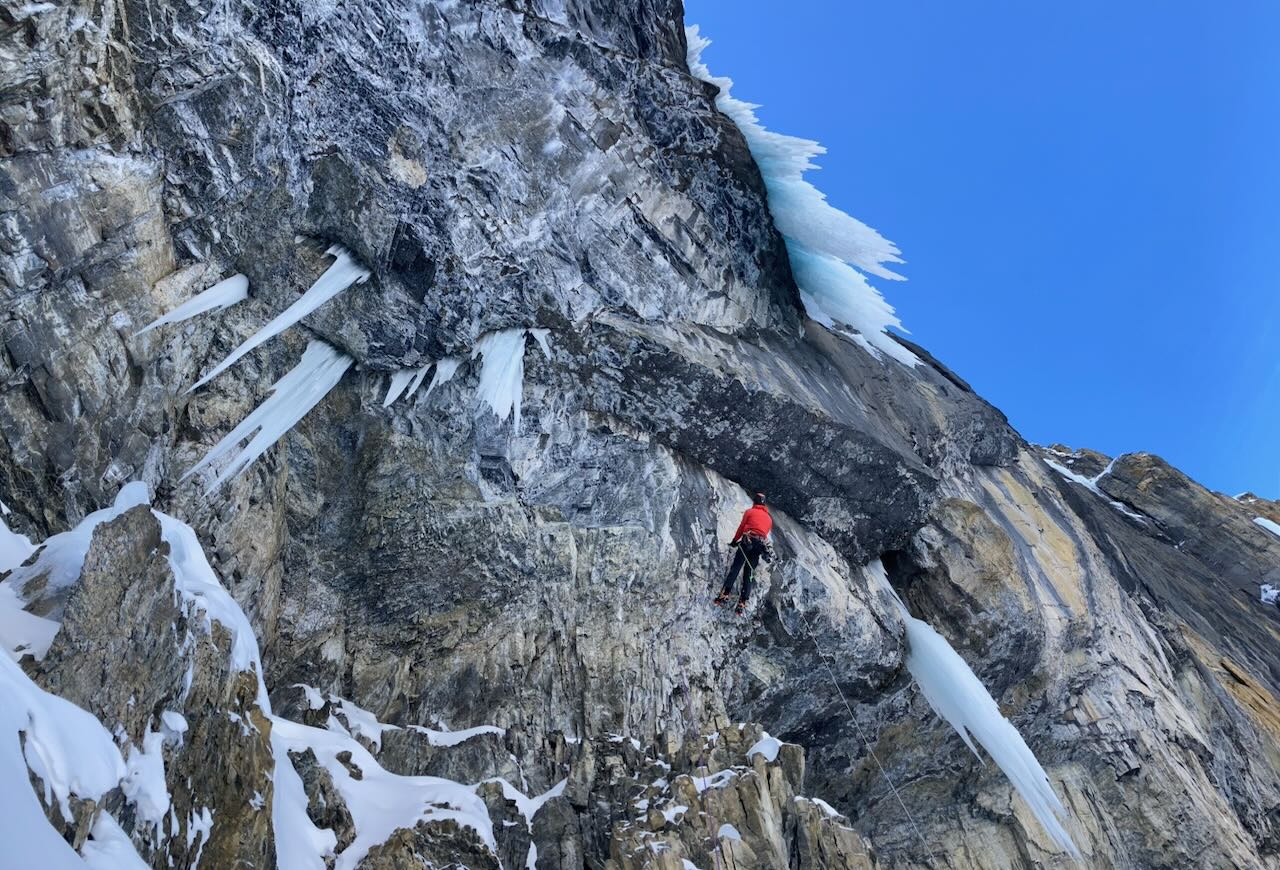
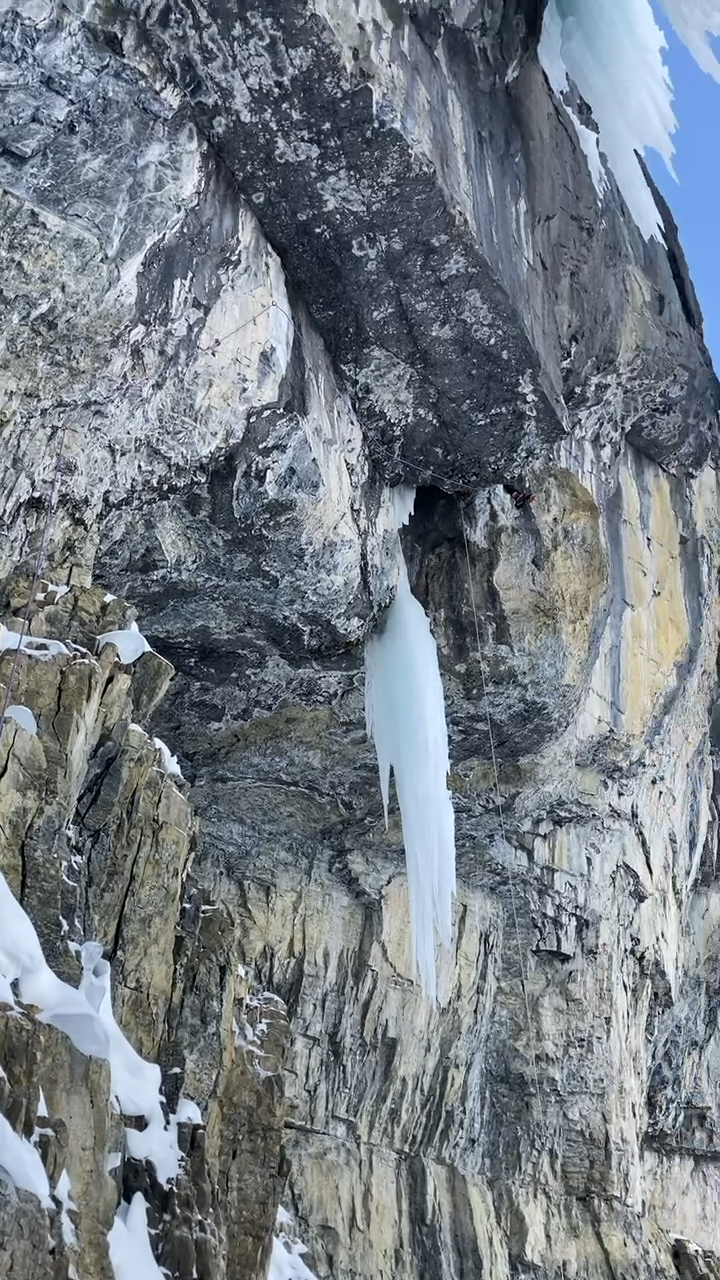
Selecting some bolt locations was tricky, especially factoring in the somewhat contrived wanderings of the path of least resistance. But the allure of the cave called, and upon arrival, it did not disappoint. It was full of ice formations and solution pockets to climb and chimney amongst. The exit proved delightful, a squeeze sequence where you hook a jug past the roof from a knee bar, then cut feet and swing out into a highly exposed stance. Pretty unique, especially on a mixed pitch.
The final stretch led up the steep headwall to a stance, and my bolt-count guess proved exactly enough. A top rope lap to check out holds followed, and we called it for the day. On descent, we got a brand new rope firmly stuck. We had to coil up what we could reach and abandon it, causing us to be late for tacos. Such is the price of adventure.
Sending with Slawinski
Raph offered to join for the next session, wanting to be part of the successor to Stairs and Flowers. But, a solid month of horrendous avalanche conditions forestalled our return. When it came time to go back, we were still worried about cornices. We made the Nemesis area our plan A for the day. But, on our drive out, we found minimal cornices on the ridge. We decided to give Addiction a try.
The avalanche cycle had been epic. Right where we broke out of the trees, it had run record lengths and knocked out mature timber. It was actually a great reset for the approach slope, which had basically been swept to dirt and littered with debris. We booted up to the route.
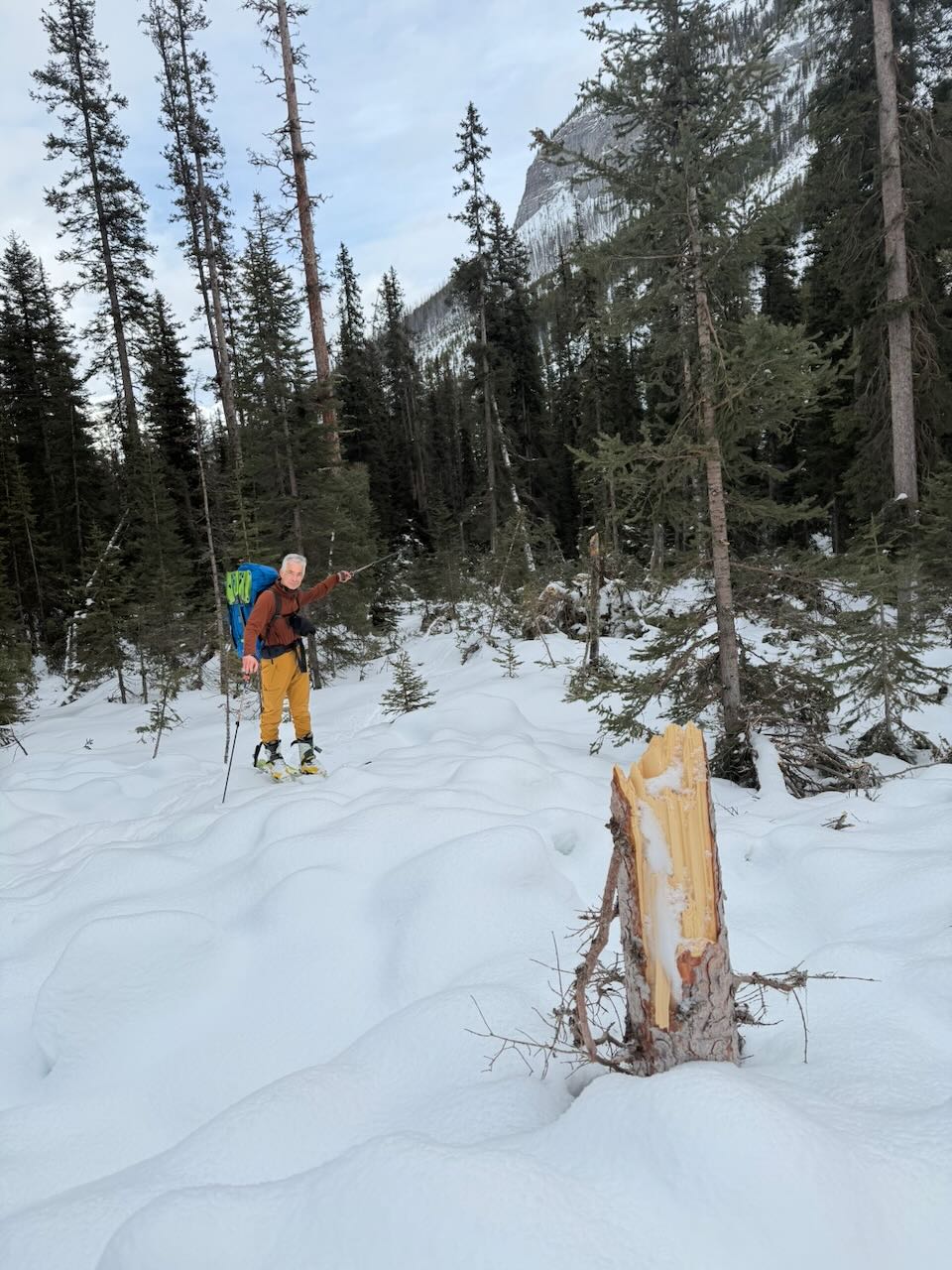
It was finally time for me to take on P1 on lead. It went delightfully smoothly, which bode well for the rest of the day. Gavin’s rope had even survived the avalanche cycle intact. The P2 ice had fattened up too, and Raph romped up it.
Raph started out on an exploratory burn on the cave pitch. I’m normally not that competitive, but part of me was really worried he would send right off the bat, and I wouldn’t have a chance. He made a solid effort before pinging off of a shoddy hold while crossing the hanging slab. He put in a bit of more work on the placements and got beta sorted out before lowering off.
I’d spent the month of March climbing very little hard terrain, and it showed when I got on the sharp end. I really wanted to be less pumped, but I was able to keep moving. I worked my way across the blank slab, and was elated when I sunk my tools into the ice at the base of the cave.
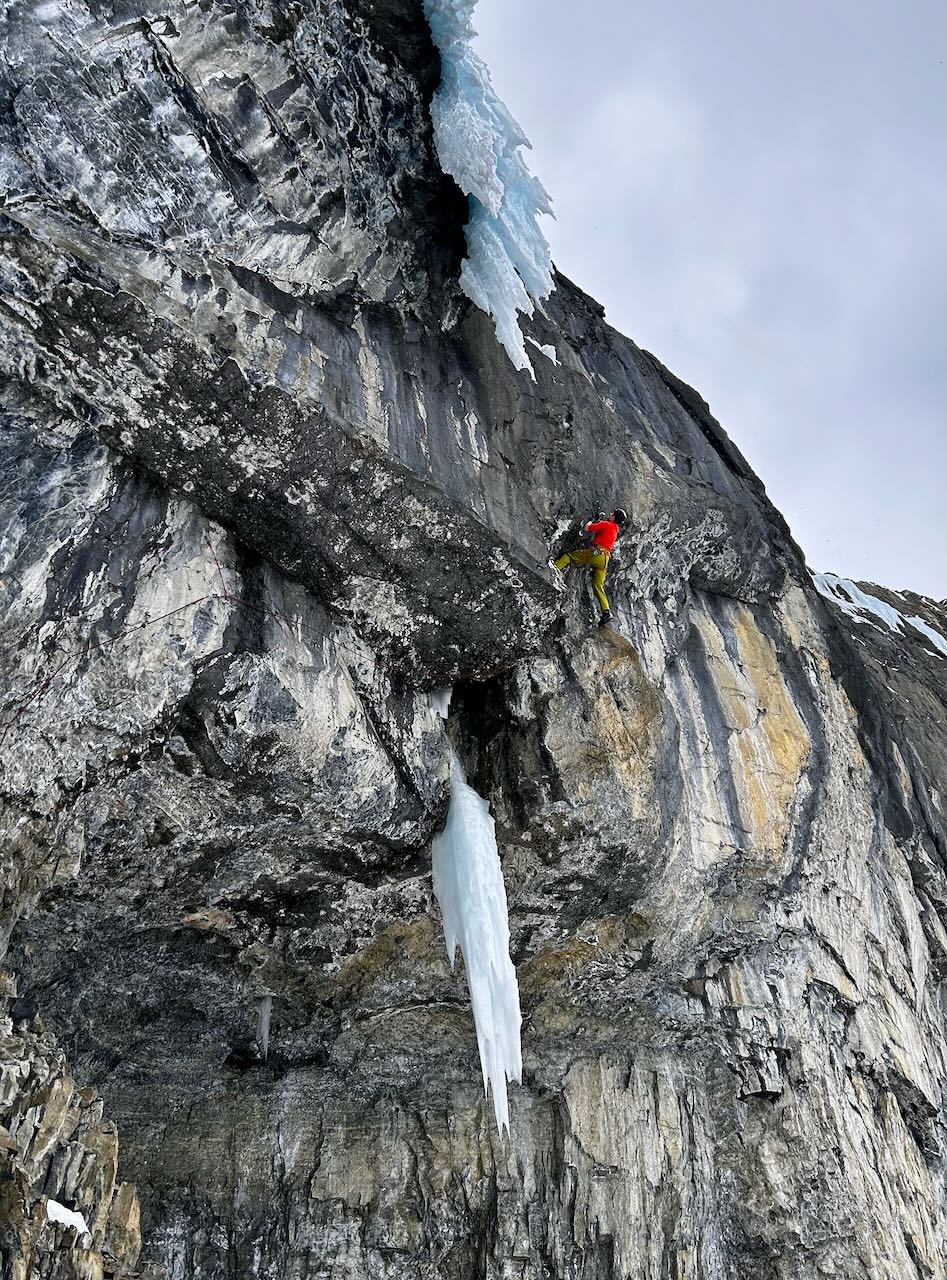
The cave is just so cool that I have to describe it twice. You climb a hanging dagger up into it, then hook icicles, solution pockets, and huge jugs as you chimney upward and get a no hands rest. There is a great bucket of a pocket as you pull outward, and I hooked it, then cut 3 points and swung through the squeeze. An improbable floating undercling leads up from there, and eventually I was able to stem out on the dagger as I finished working my way upward to the belay.
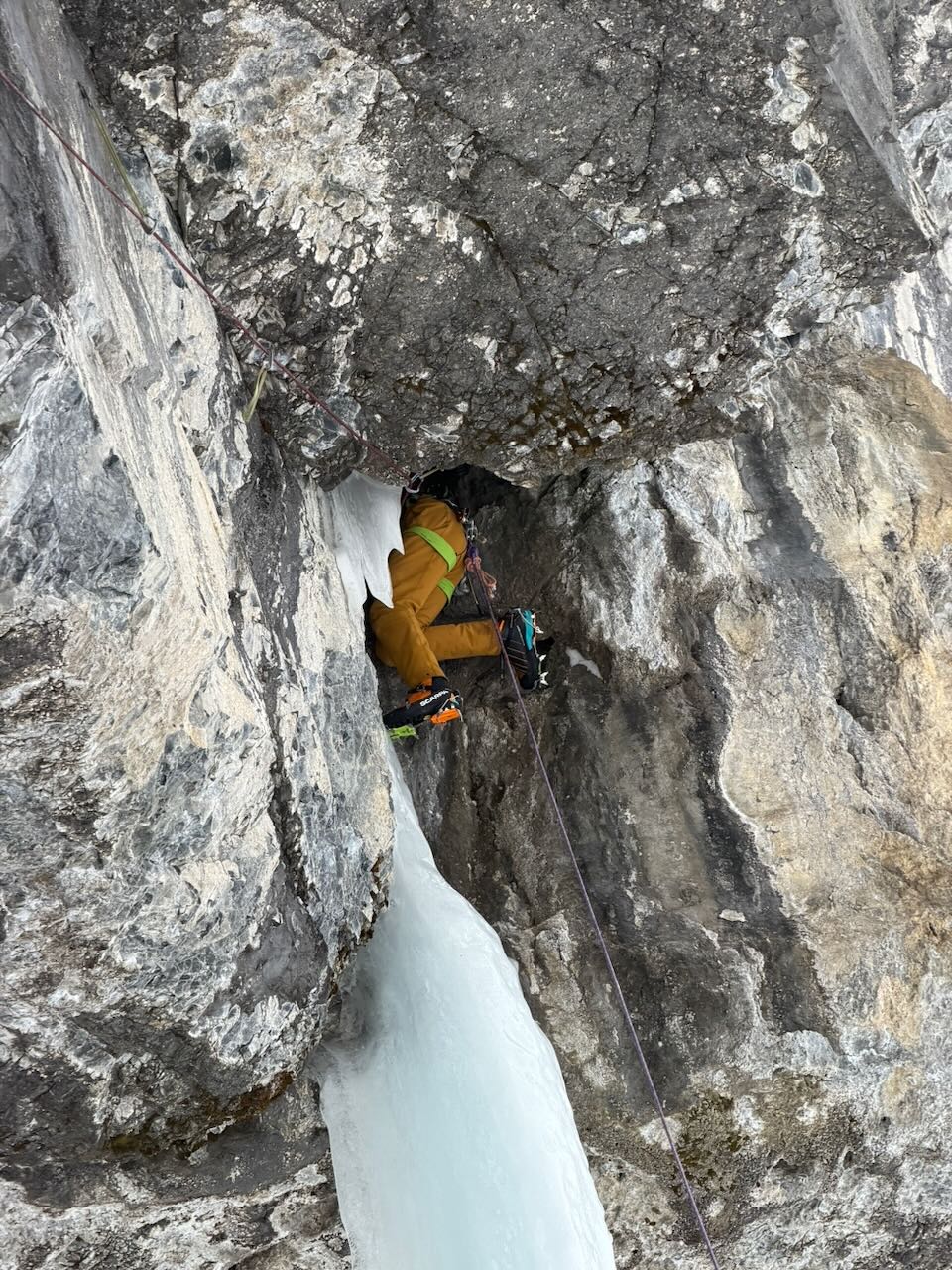
Raph loves good style, and good style to him means everyone sending the crux on lead. I lowered off to the snow ledge so he could take a crack on the sharp end. As is often the case, he made it look like an easy and enjoyable affair. I followed, cleaning the pitch, and then took off up the ice.
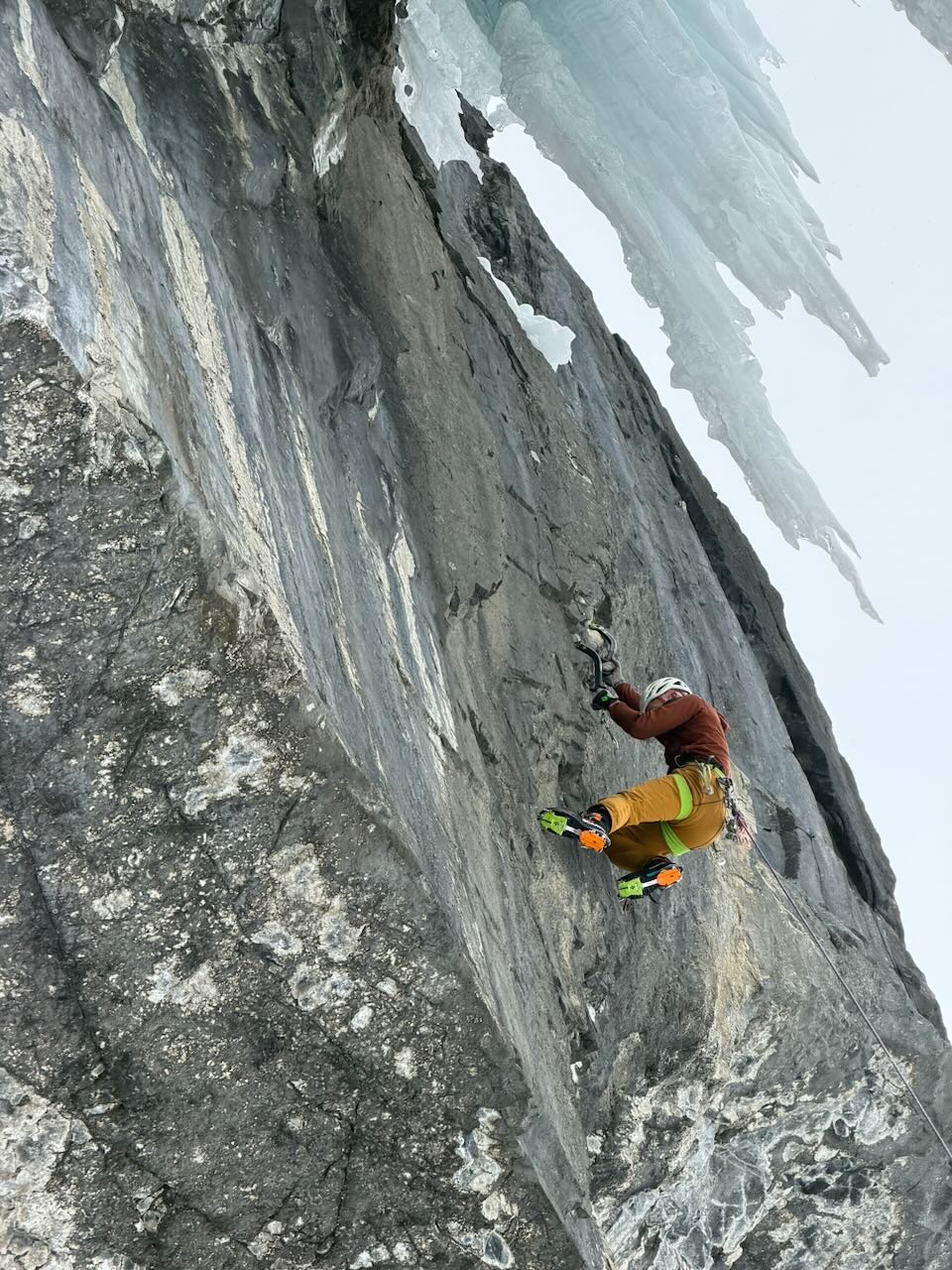
Initially it was like climbing through a waterfall, but plastic ice followed. Sooner than I expected, we were both at the top. Uneventful rappels took us down, and we hiked out, appreciating the long spring daylight hours. Some days just flow!
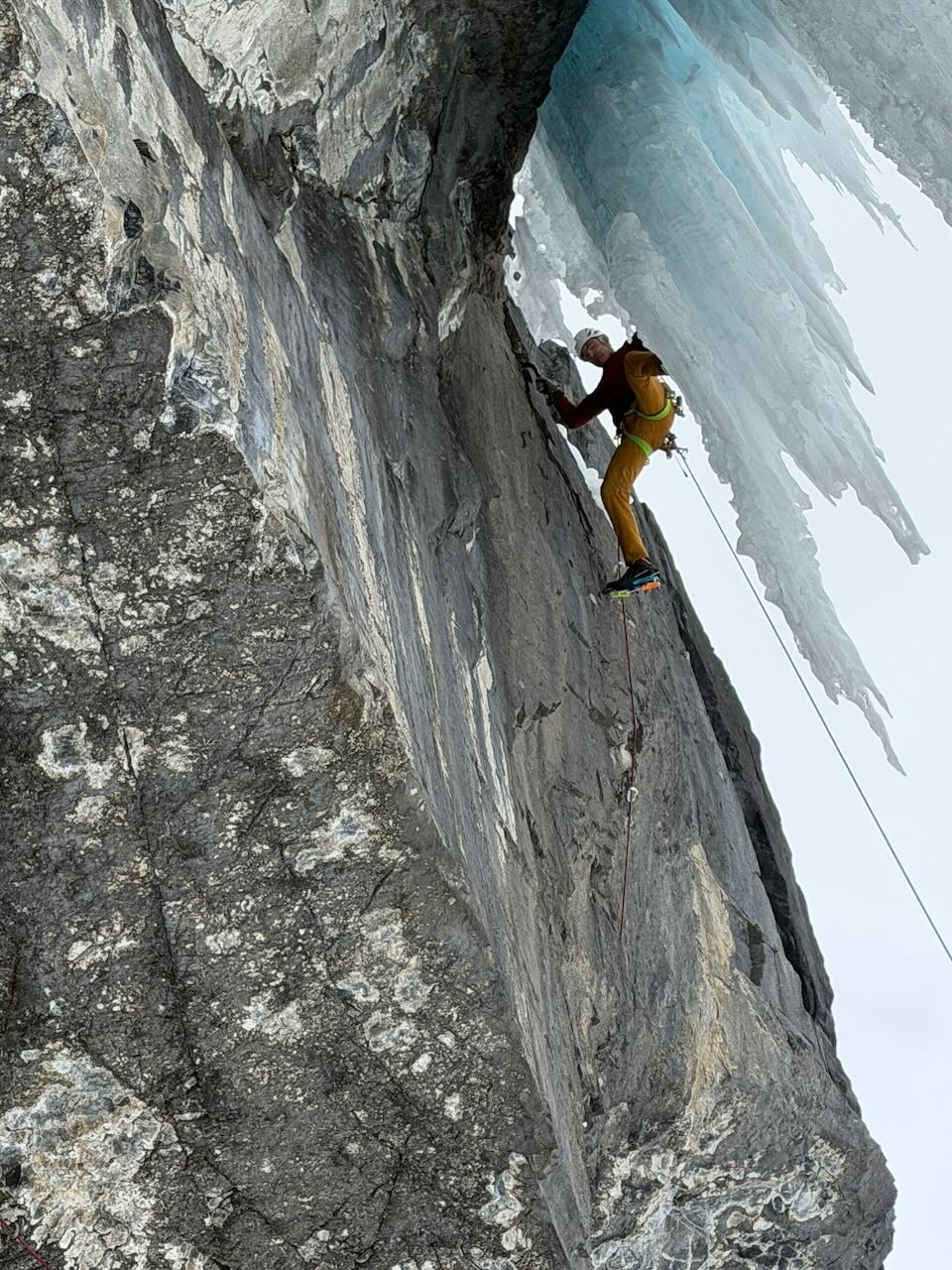
Brooding with Barrett
My relationship with climbing has been a bit of a roller coaster ride these past few years. What started as pure love of the game had morphed into a desire to perform, to be recognized, to turn aspects of it into more than a hobby.
I’m delighted about Addiction because it feels like a return to intrinsic motivation for me. I did a thing I wanted to do, with people I wanted to do it with, because I wanted to do it. Those other external motivations are still there, but they’re secondary, and I think my relationship with them has become more positive.
Climbing is an addiction, but perhaps it can be a healthy one.
Pondering the past
In the era before social media, it wasn’t uncommon for a single route to see multiple ‘First Ascents’. Information moved more slowly between groups of climbers, so sometimes parties would send and name a route, not knowing it had already been climbed. Acid Howl seems to be one of these cases, although perhaps more due to willful disregard of prior claims than any legitimate confusion.
Waterfall Ice Climbs in the Canadian Rockies has the pure ice version of this route as:
Acid Howl, FA: Scott Backes, Joe Josephson. Jan ‘93
Acid Howl Right Side, FA: Christophe Moulin, Richard Ouairy, April ‘94
But it was documented in Rock and Ice many years prior, back in 1986, as:
California Dreaming, FA: Paul Obanhein, Craig Reason. Jan ‘85
So to rightly honor the past, it’s perhaps best referred to as California Dreaming.
And to keep the record in one place, the credit for the original mixed variation is:
Stairs and Flowers, FA: Eric Dumerac and Raph Slawinski. Jan ‘01
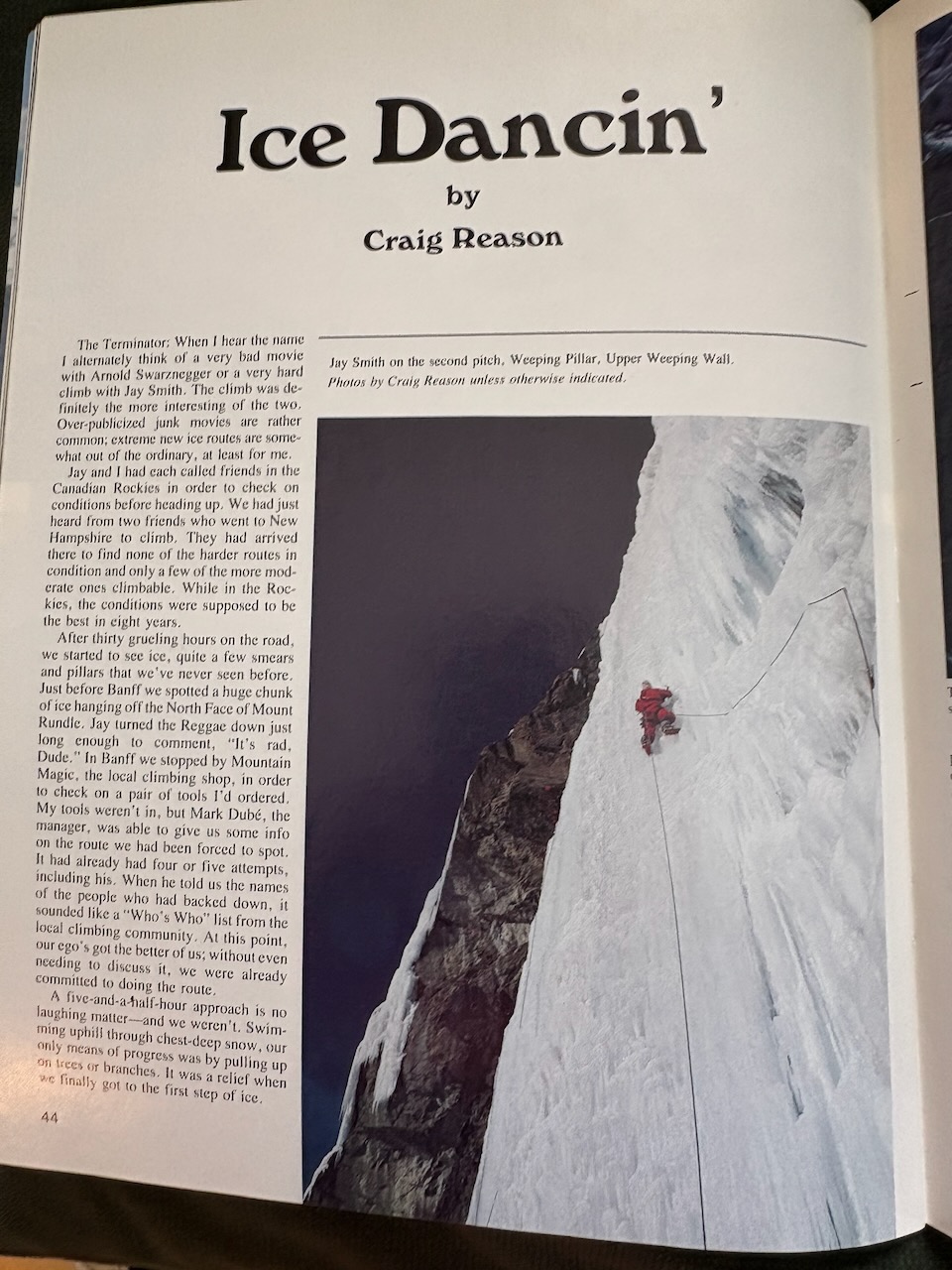
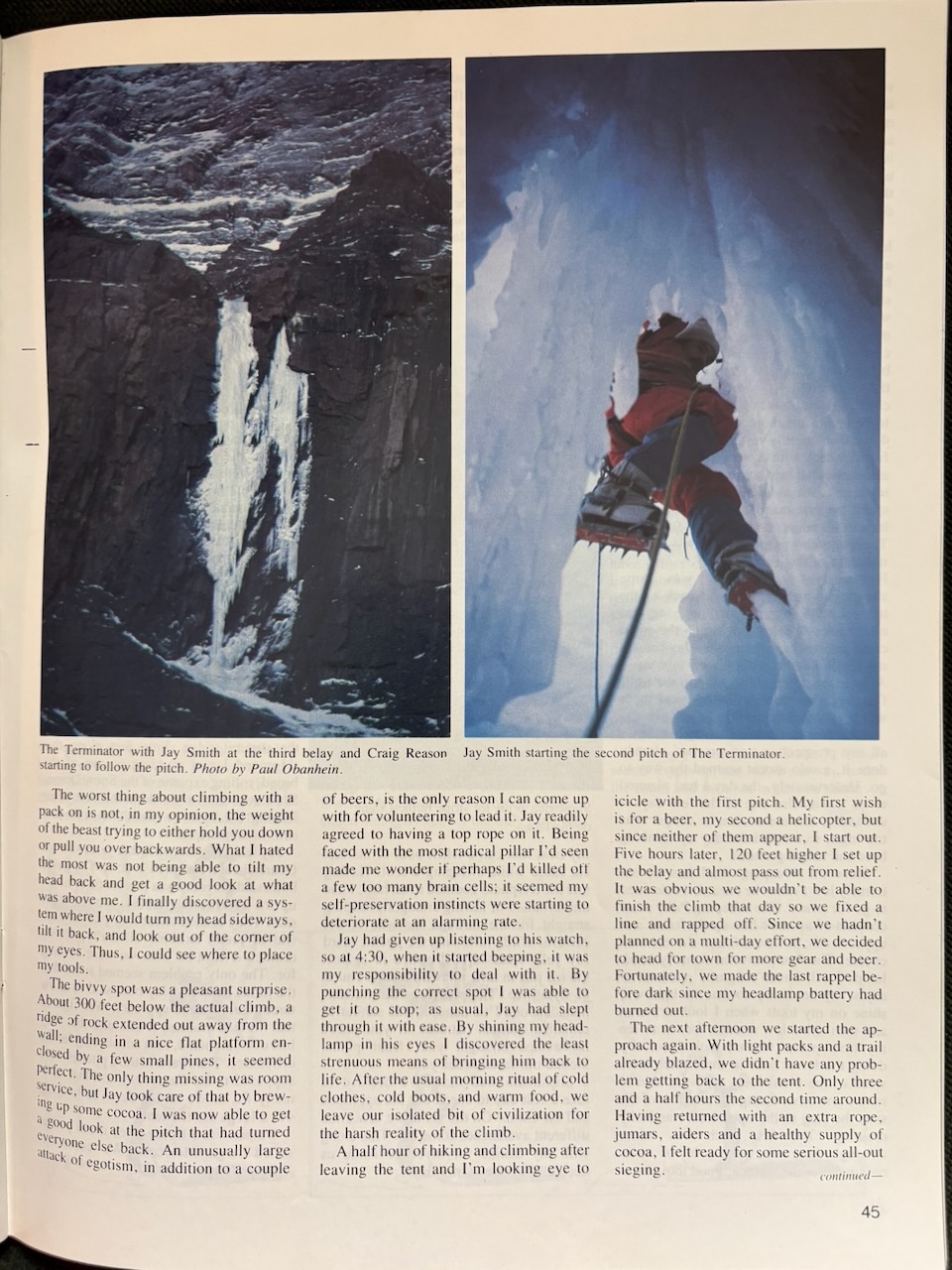
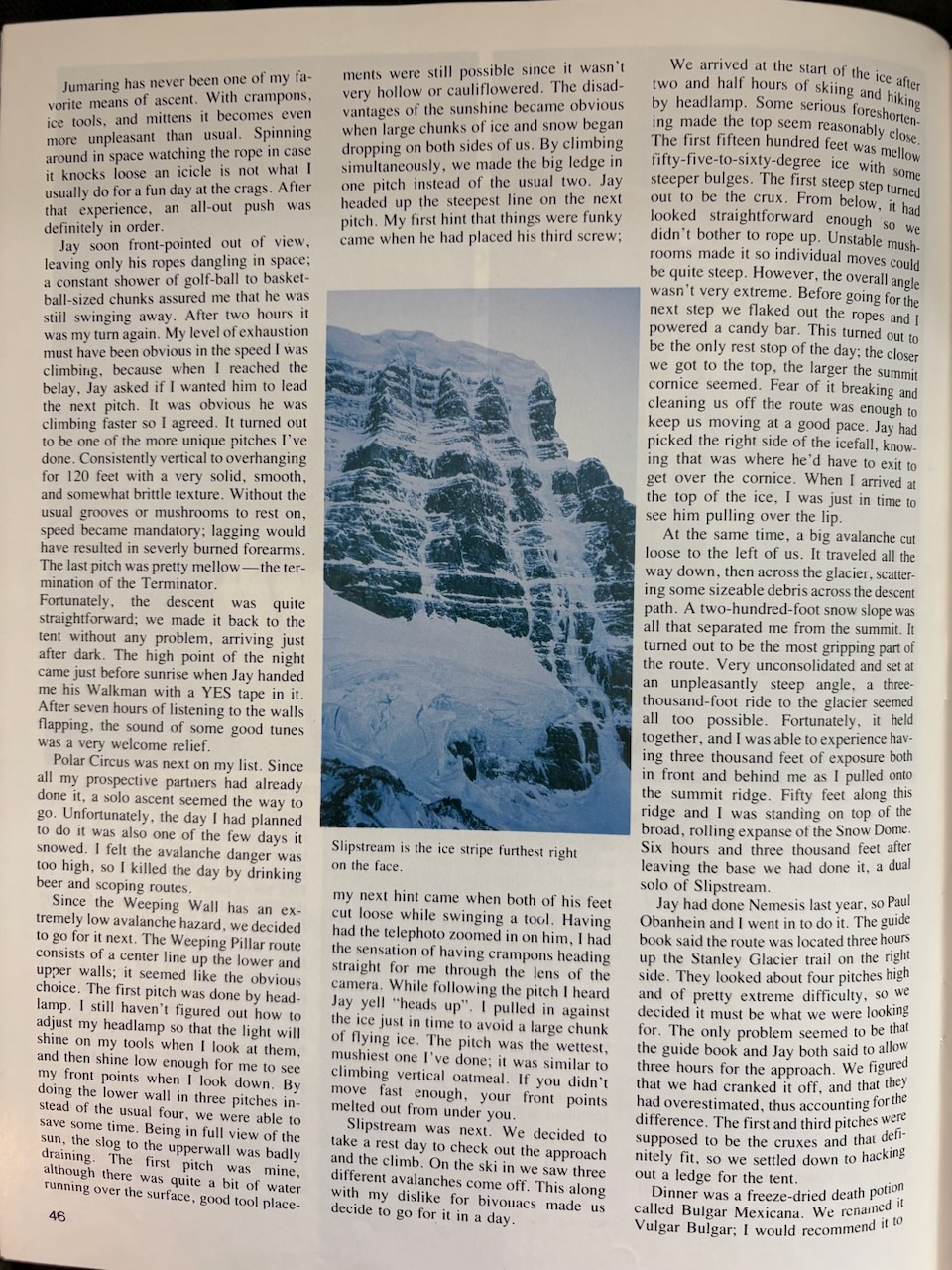
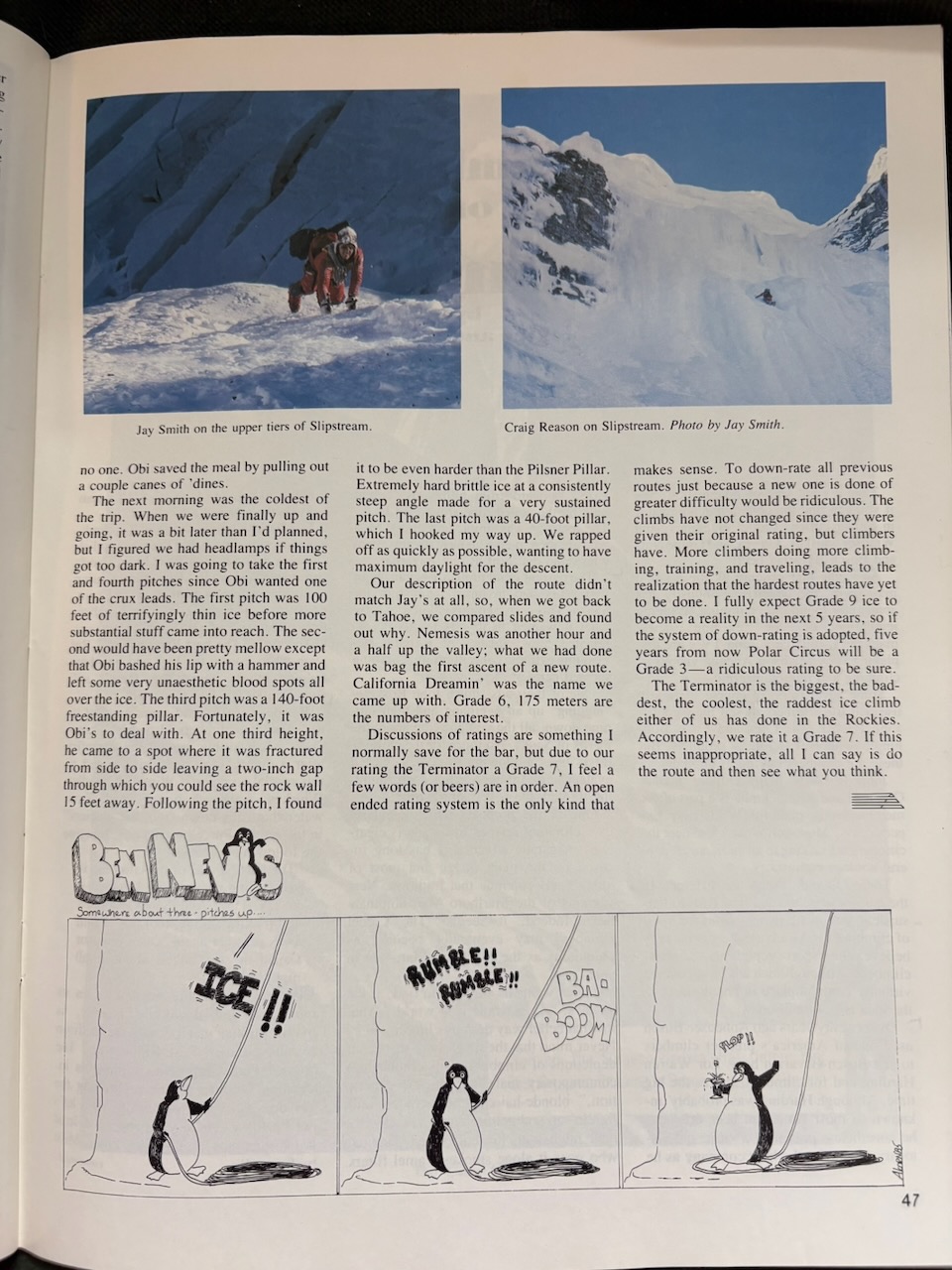
Below is the relevant excerpt from Rock and Ice. It’s hard to imagine climbing that piece of ice, reading this description, and still having any degree of uncertainty or confusion. Unfortunately, it’s more pragmatic for me to use the name Acid Howl in this post than to fully commit to the fight against thirty years of momentum.
Jay had done Nemesis last year, so Paul Obanhein and I went in to do it. The guide book said the route was located three hours up the Stanley Glacier trail on the right side. They looked about four pitches high and of pretty extreme difficulty, so we decided it must be what we were looking for. The only problem seemed to be that the guide book and Jay both said to allow three hours for the approach. We figured that we had cranked it off, and that they had overestimated, thus accounting for the difference. […]
[…]
The first pitch was 100 feet of terrifyingly thin ice before more substantial stuff came into reach. The second would have been pretty mellow except that Obi bashed his lip with a hammer and left some very unaesthetic blood spots all over the ice. The third pitch was a 140-foot freestanding pillar. Fortunately, it was Obi’s to deal with. At one third height, he came to a spot where it was fractured from side to side leaving a two-inch gap through which you could see the rock wall 15 feet away. Following the pitch, I found it to be even harder than the Pilsner Pillar. Extremely hard brittle ice at a consistently steep angle made for a very sustained pitch. The last pitch was a 40-foot pillar, which I hooked my way up. We rapped off as quickly as possible, wanting to have maximum daylight for the descent.
Our description of the route didn’t match Jay’s at all, so, when we got back to Tahoe, we compared slides and found out why. Nemesis was another hour and a half up the valley; what we had done was bag the first ascent of a new route. California Dreamin’ was the name we came up with. Grade 6, 175 meters are the numbers of interest.
— Craig Reason, Rock and Ice, Vol. 11, pg. 46-7, Jan/Feb 1986.
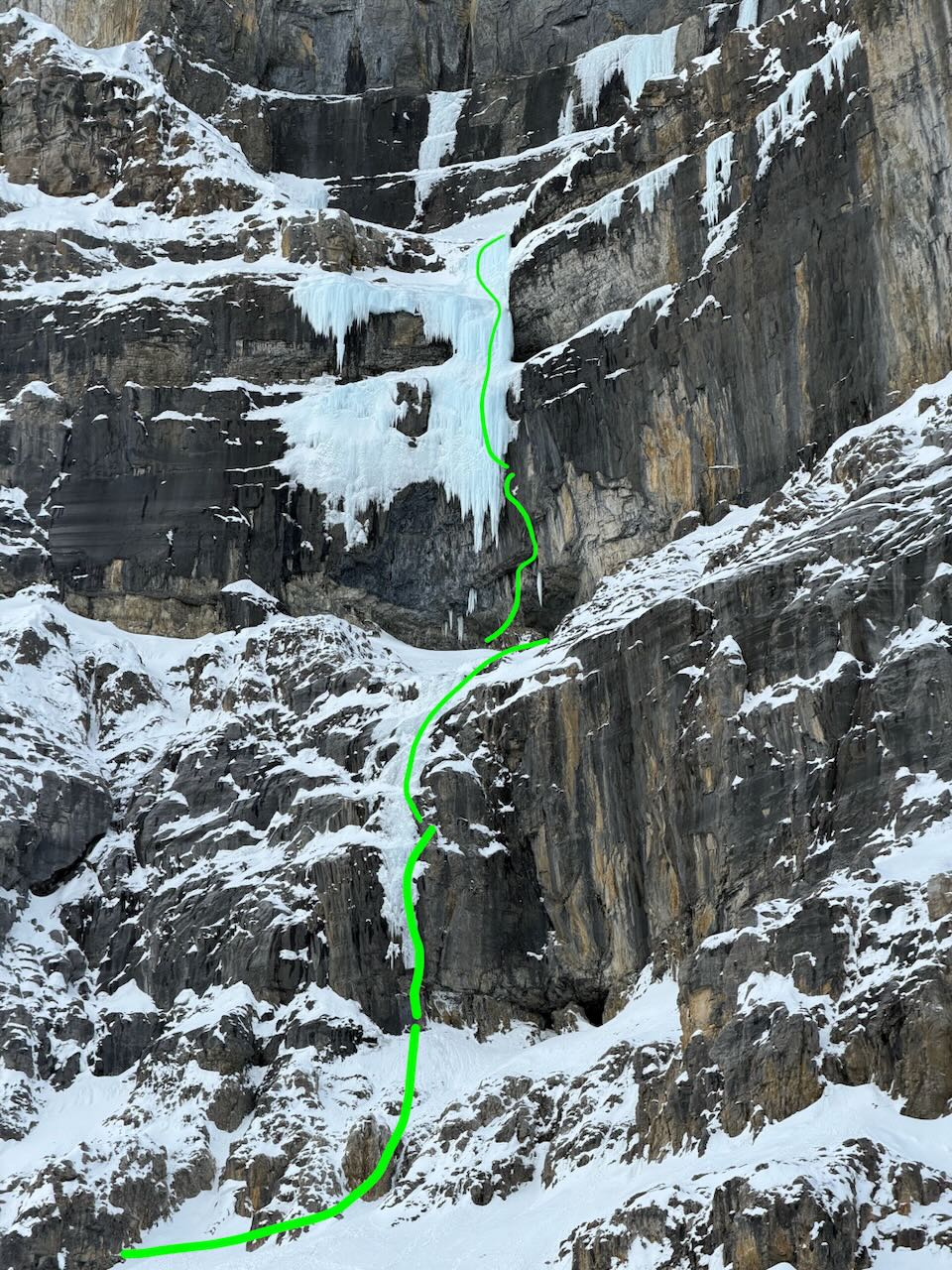
Route Description
Addiction
Stanley Headwall
M7+ WI5 150m
FA/Prep: Greg Barrett, Raphael Slawinski, Matt Edgerton, Gavin McNamara
Feb 16, 2026 - April 3, 2026
At first, there was the ice line Acid Howl. Then, it didn’t fully form, and Raph Slawinski created the mixed line Stairs and Flowers. Then, pitch three fell off and I got excited about the idea of squeezing through a cave to gain the ice instead. Thus, Addiction was conceived.
Addiction provides a two bolt variation to pitch one of S&F, shares the second pitch of Acid Howl, has a fully independent third pitch to gain the Acid Howl ice, and finishes up the ice. All combinations of the lines are described below. Best efforts have been made to keep lengths and grades accurate, but they will vary based on conditions and exact line chosen.
Approach
Ascend the summer trail and continue up the valley. A little ways before you reach Acid Howl, the summer trail will steepen and start to head up and leftward. Leave the trail at this point, crossing diagonally through the woods toward the route. Ascend the slope. A sheltered stance to rack up can be found down and left of P0. Note that this approach slope presents significant avalanche hazard, as does the overhead. More so than many other headwall routes.
P0, M-Easy, 5m
Scramble up any of the short breaks in the lower step to gain a snow bowl. Trudge up and left to a two ring-bolt anchor below the ice
Pitch One
P1, Acid Howl, WI5, 25m
If the ice touches down, climb it to a two ring-bolt anchor on the right (may be buried).
P1, Addiction, M6+ WI5, 25m, 4 bolts
If the ice is low enough, climb past two bolts directly above the anchor. Branch up and left past two more bolts, pulling a short but powerful roof. Continue up a section of steep ice, followed by another stretch of easier ice to the same anchor.
P1, Stairs and Flowers, M7+ WI4, 30m
If the ice isn’t low enough for that, branch right instead after the second bolt. Pull a roof, and continue up and right past more bolts until you are able to traverse back left and gain the ice.
Pitch Two
P2, Acid Howl, WI3, 30m
Climb ice (sometimes thin and poorly protected) until you are able to gain the snow bowl above. Trudge up to the largest rock outcrop on the right and a two ring-bolt anchor below a yellow streak (possibly buried).
Pitch Three
P3, Acid Howl, WI5-6+, 50m
If the ice touches down, climb it! Belay in a huge rock cave on the right.
P3, Addiction, M7+ WI5, 35m, 12 bolts
Belay from the left side of a chossy rock pedestal. Climb the pedestal to its top. Head up the steep face to the top of a hanging slab. Climb tenuously right across the slab to gain an ice dagger pouring out the base of the cave. Clip a bolt low on the left wall of the cave, and continue up to its top. Clip a bolt in the ceiling of the cave. Squeeze out the top of the cave, clipping a bolt on the outside face as you go. Cut feet, swing out, get established, and flick the rope as necessary to minimize drag. Continue up the steep headwall on progressively spacier bolts to gain a two ring-bolt anchor on a small ledge.
Rope drag is tricky to manage on this pitch. Alpine draws on bolts 1 and 4-7 help, as well as a double or triple length sling on bolt 8. Use your judgment.
Consider brining a screw or two for the final sequence to the anchor.
P3, Stairs and Flowers, M8 WI5+, 50m
Tragically, a large portion of this pitch has fallen off (including the bolts). The remaining line is somewhat compromised and it ends in a blank slab quite a ways below the ice.
Pitch Four & Five
P4, Acid Howl, WI4-5, 40m
Continue up steep but stepped ice to the snow slope above.
P5, Acid Howl, WI5 50m
Optionally climb one of the ice smears above.
Descent
V-threads and bolted anchors.
Gear
60m single rope and tag line. You’re going to want to haul a pack on P3. At least twelve draws including many alpines. Screws to comfort.
Addiction Route Description and Photo Topo by Greg Barrett is marked CC0 1.0